Diet Macro Split: What Works for Weight Loss, Energy, and Health
When you hear diet macro split, the ratio of protein, carbohydrates, and fats you eat daily. Also known as macronutrient distribution, it’s not about counting calories alone—it’s about how those calories are built. Most people think eating fewer calories is enough to lose weight. But if your diet macro split is off, you’ll feel tired, lose muscle, and hit plateaus—even if the scale moves.
Think about a 55-year-old woman trying to lose weight. She’s told to cut calories to 1,200–1,600 a day. But if she eats mostly carbs and not enough protein, her body breaks down muscle instead of fat. That slows her metabolism even more. The right protein intake, the amount of protein needed daily to preserve muscle and support metabolism. Also known as daily protein target, it matters more than most realize. Studies show older adults need 1.2 to 1.6 grams of protein per kilogram of body weight just to hold onto muscle. That’s not a suggestion—it’s a requirement. Without it, no amount of walking or green tea will fix what’s happening inside.
Then there’s carb intake, how many carbohydrates you consume each day, which affects energy, blood sugar, and hunger. Also known as daily carbohydrate allowance, it. Too many refined carbs? You crash by mid-afternoon. Too few? You feel foggy and irritable. The sweet spot? Enough to fuel your day without spiking insulin. That’s why someone on Wegovy or metformin might still struggle—those drugs help, but they don’t fix a broken macro balance. Same goes for diabetes management. The best medicine doesn’t work if your plate is full of the wrong stuff.
And then there’s fat intake, the amount of dietary fat consumed daily, which supports hormones, brain function, and satiety. Also known as healthy fat consumption, it. Not all fats are equal. Butter and avocado aren’t the same. Coconut oil and olive oil don’t act the same in your body. Healthy fats help you feel full longer, stabilize your mood, and even support liver health—something you can’t fix with a "detox drink" if your macros are all over the place.
This isn’t about keto or vegan or low-fat. It’s about balance that fits your life. A 70-year-old recovering from open-heart surgery needs different macros than a 35-year-old chasing weight loss with Ozempic. Your age, activity level, health conditions, and goals all change the math. That’s why one-size-fits-all diets fail. The posts below show real cases: women over 55, people on diabetes meds, those managing recovery after surgery—all with different needs, but all needing the right macro split to make progress.
You’ll find practical breakdowns here—not theory, not trends. Just what works for real people dealing with real bodies. Whether you’re trying to lose weight after 50, manage blood sugar, or just stop feeling drained by lunchtime, the answers are in how you divide your plate—not how little you eat.
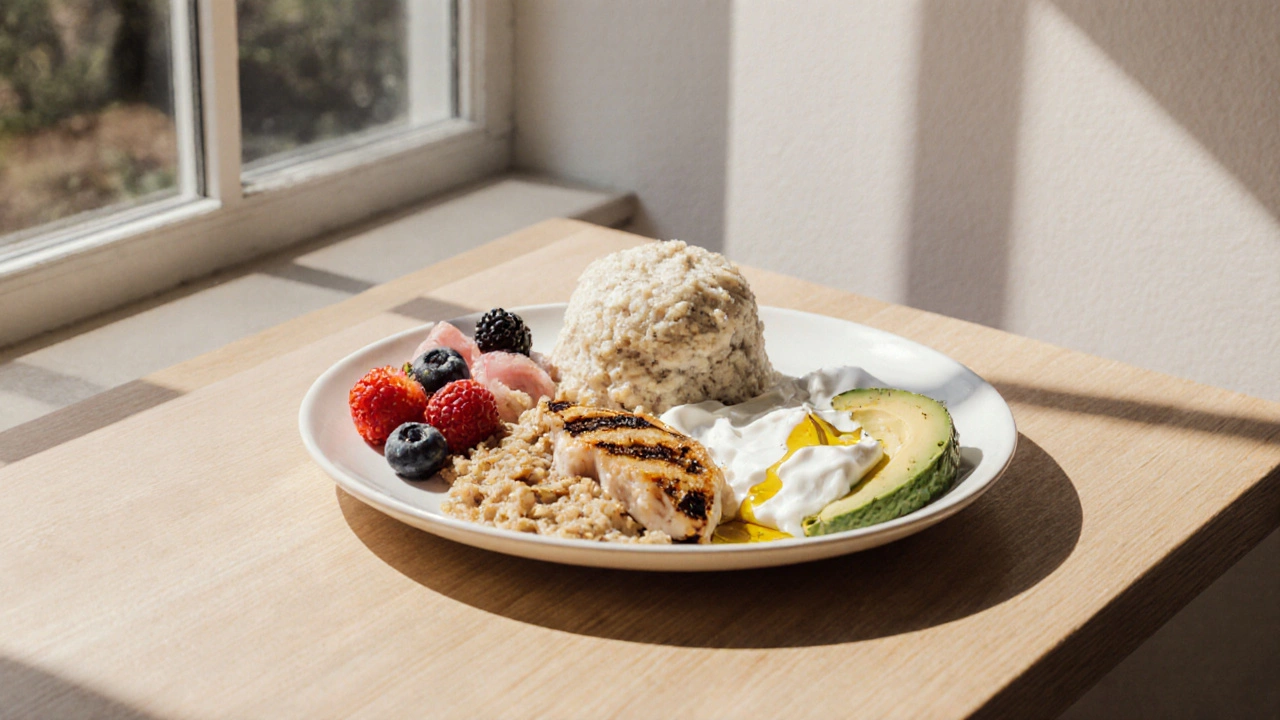
Understanding the 40‑30‑30 Rule for Weight Loss: A Complete Guide
Learn what the 40‑30‑30 rule is, how it supports weight loss, step‑by‑step setup, sample meals, common pitfalls, and whether it fits your goals.