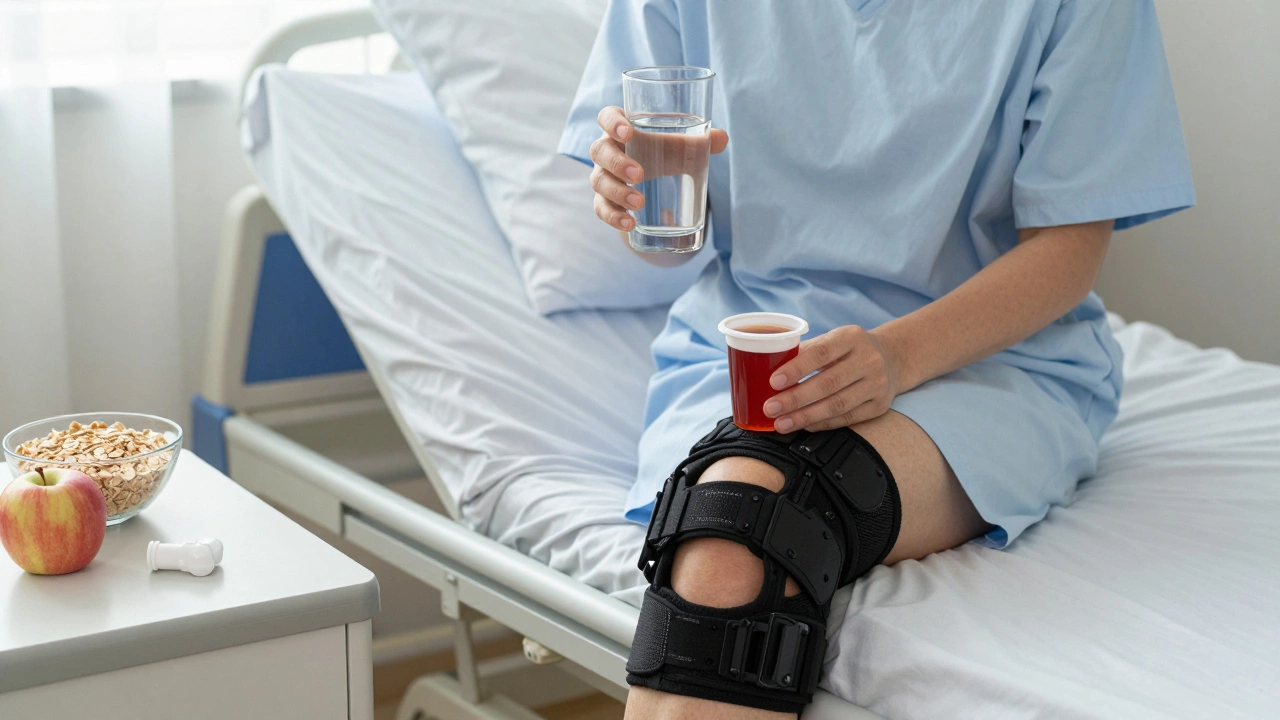
Post-Surgery Bowel Movement Calculator
Enter your knee surgery date to see expected bowel movement timeline and recovery guidance.
Enter your surgery date to see results
After knee replacement surgery, most people focus on walking, swelling, and pain. But there’s one thing no one talks about until it happens: not being able to poop. It’s weird, awkward, and totally normal. So how long does it actually take to have a bowel movement after knee surgery?
Most people don’t poop for 3 to 5 days
It’s not unusual to go three to five days without a bowel movement after knee replacement. That’s because your body is under stress, you’re taking pain meds, and you’re moving less. Your digestive system slows down-sometimes dramatically. A 2023 study in the Journal of Orthopaedic Surgery found that 68% of patients didn’t have a bowel movement within 48 hours after surgery. By day five, nearly all had gone, but many were uncomfortable.
Don’t panic if you haven’t gone by day two. That’s normal. But if you’re still stuck after five days, it’s time to act. Waiting too long can lead to bloating, nausea, and even vomiting. It’s not just about discomfort-it can delay your recovery.
Why does this happen?
It’s not just one thing. It’s a mix of meds, movement, and diet.
- Painkillers: Opioids like oxycodone or hydrocodone are common after surgery. They slow gut motility. That’s why they help with pain, but they also shut down your bowels.
- Reduced activity: Before surgery, you might’ve walked 5,000 steps a day. After? Maybe 500. Less movement means less stimulation for your intestines.
- Dehydration: You’re not drinking enough water because you’re not thirsty, or you’re afraid of peeing too much. But dehydration makes stool hard and stuck.
- Diet changes: Hospital food isn’t high in fiber. You’re eating mashed potatoes, chicken broth, and pudding. No fiber = no bulk = no push.
Put all that together, and your colon just… stops. It’s like hitting pause on your digestive system.
What can you do to speed things up?
You don’t have to wait for it to happen. There are practical steps you can take starting day one.
- Drink water like it’s your job. Aim for 8-10 glasses a day. Add lemon if it helps. Warm water in the morning can trigger your gut.
- Start fiber early. Don’t wait until you’re constipated. Ask for high-fiber meals: oatmeal, apples, beans, bran cereal. If you’re at home, keep flaxseed, prunes, or psyllium husk on hand.
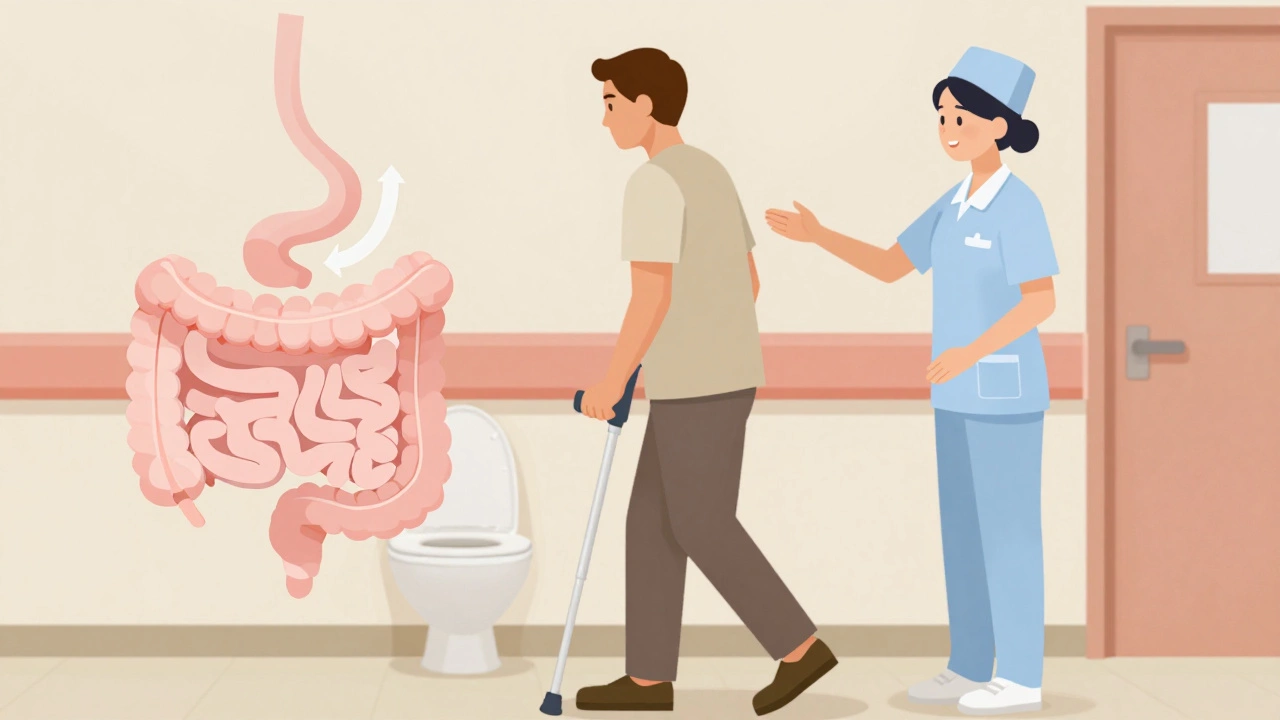
- Move as soon as you can. Even if you’re on crutches, shift your weight. Sit up, stand, walk to the bathroom. Gentle movement helps your intestines contract.
- Try a stool softener. Docusate sodium (Colace) is safe and effective. It doesn’t cause cramps like stimulant laxatives. Start it the day after surgery.
- Avoid stimulant laxatives unless needed. Senokot or Dulcolax might work fast, but they can cause cramping and dehydration. Use them only if stool softeners aren’t enough.
One patient I spoke with-67, from Melbourne-started taking docusate and drinking prune juice on day two. She had her first bowel movement on day three. Said it felt like a miracle.
What about enemas or suppositories?
They work. But they’re not usually the first line. Most hospitals avoid them unless you’re past day five and completely blocked. Enemas can be uncomfortable after knee surgery, especially if you’re still sore or have limited mobility. Suppositories (like glycerin) are easier to use and often enough.
Don’t be embarrassed to ask your nurse or physical therapist for help. They’ve seen this a hundred times. It’s not a sign of weakness-it’s part of recovery.
When should you call your doctor?
It’s normal to wait. But there are red flags.
- No bowel movement after five days
- Severe abdominal pain or bloating
- Vomiting or inability to keep fluids down
- Fever or chills
- Blood in stool (not just streaks from hemorrhoids)
If any of these happen, call your surgeon. You might have a bowel obstruction or an infection. These are rare, but they need attention.
What about long-term bowel changes?
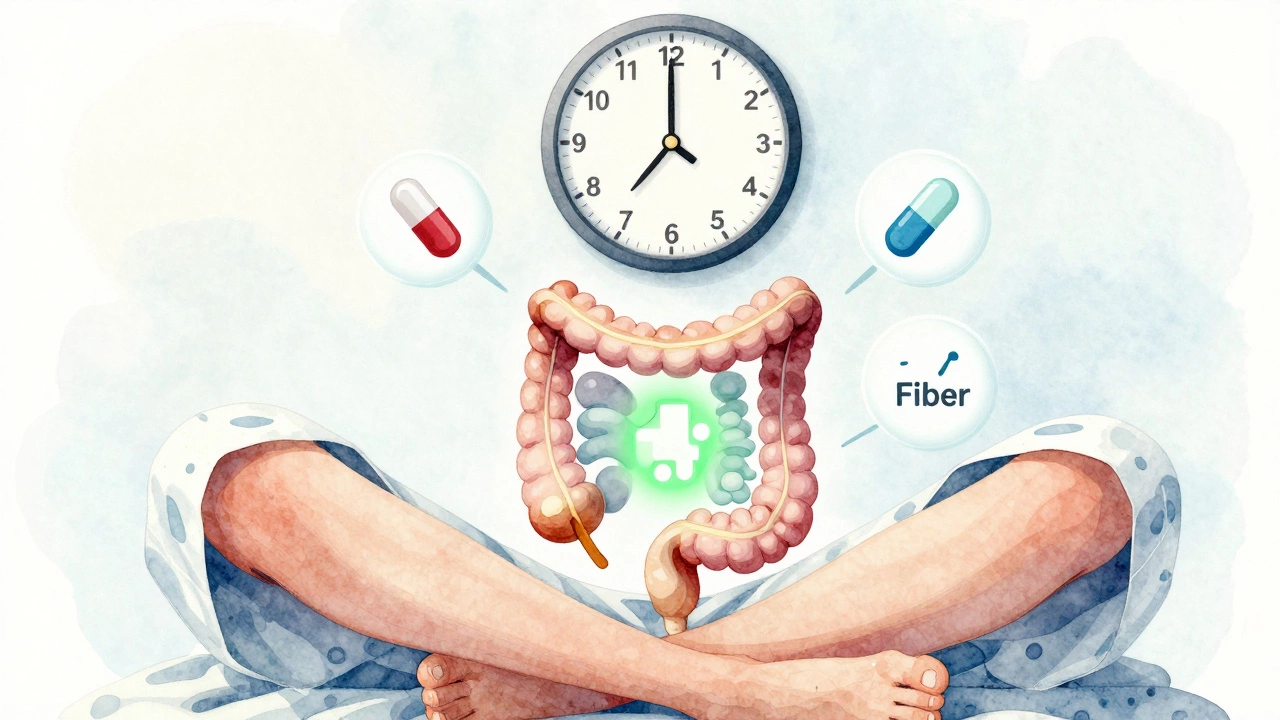
Once you’re off opioids and back to normal activity, your bowels usually return to their pre-surgery rhythm within two weeks. Some people notice they’re more regular after surgery-not because of the knee, but because they started drinking more water and eating better.
One man from Sydney told me he never ate vegetables before his surgery. Afterward, his wife made him a salad every day. He went from once-a-week poops to daily. He said it was the best side effect of the operation.
Final tip: Plan ahead
If you’re scheduled for knee replacement, talk to your doctor before the surgery. Ask:
- What pain meds will I get?
- Can I get a stool softener prescription before I leave the hospital?
- Should I buy fiber supplements or prune juice ahead of time?
Being prepared makes all the difference. You won’t be caught off guard. You’ll know what to do-and when to do it.
Is it normal to not poop for a week after knee surgery?
Going a full week without a bowel movement after knee surgery is unusual and should be checked by a doctor. Most people go by day five. If you haven’t gone by then, especially with pain, bloating, or nausea, contact your surgeon. This could signal a blockage or medication side effects that need adjusting.
Can painkillers cause permanent constipation after knee surgery?
No. Constipation from opioid painkillers is temporary. Once you stop taking them-usually within 7 to 10 days-your bowels return to normal. The key is managing the transition. Use stool softeners and fiber to keep things moving while you taper off the meds. Permanent changes are extremely rare.
Should I avoid fiber after knee surgery?
No. Fiber is one of the best tools you have. It adds bulk to stool and helps your colon contract. Start with soluble fiber like oats, apples, and psyllium. Avoid large amounts of raw veggies or bran right after surgery if you’re still on a liquid diet. But once you’re eating solids, fiber should be part of every meal.
Does drinking coffee help with constipation after surgery?
Caffeine can stimulate bowel movement in some people, but it’s not reliable after surgery. Coffee can also dehydrate you, which makes constipation worse. Stick to water, herbal teas, or prune juice. If you really want coffee, have one cup with a big glass of water.
Can I use over-the-counter laxatives without asking my doctor?
Stool softeners like docusate sodium are safe and recommended. But stimulant laxatives like senna or bisacodyl should be used cautiously. They can cause cramps, dizziness, or dehydration-especially if you’re still recovering from surgery. Always check with your surgeon or pharmacist before using anything strong.




Write a comment