Knee Replacement Candidacy Checker
Answer the following questions based on the patient's current health status to see how they align with a typical surgical profile.
Does the patient have stable blood pressure and no recent severe heart failure?
Is the patient alert and capable of following physical therapy instructions?
Does the patient have a strong family or caregiver network for post-op recovery?
If diabetic, are blood sugar (HbA1c) levels stable and well-managed?
Is the primary goal to regain independence (e.g., walking to the mailbox) through rehab?
Key Takeaways
- There is no official maximum age for knee replacement surgery.
- Surgeons focus on "biological age" (overall health) rather than chronological age.
- The primary goal is improving quality of life and mobility.
- Risks increase with age, but they can be managed with a proper pre-operative plan.
- Non-surgical options are preferred if the patient cannot survive anesthesia.
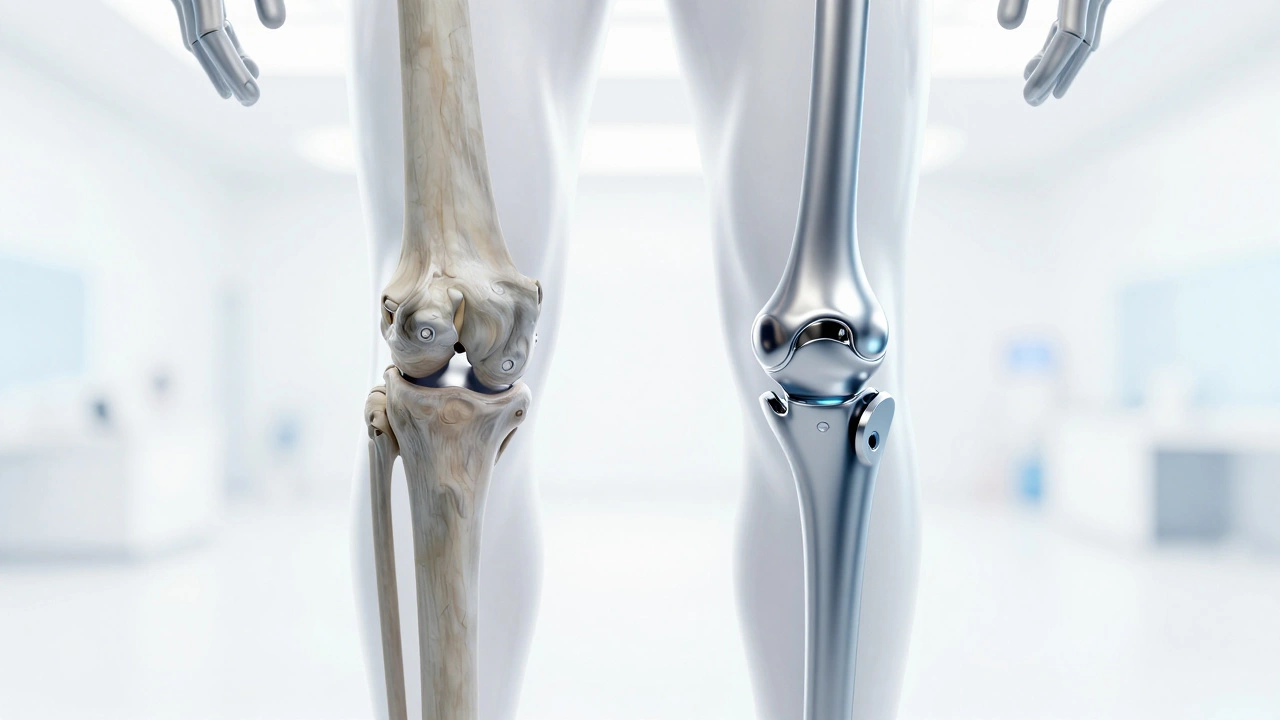
When we talk about knee replacement is a surgical procedure where a damaged knee joint is replaced with an artificial prosthesis made of metal and plastic. Also known as Total Knee Arthroplasty, this operation is designed to relieve pain and restore function. Whether you are 55 or 95, the mechanical goal remains the same: replace the worn-out cartilage with a durable surface that allows the joint to glide smoothly again.
The Shift from Chronological Age to Biological Health
In the past, some doctors might have been hesitant to operate on anyone over 80. But medicine has changed. We now look at biological age. This means looking at how your heart, lungs, and kidneys are functioning. If a 70-year-old has severe heart failure and uncontrolled diabetes, they might be a riskier candidate than a healthy, active 85-year-old who walks daily and has a steady blood pressure. Comorbidities are additional medical conditions occurring alongside the primary condition. When a surgeon evaluates a senior, they aren't counting years; they are counting comorbidities. If you have manageable high blood pressure, that's one thing. If you have advanced dementia or end-stage renal disease, the risks of the surgery might outweigh the benefits of walking without pain.
When is Surgery No Longer the Best Option?
While there isn't a hard age limit, there are "red lines" where a surgeon will likely suggest sticking to physical therapy or pain management. The biggest concern is usually General Anesthesia, which is a state of controlled unconsciousness used during major surgery. As we age, our brains and hearts become more sensitive to these drugs. If a patient is so frail that the risk of a stroke or heart attack during the procedure is too high, the surgery is usually off the table. Another factor is cognitive function. A successful knee replacement isn't just about the surgery; it's about the three months of grueling physical therapy afterward. If a patient has advanced Alzheimer's and cannot follow simple instructions on how to move their leg or use a walker, the surgery could actually be dangerous. They might fall or refuse to do the exercises, leading to a stiff, frozen joint that is worse than what they started with.
| Factor | Ideal Candidate (Regardless of Age) | Poor Candidate (High Risk) |
|---|---|---|
| Heart Health | Stable BP, no recent heart failure | Unstable angina, severe congestive heart failure |
| Cognitive State | Alert, able to follow PT instructions | Severe dementia, unable to cooperate |
| Mobility Goal | Wants to regain independence/walking | Bedridden with no desire or ability to rehab |
| Medical Support | Strong family or caregiver network | Isolated, no home support for recovery |
The Role of Pre-Operative Optimization
If you're older and worried about the risks, the modern approach is called "pre-habilitation." Instead of just scheduling a date, doctors spend weeks getting your body ready. This might include a strict diet to lower inflammation, targeted exercises to strengthen the quadriceps, and a full check-up with a Cardiologist, a doctor who specializes in heart and blood vessel health, to ensure your heart can handle the stress of surgery. By optimizing your health first, you lower the chance of complications. For example, managing Diabetes (specifically controlling HbA1c levels) is crucial because high blood sugar slows down healing and significantly increases the risk of post-surgical infections. If you can get your sugar under control for two months before the operation, your odds of a smooth recovery skyrocket.
Understanding the Recovery Curve for Older Adults
Recovery for an 80-year-old looks different than it does for a 50-year-old. A younger patient might be back to jogging in six months. An older patient's goal is usually "functional independence." This means being able to get to the bathroom alone, walk to the mailbox, and sit comfortably in a chair. One major risk for seniors is Deep Vein Thrombosis (DVT), which is a blood clot that forms in a deep vein, usually in the legs. Because older adults tend to move less, the risk of clots is higher. To fight this, surgeons use blood thinners and insist on "early ambulation"-getting the patient out of bed and walking, even just a few steps, within 24 hours of surgery. The faster you move, the lower the risk of a lethal pulmonary embolism.

Alternatives When Surgery Isn't Possible
If the medical team decides that a full replacement is too risky, it doesn't mean you're stuck with the pain. There are several tiers of treatment that can provide relief without the need for a general anesthetic. First, there are Corticosteroid Injections, which are medications injected directly into the joint to reduce inflammation and pain. These can provide relief for a few months at a time. For those who need something more long-term, Viscosupplementation-injecting a thick, gel-like substance (hyaluronic acid)-can lubricate the joint, making it feel less like bone-on-bone rubbing. Low-impact physical therapy is also a powerhouse. Even if you can't have surgery, strengthening the muscles around the knee takes the pressure off the joint itself. Water aerobics is particularly effective for seniors because the buoyancy of the water removes the weight from the joint while still allowing the muscles to work.
Making the Final Decision
How do you decide if it's time? Ask yourself: "Is the pain preventing me from living the life I want, and is the risk of the surgery lower than the risk of staying immobile?" If you stop walking because of knee pain, you're at a higher risk for pneumonia, pressure sores, and muscle atrophy. In many cases, the risk of *not* having the surgery is actually higher than the risk of the procedure itself. Talk to your surgeon about the specific type of implant. Some modern implants are designed specifically for lower-activity levels, which might be a better fit for a senior than a high-performance implant meant for someone who wants to play pickleball every day.
Can someone in their 90s get a knee replacement?
Yes, it is possible. If the patient is medically stable, has a healthy heart and lungs, and has a strong support system for recovery, age alone is not a reason to deny surgery. The focus is on whether the patient can survive anesthesia and commit to the physical therapy required for the joint to function.
What are the biggest risks for elderly patients during knee surgery?
The most significant risks include blood clots (DVT), surgical site infections, and cardiovascular stress from anesthesia. There is also a risk of postoperative delirium, where the patient becomes confused or disoriented for a few days after waking up from surgery.
How long does recovery take for a senior?
While the initial wound heals in a few weeks, full recovery can take 6 to 12 months. Seniors may take longer to regain full range of motion compared to younger patients, but with consistent physical therapy, most can return to their basic daily activities within 3 months.
Will the artificial knee wear out if I get it at an old age?
Modern knee replacements are very durable, often lasting 15 to 20 years. For a patient in their 80s, the implant is likely to outlast their natural life expectancy, meaning they will never need a second "revision" surgery.
What happens if I'm told I'm too old for surgery?
If a surgeon deems you too high-risk, focus on "palliative" care. This includes pain management via medications, corticosteroid or gel injections, and specialized physical therapy to maintain as much mobility as possible without surgery.
Next Steps and Troubleshooting
If you are trying to help a parent or grandparent navigate this choice, start by requesting a comprehensive geriatric assessment. This is a holistic review of their health that goes beyond just the knee. If the surgeon says "no," don't either give up or go to another surgeon immediately-first, ask exactly *why*. Is it the heart? The lungs? The cognitive state? Knowing the specific barrier allows you to address it (e.g., working with a cardiologist to stabilize a heart condition) which might move them from the "too risky" pile to the "good candidate" pile.




Write a comment