Knee Replacement Recovery: What Really Works and How to Speed Up Healing
When you undergo a knee replacement, a surgical procedure to replace a damaged knee joint with an artificial implant. Also known as total knee arthroplasty, it’s one of the most common orthopedic surgeries—and one of the most life-changing if recovery is done right. This isn’t just about letting a cut heal. It’s about rebuilding strength, restoring balance, and retraining your body to move without pain. Too many people think recovery ends when the bandages come off. It doesn’t. The real work starts then.
Successful knee replacement recovery, the process of regaining mobility, strength, and function after knee surgery depends on three things: movement, consistency, and patience. You won’t get there by sitting still. Studies show patients who start walking the same day as surgery heal faster and have fewer complications. But you also won’t get there by pushing too hard. Overdoing it leads to swelling, stiffness, and setbacks. The key is finding the sweet spot—enough motion to keep the joint loose, but not so much that you tear into healing tissue.
Recovery isn’t just physical. It’s mental too. You’ll need to relearn simple things like sitting on the toilet, getting in and out of bed, or climbing stairs. That’s why mobility after knee replacement, the ability to move freely and safely without assistance after surgery is tied to the tools you use. Raised toilet seats, grab bars, and long-handled reachers aren’t signs of weakness—they’re smart upgrades. And yes, physical therapy isn’t optional. It’s the bridge between surgery and real-life function. Skip it, and you risk long-term stiffness or even needing a second surgery.
Some people expect to walk normally in two weeks. Others think it’ll take six months. The truth? It’s somewhere in between—and it’s different for everyone. Age doesn’t matter as much as your baseline health. A 65-year-old who walks daily before surgery often recovers faster than a 50-year-old who’s been sedentary. What matters is your commitment to daily movement, even on the hard days. Pain isn’t always a sign you’re doing too much. Sometimes it’s just your nerves firing up as they reconnect.
You’ll see advice everywhere: ice, heat, compression, supplements, special diets. Some help. Some don’t. Water keeps your joints lubricated. Protein helps repair tissue. Sleep is when your body rebuilds itself. That’s it. No magic herbs, no miracle creams. The real secret? Showing up. Doing the exercises. Walking a little farther each day. Not comparing yourself to someone else’s timeline.
Below, you’ll find real advice from people who’ve been through it. From how to sit safely after surgery to what to do when your knee locks up at night. No fluff. No hype. Just what actually works.
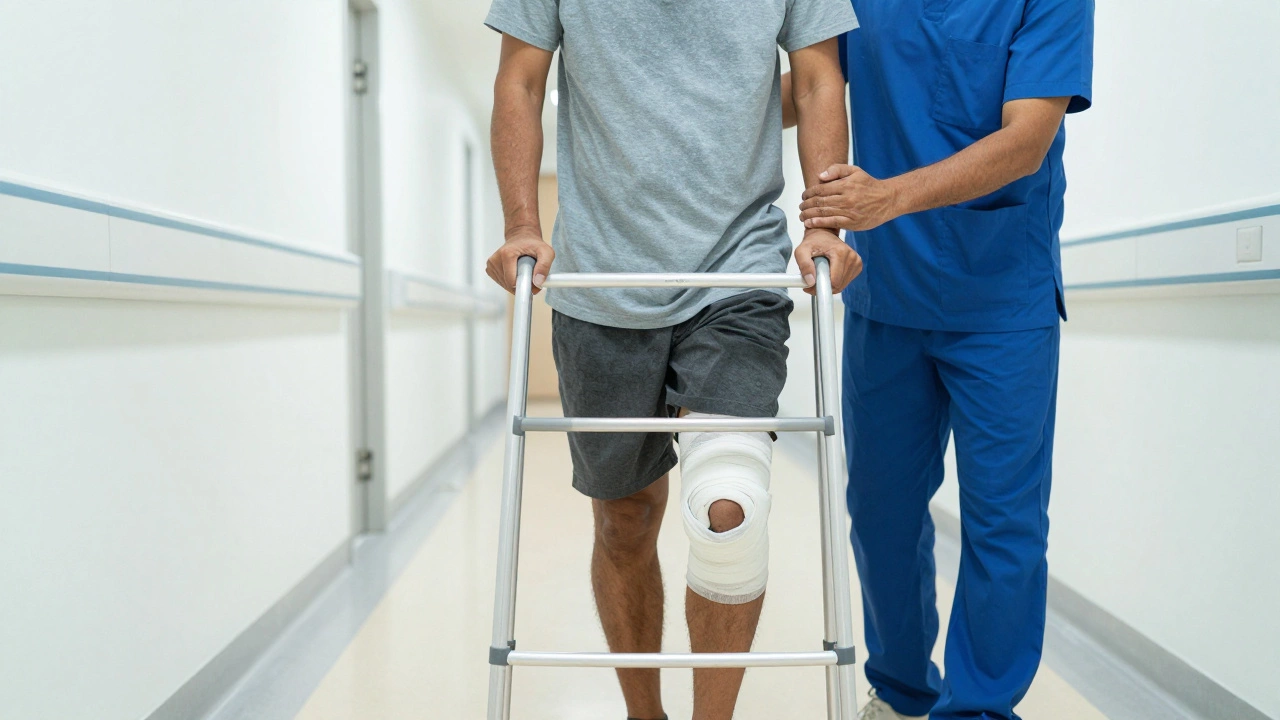
How Long to Walk Normally After Total Knee Replacement Surgery Timeline
Understand the realistic timeline for walking after total knee replacement. Learn recovery phases, milestones, and tips for speeding up your return to normal gait.
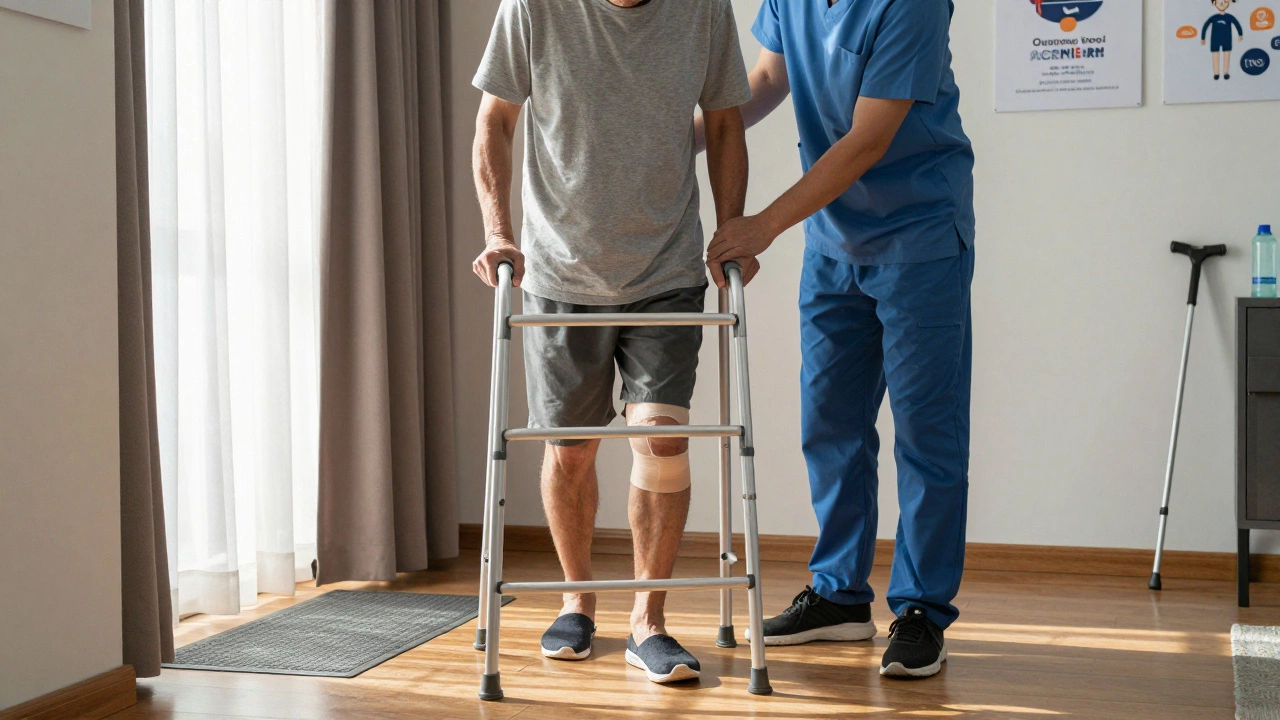
How Long Will I Need a Walker After Knee Replacement?
Most people use a walker for 2 to 4 weeks after knee replacement, but recovery varies. Learn the timeline, signs you're ready to stop, and what to do if you're still using it after six weeks.

How Long Is Bed Rest After Knee Replacement? Get the Real Recovery Timeline
Wondering how long you’ll be stuck in bed after knee replacement surgery? This article gives a realistic breakdown of what to expect, from your first days post-op to getting back on your feet. You’ll learn why jumping to too much activity can backfire, how to ease common worries about movement, and practical tips to keep your recovery moving. Forget vague promises—get real, useful info you can use right at home. Recovery is a journey; know exactly what steps matter most and when.

How Many Days of Rest Do You Need After Knee Replacement?
Recovering from knee replacement surgery isn't a one-size-fits-all process. Factors like age, overall health, and whether the surgery was partial or total can affect how long you need to rest. Typically, many people find themselves back on their feet within a few weeks, but full recovery can take several months. Learn why giving yourself enough time to heal can make a world of difference.