Recovery Timeline Estimator
Your Recovery Factors
Recovery Benchmarks
Walk 50-100 feet with walker, start seated exercises
Transition to cane or no aid, walk 200-300 feet
Complete recovery or continue therapy
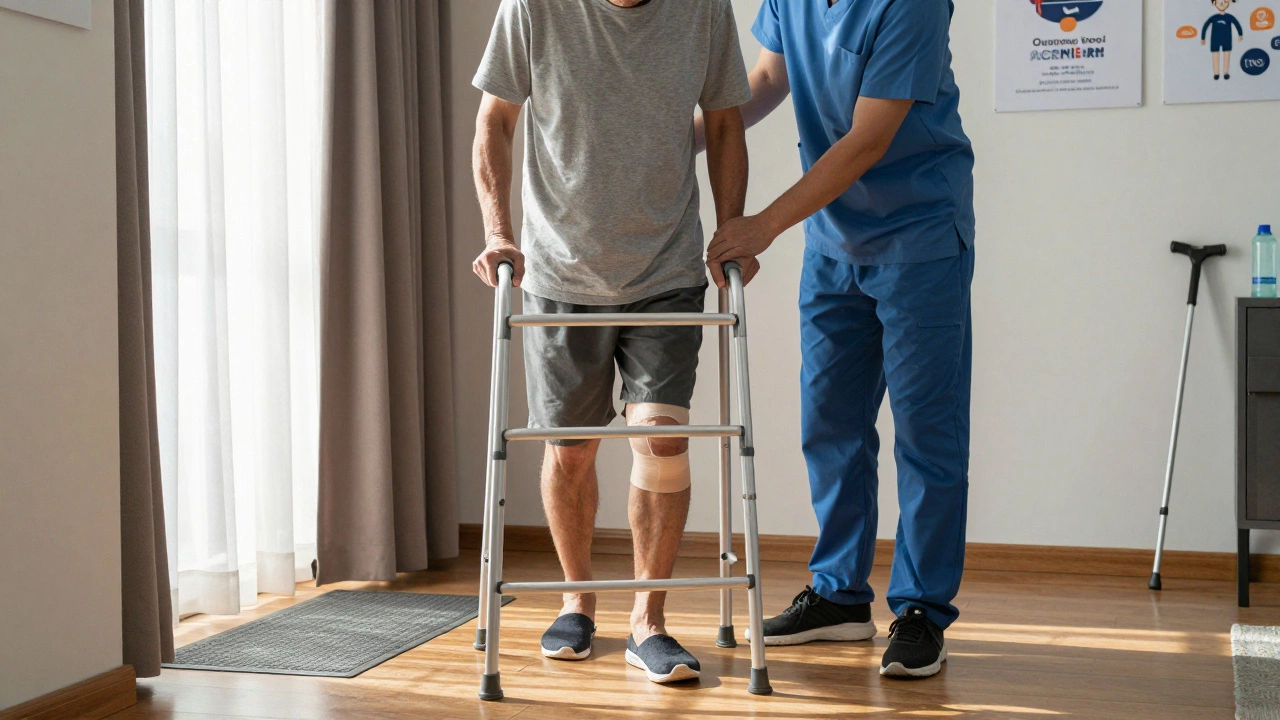
After knee replacement surgery, most people use a walker for about 2 to 4 weeks. But the exact time depends on your strength, balance, pain levels, and how well you follow your rehab plan. Some people switch to a cane or no aid at all by week three. Others might need the walker for six weeks or longer - especially if they’re older, have other health issues, or didn’t stay active before surgery.
Why Do You Need a Walker at All?
Your new knee isn’t just a replacement - it’s a healing joint. Even though the implant is stable, the muscles around it are weak, and your body needs time to relearn how to move safely. A walker gives you stability while you rebuild strength and confidence. It keeps your weight off the new joint just enough to prevent falls and protect the surgical site.
Studies show that patients who use a walker properly in the first two weeks have fewer complications. Falls during early recovery can lead to dislocation, bleeding, or even the need for revision surgery. That’s why your physical therapist will likely insist you use the walker - even if you feel like you can walk without it.
What Happens Week by Week?
Recovery isn’t one-size-fits-all, but most people follow a similar pattern:
- Days 1-3: You’re on the walker full-time. You take a few steps with help from a therapist. Your goal is to stand and take 10-20 steps without help.
- Week 1: You’re walking 50-100 feet with the walker. You may start doing seated exercises and light stretching. Pain is still high, but it’s dropping each day.
- Week 2: Many people start reducing walker use. You might walk 200-300 feet without stopping. Your therapist will test your balance - if you can stand on one foot for 5 seconds, you’re ready to try a cane.
- Week 3-4: Most switch to a cane or just a handrail. You’re walking around the house without assistance. If you still need the walker, it’s not a failure - it just means you need more time.
- Week 5-6: If you’re still using a walker, your doctor or therapist will investigate why. Maybe your quadriceps are still too weak, or you’re afraid to put weight on the leg. That’s normal, but it needs attention.
When Can You Stop Using the Walker?
You don’t stop using the walker because a calendar says so. You stop when you meet these three real-world benchmarks:
- You can walk 100 feet without stopping or holding onto anything.
- You can stand on your operated leg for 10 seconds without shaking or losing balance.
- You can climb a flight of stairs without holding the railing with both hands.
If you can do all three, you’re ready to move to a cane - or go unaided. If you can’t, keep using the walker. Pushing too soon increases your risk of injury. There’s no prize for getting off the walker fast.
What If You Still Need the Walker After 6 Weeks?
It’s not unusual. About 15% of patients still use a walker at six weeks. That doesn’t mean your surgery failed. It might mean:
- Your thigh muscles (quadriceps) are still weak - they’re the engine of your knee.
- You’re afraid of falling - fear can lock your body up more than pain.
- You have arthritis in other joints, like your hip or ankle, that’s slowing you down.
- You didn’t do your home exercises consistently.
If you’re still using the walker past six weeks, talk to your physical therapist. They might add strength training, adjust your rehab plan, or check for nerve issues. Some patients need a few more weeks of focused therapy - and that’s okay.
What About Canes, Rollators, or No Aid?
Once you’re ready to leave the walker behind, here’s what comes next:
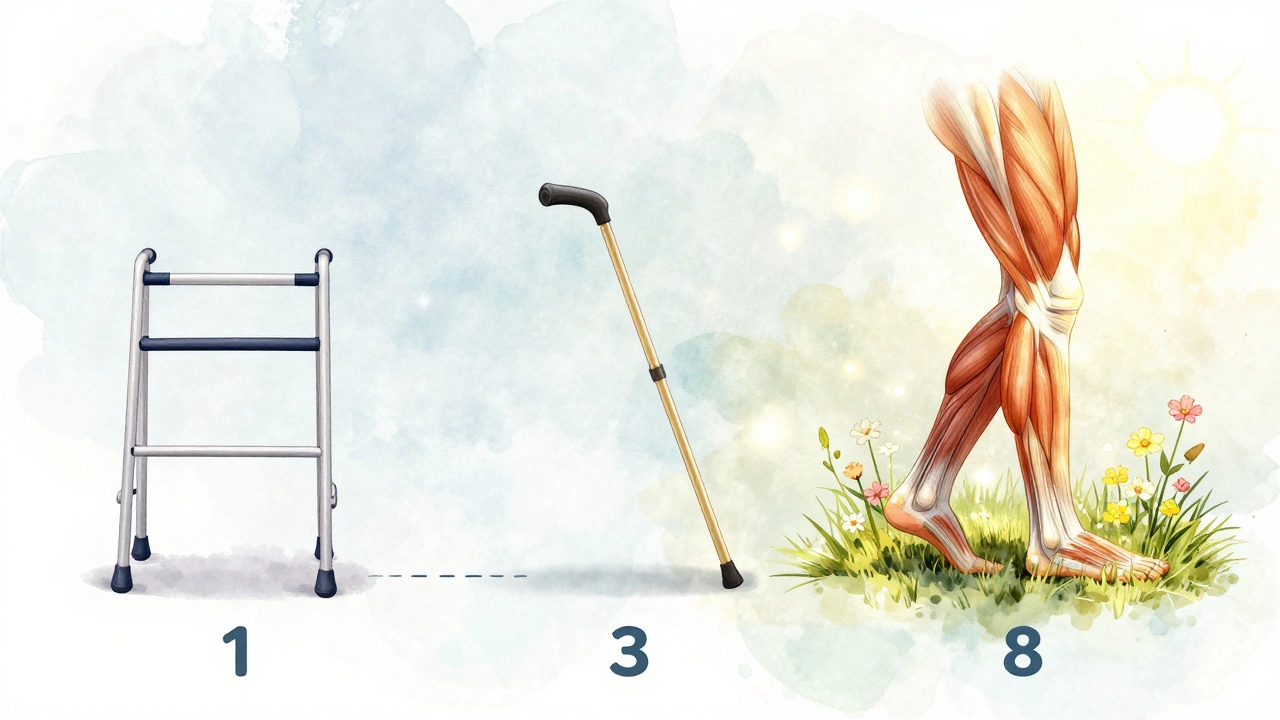
- Cane: Best for people who need light support. Use it in the hand opposite your operated knee. It helps with balance, not weight-bearing.
- Rollator (wheeled walker): Good if you get tired easily or need to carry things. Has a seat, brakes, and storage. Some people skip the walker and go straight to a rollator.
- No aid: Most people reach this by 8-12 weeks. You shouldn’t feel pain, wobbling, or fear when walking. If you’re still limping or stiff after 3 months, talk to your doctor.
What Slows Down Recovery?
Some habits make recovery longer - and they’re easier to fix than you think:
- Sitting too much: If you’re on the couch all day, your muscles atrophy fast. Walk at least 5-10 minutes every 2 hours.
- Skipping exercises: The home exercises aren’t optional. They’re the core of your recovery. Do them even if you’re sore.
- Not walking far enough: Walking 10 steps around the kitchen isn’t enough. Aim for 500-1,000 steps a day by week two.
- Ignoring pain: Mild discomfort is normal. Sharp pain, swelling, or heat in the knee means stop and call your doctor.
- Being overweight: Every extra pound adds stress to your new knee. Losing even 5-10 pounds speeds up recovery.

Real Stories: What People Actually Experience
One 68-year-old woman had her surgery in October 2025. She used the walker for 3 weeks, switched to a cane for 2 weeks, and walked unaided by week 6. She credits daily walks around her neighborhood and doing her exercises even when she didn’t feel like it.
A 72-year-old man with diabetes used the walker for 7 weeks. His recovery was slower because his nerves were affected by high blood sugar. He didn’t give up - he worked with his therapist on targeted strength drills and used a rollator for longer outings. By week 10, he was walking his grandchild to the park.
There’s no magic timeline. Progress isn’t linear. Some days you’ll feel strong. Other days you’ll feel like you’re back at square one. That’s normal.
When to Call Your Doctor
Call your surgeon or rehab team if:
- Your pain gets worse after the first week.
- You can’t bend your knee past 90 degrees after 4 weeks.
- You notice redness, warmth, or fluid leaking from the incision.
- You have swelling in your calf or shortness of breath - these could be signs of a blood clot.
Don’t wait. Early intervention stops small problems from becoming big ones.
Final Thought: Patience Wins
Recovery isn’t a race. It’s a rebuild. Your body didn’t get weak overnight - and it won’t get strong overnight. The walker isn’t a sign of failure. It’s a tool. Use it as long as you need. Push too hard, and you risk setbacks. Stay steady, and you’ll be walking without aid - and without pain - before you know it.
How long should I use a walker after knee replacement?
Most people use a walker for 2 to 4 weeks after knee replacement surgery. Some need it longer - up to 6 weeks - especially if they’re older, have other health conditions, or didn’t stay active before surgery. You should stop using it only when you can walk 100 feet without stopping, stand on one leg for 10 seconds, and climb stairs without holding both railings.
Can I stop using the walker if I feel fine after one week?
No. Feeling fine doesn’t mean your muscles are strong enough or your balance is safe. Using the walker too early increases your risk of falling, which could damage your new knee or cause internal bleeding. Stick to your therapist’s plan - even if you think you’re ready to move on.
Is it normal to still need a walker after 6 weeks?
Yes. About 15% of patients still use a walker at six weeks. It’s often because thigh muscles are still weak, fear of falling is high, or there’s another joint issue like hip arthritis. Talk to your physical therapist - they can adjust your rehab plan. It’s not a failure - it just means you need more time.
Should I use a cane or rollator after the walker?
A cane is best for light balance support - hold it in the hand opposite your operated knee. A rollator (wheeled walker with a seat) is better if you get tired easily or need to carry items. Most people switch to a cane first, then go unaided. Some skip the cane and go straight to a rollator if they need more stability.
What happens if I don’t use a walker at all?
Skipping the walker increases your risk of falling, which can cause serious injury to your new knee. You might also develop bad walking habits, like limping, that become permanent. Even if you feel strong, your muscles and nerves need time to relearn movement. Use the walker as directed - it’s not optional.




Write a comment