Surgical Survival Comparison Tool
Select a procedure to compare the historical danger versus modern safety:
> 80%
Estimated Mortality Rate
Oxygen deprivation to the brain, lack of bypass systems, and surgical shock.
2% - 5%
Estimated Mortality Rate
Heart-Lung Machine, advanced sterilization, and systemic monitoring.
Quick Takeaways: The Danger Zone
- Early abdominal and thoracic surgeries had mortality rates often exceeding 50%.
- Before the 1950s, attempting to fix the heart was almost always a death sentence.
- The "deadliest" surgery isn't one specific procedure, but rather an entire era of pre-anesthetic and pre-antibiotic attempts.
- Modern high-risk surgeries, like heart transplants, have seen survival rates jump from barely 10% to over 85%.
When people ask what the deadliest surgery was, they usually expect a single name. But the truth is more complex. In the mid-19th century, a simple amputation could kill you because of "hospital gangrene." However, if we look at specific organ systems, the heart was the ultimate forbidden zone. For decades, if a surgeon touched a beating heart, the patient died. Period. It wasn't just about the skill of the doctor; it was about the sheer biological volatility of the Cardiovascular System, which is the network of organs and vessels that circulates blood throughout the body.
The Era of the "Forbidden" Heart
For a long time, the heart was considered untouchable. In the late 1800s, surgeons believed that any injury to the heart was fatal. If you were a surgeon who tried to stitch a wound in the heart, you were often viewed as reckless or insane. This changed slightly in 1896 when Ludvig Heeup, a Danish surgeon, successfully sutured a heart wound. But for the average person, any surgery involving the chest cavity was essentially a coin flip with the odds stacked against you.
The real danger came from the lack of a way to keep the rest of the body alive while the heart stopped. Imagine trying to fix a car engine while the car is driving 60 mph down a highway. That was early heart surgery. Without a way to bypass the blood, the brain would starve of oxygen within minutes. This made early attempts at correcting congenital defects or removing tumors from the heart some of the most lethal procedures ever attempted.
The Game Changer: The Heart-Lung Machine
Everything changed with the invention of the Heart-Lung Machine. This device is a pump and oxygenator that temporarily takes over the functions of the heart and lungs during surgery. Before John Gibbon successfully used the first one in 1953, surgeons had to use "hypothermic arrest"-essentially chilling the patient's body to slow down metabolism-but this only gave them a few minutes of safe time. If the surgery took longer, the patient died.
Even with this machine, the early days of open-heart surgery were terrifying. The first few years of Coronary Artery Bypass Grafting (CABG) saw a staggering number of failures. Patients would survive the operation only to die of massive clots or systemic infections. The risk wasn't just the knife; it was the biological reaction to the machine itself, which often triggered a massive inflammatory response in the blood.
| Procedure Type | Pre-1950s Mortality (Est.) | Modern Mortality (Est.) | Key Driver of Change |
|---|---|---|---|
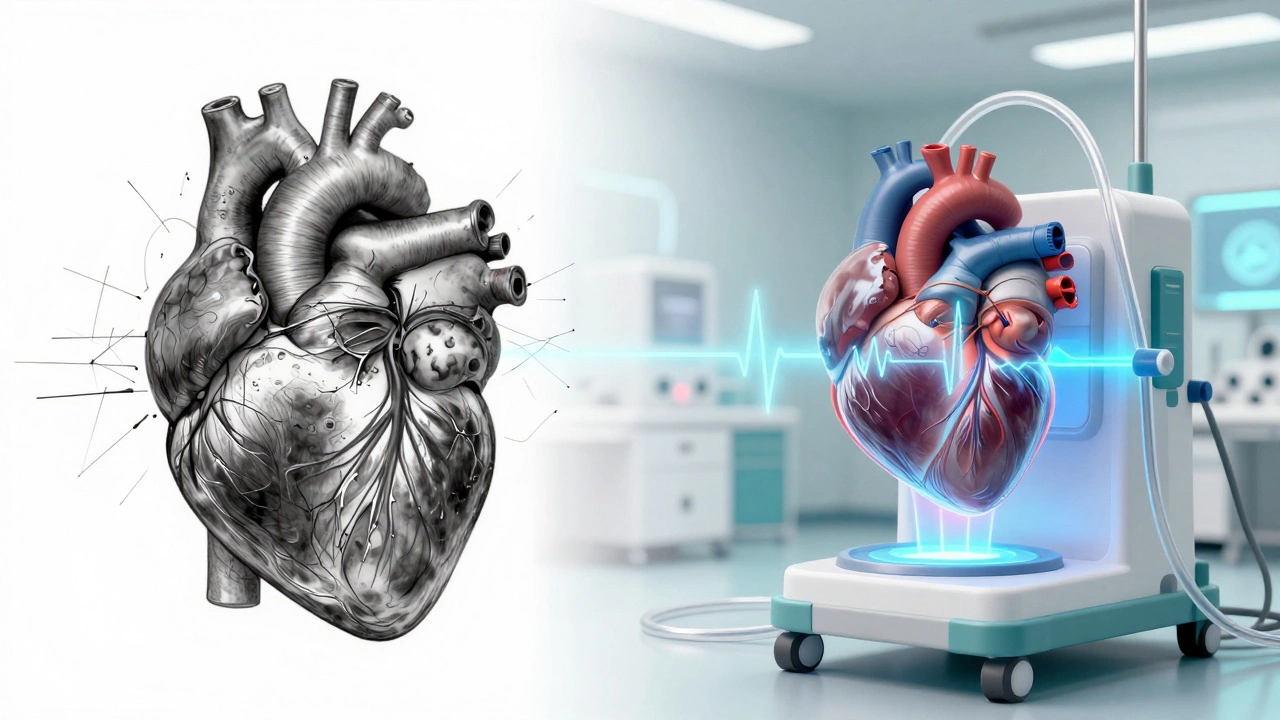
| Open Heart Surgery | > 80% | 2% - 5% | Heart-Lung Machine / Sterilization |
| Abdominal Surgery | 40% - 60% | < 1% (Elective) | Antibiotics / Anesthesia |
| Amputations | 25% - 50% | < 2% | Sepsis Control / Vascular Repair |
The Danger of Sepsis and the "Death Ward"
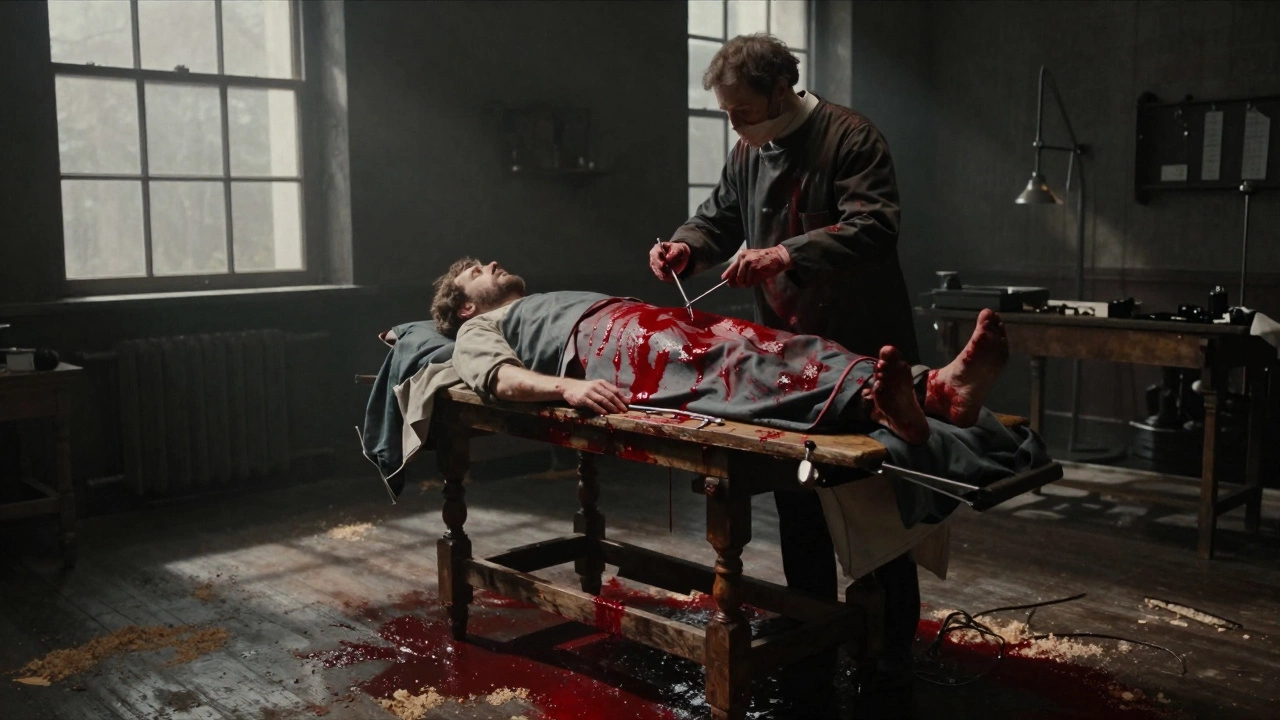
While heart surgery is the most technically difficult, the deadliest surgeries of the 1800s were often the simplest ones. Why? Because of Sepsis. Sepsis is a life-threatening reaction to an infection that causes systemic organ failure. Before Joseph Lister popularized Antiseptic techniques using carbolic acid, surgeons would often move from a patient who had died of gangrene straight to a healthy patient without washing their hands or their tools.
This created a phenomenon known as "hospitalism." Patients would survive the surgery itself-say, a leg amputation-only to die a week later from a fever. In some hospitals, the mortality rate for simple surgeries was nearly 50% purely because of the environment. The operating room was a breeding ground for bacteria. It is a haunting thought that the very place meant for healing was often the place where people went to die.
High-Stakes Modern Surgeries
Are there still "deadly" surgeries today? Yes, but the definition has changed. We no longer fight simple bacteria; we fight the limits of human biology. A Heart Transplant remains one of the most complex procedures. While survival rates are high now, the early years of transplantation in the 1960s were brutal. The biggest killer wasn't the surgery, but Organ Rejection, where the immune system attacks the new heart as a foreign object.
The introduction of Cyclosporine in the 1980s revolutionized this. It is an immunosuppressant drug that prevents the body from rejecting a transplanted organ. Without this specific chemical breakthrough, heart transplants would still be considered one of the deadliest options for patients with end-stage heart failure.
Why Some Procedures Remain High-Risk
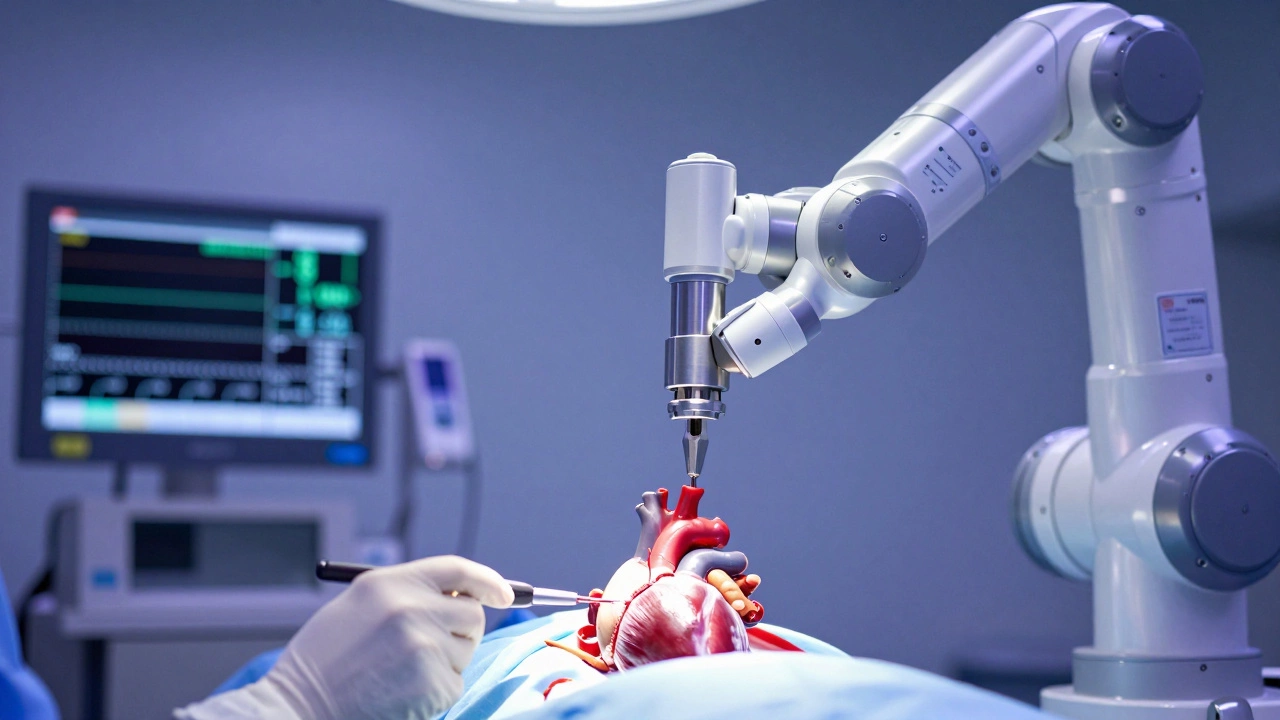
Even with AI-assisted robotics and 3D mapping, certain surgeries stay dangerous. Any procedure involving the Central Nervous System-specifically the brainstem-carries a risk of permanent disability or death. Because the brainstem controls basic life functions like breathing and heart rate, a millimeter of error can be fatal. However, the "death rate" here is far lower than the chaotic era of early thoracic surgery.
The risk today usually comes from comorbidities. A patient isn't usually killed by the surgery itself, but by their body's inability to handle the stress. A person with advanced diabetes and kidney failure is at a much higher risk during a heart valve replacement than a healthy 50-year-old. We've moved from a world where the surgeon's tools were the danger to a world where the patient's underlying health is the primary risk factor.
What was the single most dangerous surgery in history?
There isn't one single surgery, but early attempts at open-heart surgery in the early 20th century were the most lethal. Before the invention of the heart-lung machine, any attempt to open the heart usually resulted in immediate death due to oxygen deprivation to the brain.
Why were surgeries so deadly before 1900?
The three main killers were shock from pain (lack of anesthesia), massive blood loss (lack of blood transfusion technology), and sepsis. Because surgeons didn't understand germs, they unknowingly transferred bacteria from one patient to another, leading to fatal infections.
Is heart surgery still dangerous today?
While still a major operation, it is exponentially safer. Most routine heart surgeries now have a mortality rate of less than 5%. The risk depends heavily on the patient's age, overall health, and the specific type of procedure being performed.
What is the "Forbidden Zone" in surgery?
Historically, the "Forbidden Zone" referred to the heart and the brain. For centuries, medical consensus was that these organs were too complex and vital to be operated on without causing instant death or permanent vegetative states.
How did antibiotics change surgical death rates?
Antibiotics, starting with Penicillin in the 1940s, virtually eliminated the era of "death by infection." They allowed surgeons to perform longer, more invasive procedures because they could treat the inevitable bacterial contamination that occurred during surgery.
Next Steps for Understanding Surgical Risk
If you or a loved one are facing a high-risk procedure, the best way to mitigate danger is through a "Pre-habilitative" approach. This means optimizing your heart and lung health through guided exercise and nutrition before the operation. Ask your surgeon about the specific "30-day mortality rate" for your exact procedure at their specific hospital-not just the national average. This gives you a concrete data point on the actual risk involved in your specific scenario.


Write a comment