Ayurvedic Meal Timing Calculator
Calculate Your Ideal Meal Times
Based on Ayurvedic principles, your body's digestion is strongest between 12-2pm. Find your optimal eating windows based on your wake-up time.
Most people think eating is just about what you eat. But in Ayurveda, when you eat matters just as much as what’s on your plate. If you’ve ever felt bloated after dinner, sluggish after lunch, or hungry at 10 p.m. despite eating a big meal earlier-you’re not broken. You’re just out of sync with your body’s natural rhythm. Ayurveda, an ancient Indian system of health that’s been practiced for over 5,000 years, doesn’t just tell you what to eat. It tells you exactly when to eat it.
Why Timing Matters More Than You Think
Ayurveda sees the body as a living clock. Every function-digestion, energy, sleep, hormone release-follows a daily cycle tied to the sun and the elements. Your digestive fire, called agni, rises and falls throughout the day. Eat when it’s low? You’ll get gas, weight gain, or fatigue. Eat when it’s strong? Food turns to energy, not waste.
Think of it like this: you wouldn’t try to light a campfire with wet wood and no breeze. Your body is the same. If you eat when your digestive fire is weak, no amount of healthy food will help. Timing is the match.
The Three Main Eating Windows
Ayurveda doesn’t recommend three meals at 8 a.m., 1 p.m., and 7 p.m. like modern diets. Instead, it aligns meals with natural energy shifts. Here’s the real schedule:
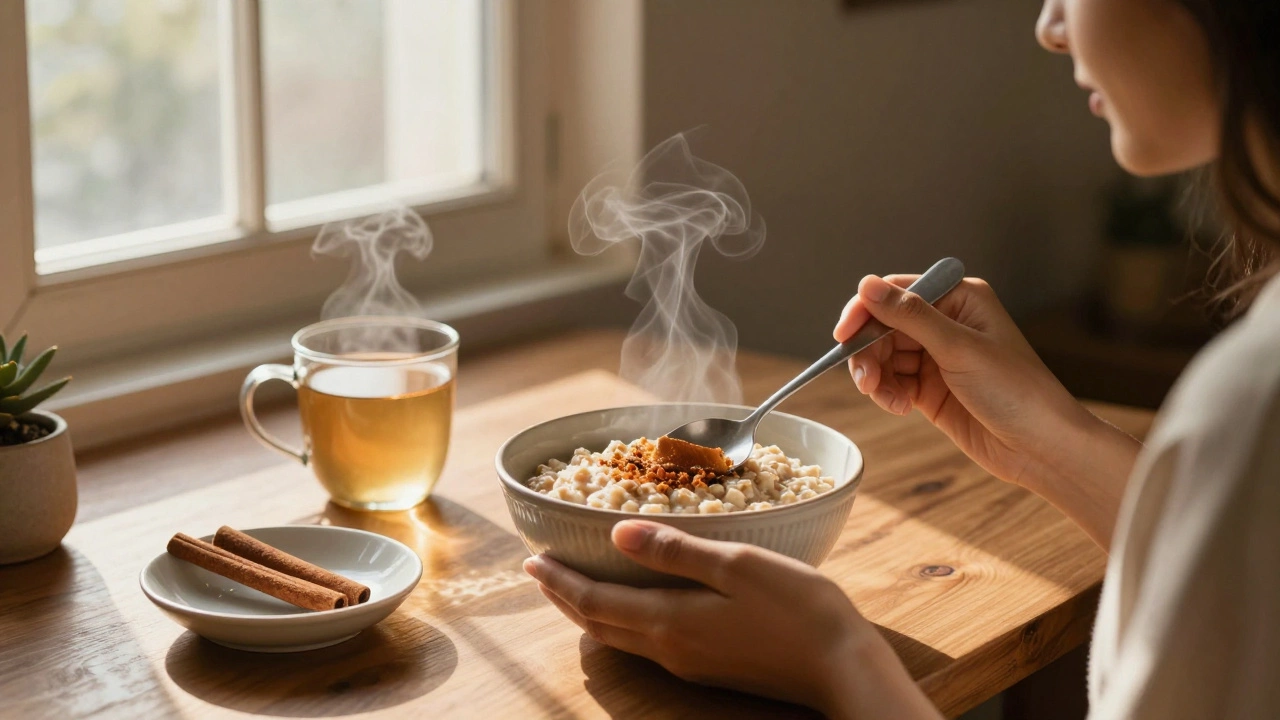
- Breakfast: 7 a.m. to 9 a.m. - This is when the body’s energy is dominated by Kapha, the earth and water element. Your body is still waking up, so eat something light and warm. Oatmeal with cinnamon, steamed vegetables, or warm lemon water with ginger. Avoid heavy dairy, fried foods, or cold cereal.
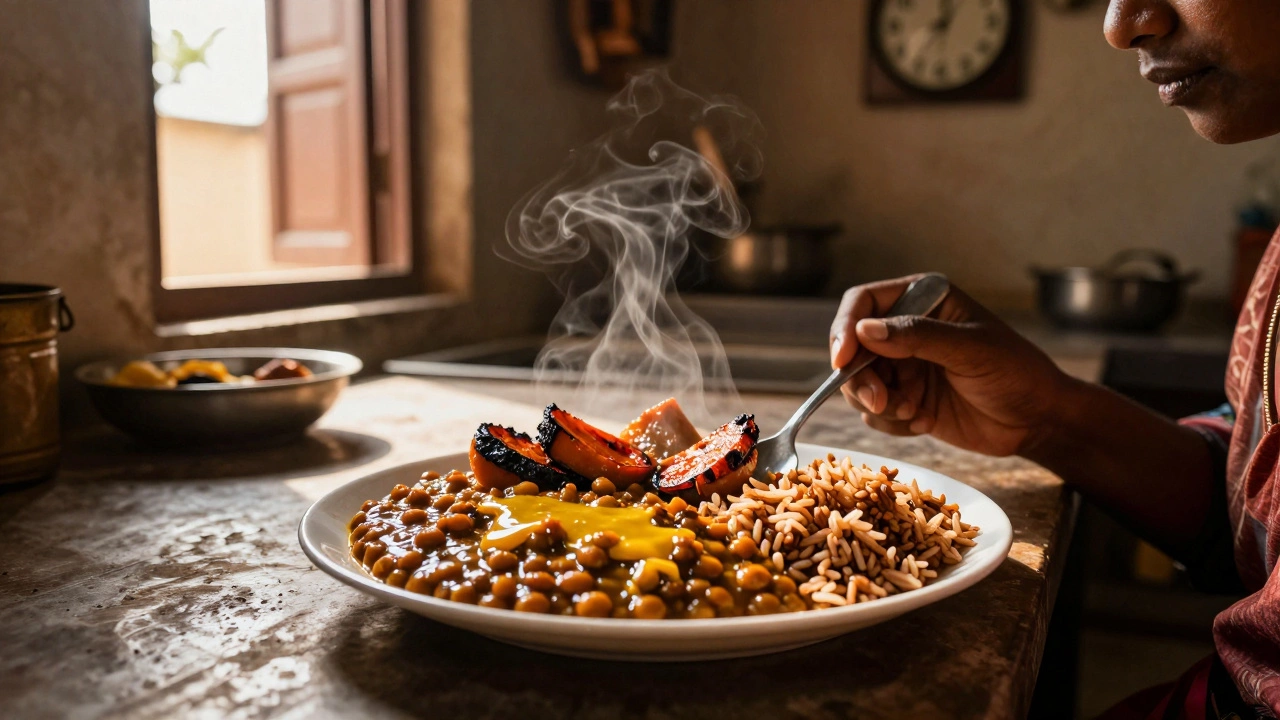
- Lunch: 12 p.m. to 2 p.m. - This is your peak digestive time. Pitta, the fire element, is strongest. Your stomach acid, enzymes, and metabolism are at their highest. This is the only meal you should eat like a king. Include protein, whole grains, healthy fats, and vegetables. A bowl of lentils with brown rice, roasted veggies, and ghee is perfect.
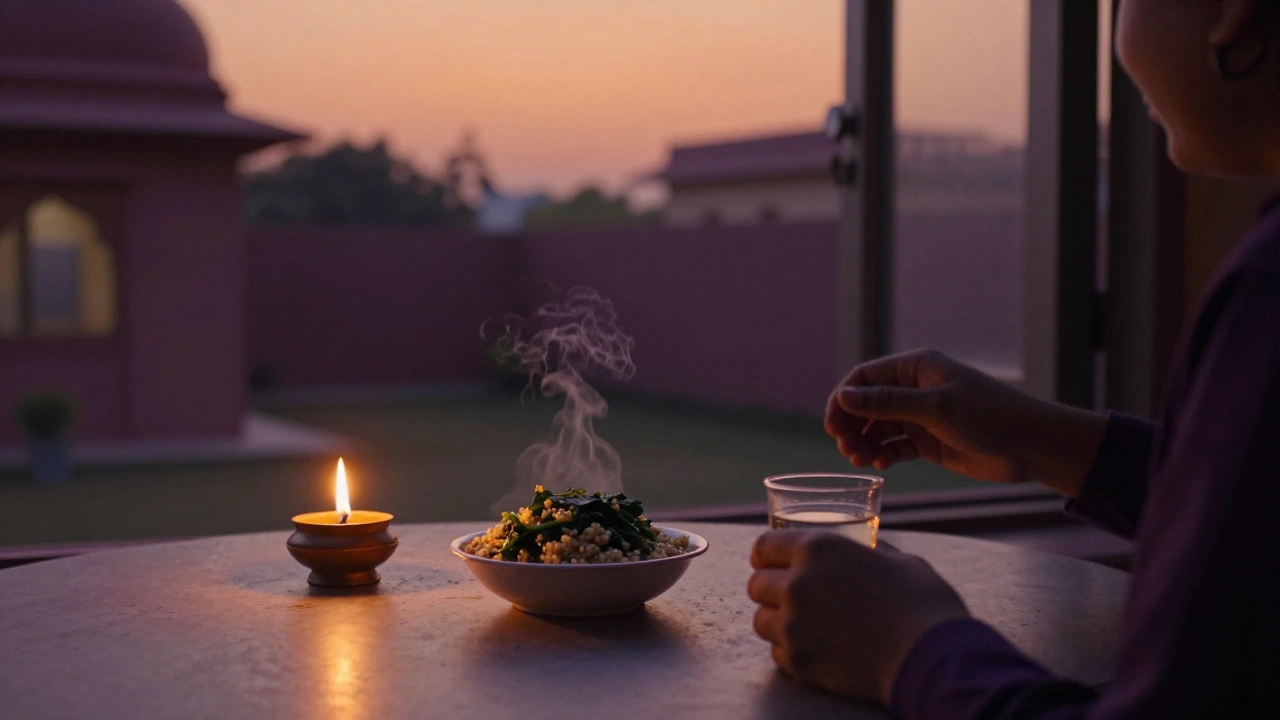
- Dinner: 6 p.m. to 7 p.m. - By now, Kapha is returning. Digestion slows down. Eat your lightest meal here. Think soup, steamed greens, quinoa, or a small portion of cooked vegetables. No fried food. No dairy. No leftovers. Stop eating at least three hours before bed.
That’s it. Three meals. No snacks. No midnight ice cream. No 9 p.m. smoothies. If you’re hungry between meals, drink warm water with a pinch of cumin or fennel. It helps calm cravings without taxing digestion.
Why Skipping Lunch or Eating Late Ruins Your Health
Most people skip lunch because they’re busy. Or they eat dinner at 9 p.m. because that’s when they get home. Both habits break Ayurvedic rhythm-and they have real consequences.
When you skip lunch, your body thinks it’s in starvation mode. It starts storing fat, slows metabolism, and craves sugar later. You end up eating more at night, which your body can’t digest. That’s why so many people wake up bloated, with acid reflux, or feeling tired all day.
Eating late? Your body is trying to sleep, not digest. The liver, which cleans toxins, needs to work between 11 p.m. and 3 a.m. If it’s busy breaking down pizza or curry, it can’t do its job. Over time, this leads to toxins building up in the body-what Ayurveda calls ama. Ama causes inflammation, weight gain, brain fog, and even chronic disease.
Studies from the Indian Institute of Ayurvedic Sciences show that people who followed a strict Ayurvedic meal schedule for 8 weeks had 30% less bloating, 40% better sleep, and 25% more energy. They didn’t change what they ate-just when.
What About Snacks and Drinks?
Ayurveda doesn’t ban snacks. It bans the wrong snacks at the wrong time.
- Between meals? Sip warm water. Add a pinch of black salt, cumin, or ginger. It cleanses the digestive tract.
- Craving something sweet? Eat a dried fig or two. Or a spoon of honey in warm water. Never cold honey-it’s hard to digest.
- Need a drink? Only warm or room-temperature liquids. Cold water or iced tea shuts down digestion. Even a glass of cold milk after dinner can cause mucus buildup.
And no coffee before 9 a.m. It spikes cortisol when your body should be calming down. Wait until after lunch if you need it.
Seasonal Adjustments
Ayurveda isn’t rigid. It adapts to seasons. In winter, when days are shorter, you can shift meals slightly later. Eat dinner at 7:30 p.m. instead of 6:30 p.m. In summer, when days are long, eat lunch a bit earlier-maybe 11:30 a.m.
The key is consistency. Don’t eat dinner at 7 p.m. one day and 10 p.m. the next. Your body thrives on routine. Even if you’re traveling or working late, try to stay within a one-hour window.
What to Avoid
Here are the top five mistakes people make with Ayurvedic eating times:
- Eating after 8 p.m.
- Skipping lunch or eating a salad instead of a warm, cooked meal
- Drinking cold beverages with meals
- Snacking on chips, chocolate, or crackers between meals
- Waiting until you’re starving to eat-this triggers overeating and poor digestion
If you do one thing differently this week, make it this: stop eating after 7 p.m. and eat lunch between 12 and 2 p.m. That alone will change how you feel by next Monday.
How to Start Today
You don’t need to overhaul your life. Start small:
- Set a phone reminder for 6:30 p.m. to stop eating.
- Prepare your lunch the night before so you’re not tempted to skip it.
- Drink a cup of warm ginger tea 20 minutes before each meal-it wakes up your digestion.
- For three days, write down what you eat and when. You’ll see patterns you never noticed.
After a week, you’ll feel lighter. Your sleep will improve. Your cravings will fade. Your energy will stabilize. That’s not magic. That’s your body working the way it was designed to.
Can I eat fruit at any time in Ayurveda?
Fruit should be eaten alone, on an empty stomach, and only in the morning before 10 a.m. That’s because fruit digests quickly and ferments if mixed with other foods. Apples, pears, or papaya are best. Avoid bananas or dried fruit later in the day-they’re harder to digest and can create mucus.
Is it okay to have a light snack after dinner if I’m hungry?
No. If you’re hungry after dinner, it means you didn’t eat enough at lunch or ate something hard to digest. Instead of snacking, drink warm water with a teaspoon of ghee and a pinch of black salt. It soothes hunger without burdening digestion. If you’re truly hungry, your body is signaling a deeper imbalance-like poor lunch quality or stress.
What if I work night shifts? Can I still follow Ayurvedic eating times?
Yes, but you flip the schedule. Your main meal should be when you’re most active, even if that’s 3 a.m. Eat your largest meal during your waking hours, and your lightest meal before sleep-even if sleep is during the day. The key is consistency: eat when your body is awake, not when the sun is up.
Does Ayurveda say you must eat vegetarian?
No. Ayurveda doesn’t require vegetarianism. But it does say meat should be eaten sparingly, only if your body type (dosha) needs it, and always cooked with digestive spices like cumin, turmeric, and ginger. For most people, plant-based meals are easier to digest and align better with the daily rhythm.
How long does it take to see results from following Ayurvedic meal times?
Most people notice less bloating and better sleep within 3-5 days. Energy levels stabilize in about a week. Digestive issues like acid reflux or constipation often improve in 2-3 weeks. The deeper benefits-clearer skin, better mood, fewer cravings-show up after a month of consistent timing.




Write a comment