Kidney Safety & Herb Risk Checker
You might be reaching for that bottle of herbal tea or natural supplement thinking you’re doing your body a favor. After all, it’s “natural,” right? But here is the hard truth: nature produces some of the most potent toxins on earth. Your kidneys are the filters of your body, working tirelessly to remove waste from your blood. When you introduce certain plants into that mix, you aren’t just adding flavor; you might be introducing compounds that those tiny filters can’t handle.
It is a common misconception that if something grows in the ground, it is safe to consume in large quantities. In reality, several popular herbs and traditional remedies carry significant risks for kidney damage, ranging from acute injury to long-term failure. Understanding which plants to avoid is not about fear-mongering; it is about protecting one of your most vital organs.
The Silent Threat: Aristolochic Acid
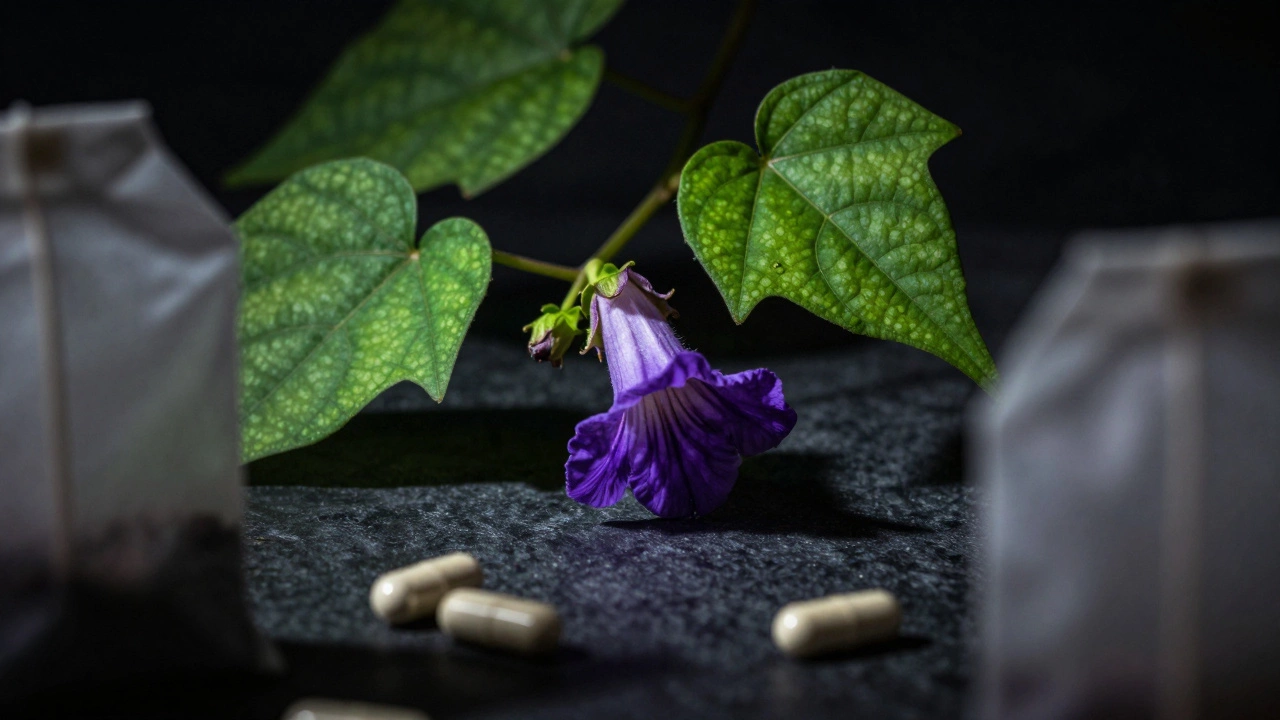
If there is one compound you need to know about when discussing kidney health, it is Aristolochic acid. This is a group of toxic chemicals found in plants belonging to the Aristolochia genus, commonly known as birthwort or pipevine.
This isn't a minor side effect. Aristolochic acid is classified as a Group 1 carcinogen by the International Agency for Research on Cancer (IARC). It causes a specific type of kidney disease known as Aristolochic Acid Nephropathy (AAN). The damage it does is often irreversible. Once the scar tissue forms in the kidneys, the function loss is permanent.
Here is why this is tricky: these plants have been used in traditional Chinese medicine and other folk practices for centuries under different names. You might see them listed as:
- Aristolochia fangchi
- Aristolochia contorta
- Aristolochia manshuriensis
- Guang Fang Ji (a traditional herb name)
In the 1990s, a cluster of young women in Belgium developed rapid kidney failure after taking a weight-loss pill containing Aristolochia fangchi. This event, known as the "Chinese Herb Nephropathy" scandal, brought global attention to the danger. Today, many countries ban these plants, but unregulated online supplements can still slip through the cracks. Always check the Latin name on the label, not just the common name.
High Potassium Risks: Licorice Root and Others
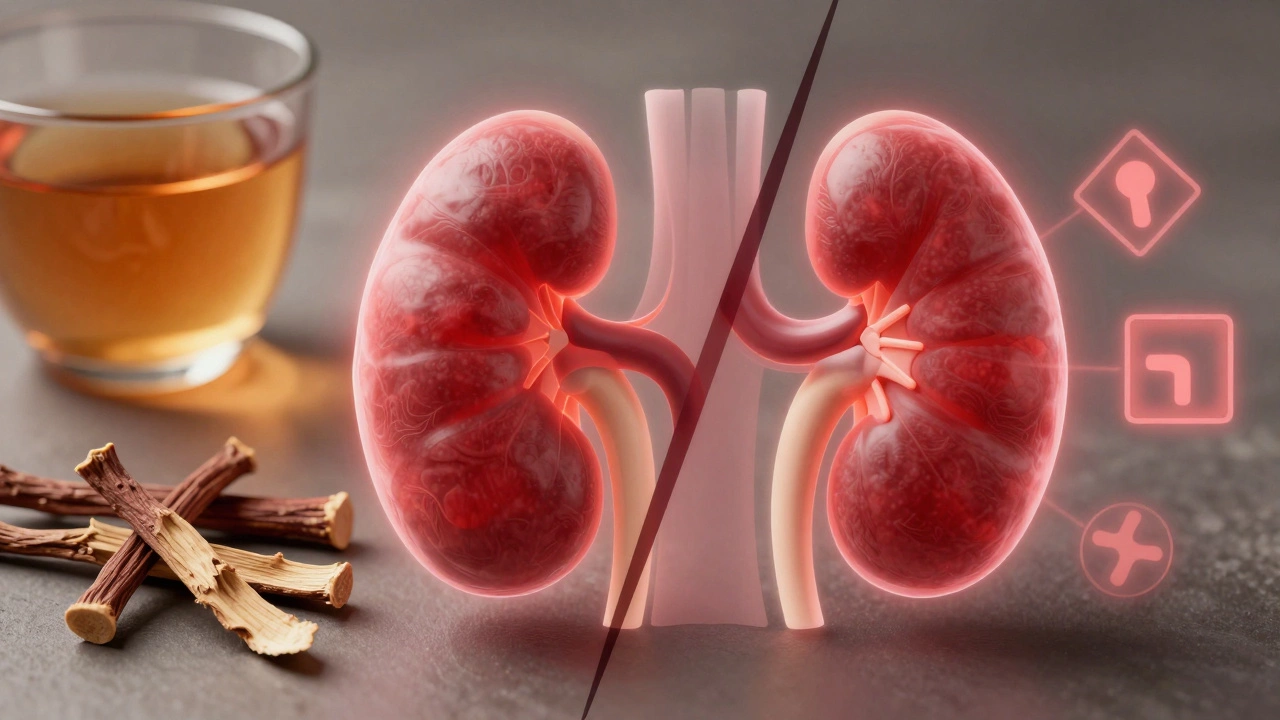
Not all kidney-damaging herbs work by direct toxicity. Some disrupt the chemical balance your kidneys strive to maintain. One prime example is Licorice root (Glycyrrhiza glabra). While widely used for digestive issues and sore throats, licorice root contains glycyrrhizin.
Glycyrrhizin interferes with an enzyme called 11β-hydroxysteroid dehydrogenase type 2. This leads to a condition called pseudoaldosteronism. Essentially, your body retains too much sodium and excretes too much potassium. For healthy kidneys, this might just cause high blood pressure. For someone with existing kidney disease, the sudden drop in potassium (hypokalemia) and spike in blood pressure can strain the kidneys further, leading to acute injury.
Be careful with products labeled "DGL" (deglycyrrhizinated licorice), as these have had the problematic compound removed. However, standard licorice candy, teas, and supplements pose a real risk if consumed daily for more than a few weeks.
Herbs That Interact With Medications
Your kidneys don't work in isolation. They process medications. If you take drugs for blood pressure, diabetes, or pain, certain herbs can turn those medications into toxins.
Consider St. John’s Wort (Hypericum perforatum). It is famous for treating mild depression. However, it induces liver enzymes that break down drugs faster. If you are on immunosuppressants like cyclosporine or tacrolimus-common for transplant patients-St. John’s Wort can lower drug levels in your blood to dangerous lows, causing the body to reject the new organ, which then fails.
Then there is Ginkgo biloba. Often taken for memory and circulation, it thins the blood. If you combine it with NSAIDs (like ibuprofen) or aspirin, you increase bleeding risk. While this doesn't directly poison the kidney tubules, the resulting internal bleeding or hypotension (low blood pressure) can reduce blood flow to the kidneys, causing ischemic injury.
The Heavy Metal Problem: Contaminated Supplements
Sometimes, the herb itself isn't the problem-it's what grew with it. Plants are excellent at absorbing minerals from soil, including heavy metals like lead, mercury, cadmium, and arsenic. These metals accumulate in the kidneys over time, causing oxidative stress and cellular death.
This is particularly prevalent in:
- Ayurvedic Rasayanas: Some traditional Ayurvedic preparations use processed metals (bhasmas). If not prepared correctly according to strict ancient protocols, they can contain toxic levels of lead and mercury.
- Wild-Harvested Herbs: Plants grown near industrial areas or old mining sites may absorb heavy metals. Without third-party testing, you have no way of knowing.
A study published in the *Journal of Clinical Pharmacy and Therapeutics* found that a significant percentage of imported herbal supplements contained undeclared pharmaceutical ingredients or heavy metals exceeding safety limits. The FDA has issued numerous warnings about this, but the burden of verification often falls on the consumer.
Comparison of High-Risk Herbs for Kidney Health
| Herb Name | Primary Risk Mechanism | Severity Level | Key Warning Sign |
|---|---|---|---|
| Aristolochia species | DNA damage, fibrosis | Critical (Irreversible) | Rapid loss of function, cancer risk |
| Licorice Root | Potassium depletion, hypertension | Moderate to High | Swelling, muscle weakness, high BP |
| Ephedra (Ma Huang) | Vasoconstriction, reduced blood flow | High | Heart palpitations, stroke risk |
| Goldenseal | Berberine toxicity in high doses | Moderate | Nausea, potential liver/kidney strain |
| Hawthorn | Drug interactions (digoxin) | Moderate (Context-dependent) | Dizziness, irregular heartbeat |
Who Is Most at Risk?
If you have perfectly healthy kidneys, your body can usually filter out small amounts of plant toxins without lasting harm. However, certain groups face a much higher danger zone:
- People with Chronic Kidney Disease (CKD): Even mild stressors can push CKD stages forward. Stage 3+ patients should avoid almost all non-prescribed herbal supplements unless cleared by a nephrologist.
- Kidney Transplant Recipients: As mentioned with St. John’s Wort, interactions with immunosuppressants can be fatal.
- Elderly Individuals: Kidney function naturally declines with age. What was safe at 40 might be toxic at 70 due to reduced filtration rates (GFR).
- Dehydrated People: Concentrated urine increases the contact time between toxins and kidney lining. Herbal diuretics combined with dehydration create a perfect storm for crystal formation and blockage.
How to Stay Safe: A Practical Checklist
You don’t need to give up all herbs to protect your kidneys. You just need to be smarter about how you use them. Here is a practical approach to navigating the world of herbal supplements safely.
- Check the Latin Name: Common names vary by region. Aristolochia is always bad. Look for the scientific binomial name on the ingredient list.
- Ask for Third-Party Testing: Look for seals from USP (United States Pharmacopeia), NSF International, or ConsumerLab.com. These organizations test for heavy metals and contaminants.
- Talk to Your Doctor: Bring your actual bottles to your next appointment. Don’t just say "I take herbs." Show them the labels. Doctors often don't ask because they assume you will volunteer this information.
- Avoid "Detox" Teas: Many detox teas contain senna or cascara sagrada, which are harsh laxatives. Chronic diarrhea leads to dehydration and electrolyte imbalances that stress the kidneys.
- Monitor Your Blood Pressure: Since many herbs affect blood pressure, keep an eye on your readings. Uncontrolled hypertension is the second leading cause of kidney failure.
Understanding Nephrotoxicity
To truly understand why these herbs are dangerous, it helps to know what happens inside the kidney. Nephrotoxicity refers to kidney damage induced by substances. The kidneys receive about 20-25% of cardiac output, meaning they are exposed to high concentrations of filtered blood.
When a toxin enters the system, it can damage three main parts:
- The Glomerulus: The initial filter. Damage here leads to protein leaking into urine (proteinuria).
- The Tubules: Where reabsorption happens. Acute Tubular Necrosis (ATN) is a common result of herbal toxicity, where cells die and block the tube.
- The Interstitium: The tissue between structures. Inflammation here (interstitial nephritis) can be caused by allergic reactions to herbs like goldenseal or echinacea.
Early signs of herbal-induced kidney damage are subtle. You might notice foamy urine (protein), swelling in ankles (fluid retention), or fatigue (anemia). By the time symptoms become obvious, significant damage may have already occurred. Regular blood tests measuring creatinine and eGFR (estimated Glomerular Filtration Rate) are the only way to catch issues early.
Frequently Asked Questions
Can green tea hurt my kidneys?
In normal dietary amounts, green tea is generally safe and may even offer antioxidant benefits. However, green tea extract supplements in high doses have been linked to liver injury, which can indirectly affect kidney health. Stick to brewed tea rather than concentrated pills unless advised by a doctor.
Is turmeric safe for people with kidney stones?
Turmeric contains oxalates, which can bind with calcium to form kidney stones. If you are prone to calcium-oxalate stones, consuming large amounts of turmeric powder or supplements could increase your risk. Culinary use in food is typically fine, but high-dose supplements require caution.
What are the first signs of kidney damage from herbs?
Early signs include changes in urination frequency, foamy or bloody urine, swelling in the legs or face, persistent fatigue, and nausea. Because these symptoms are vague, regular blood and urine tests are crucial for anyone taking herbal supplements regularly.
Are there any herbs that are good for the kidneys?
Some herbs like nettle leaf and dandelion root are traditionally used as gentle diuretics, but evidence is mixed. Reishi mushroom has shown promise in animal studies for reducing inflammation. However, "good" is relative. Always consult a nephrologist before using any herb therapeutically, especially if you have existing kidney conditions.
How long does it take for herbs to damage kidneys?
The timeline varies wildly. Aristolochic acid can cause damage within months of use. Heavy metal toxicity builds up over years. Acute reactions to allergens like goldenseal can happen within days. There is no safe "waiting period" to determine if an herb is harming you; monitoring is essential from day one.




Write a comment