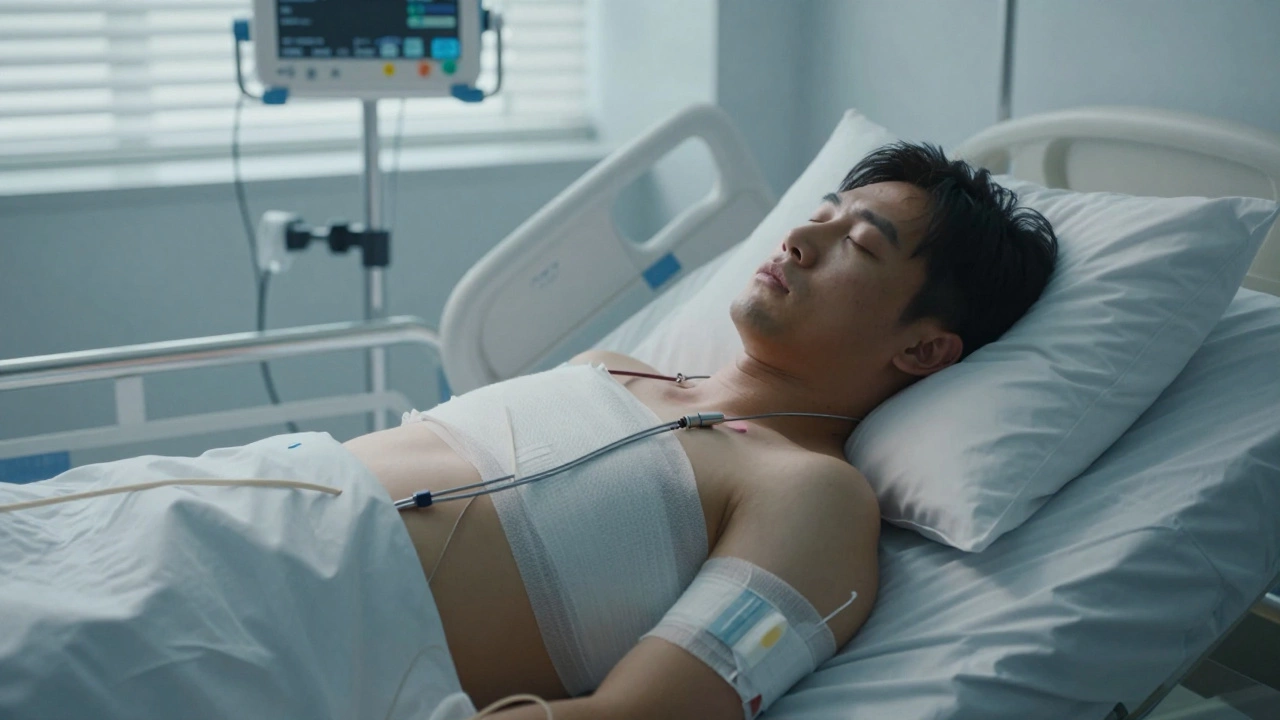
Pain Recovery Estimator
How Severe Is Your Pain?
Estimate your current pain level based on days since surgery using clinical data from heart surgery patients.
Your Expected Pain Level:
Peak Pain 4-14 days
Severe Recovery 15-30 days
Moderate Healing 31-60 days
Mild Symptoms 60+ days
Minimal Discomfort
When people ask about the most painful surgery, they’re usually thinking about the kind that leaves you breathless, wired up, and wondering if you’ll ever sleep normally again. While pain is personal and depends on your body, your nerves, and even your mindset, one procedure stands out in hospital records, patient stories, and surgeon interviews: open heart surgery.
Why Open Heart Surgery Tops the List
Open heart surgery isn’t just one operation-it’s a family of procedures where the chest is cut open, the heart is stopped, and a machine takes over breathing and circulation. The most common version is coronary artery bypass grafting (CABG), done for blocked arteries. But whether it’s valve replacement, aneurysm repair, or congenital defect fixes, the physical trauma is similar.
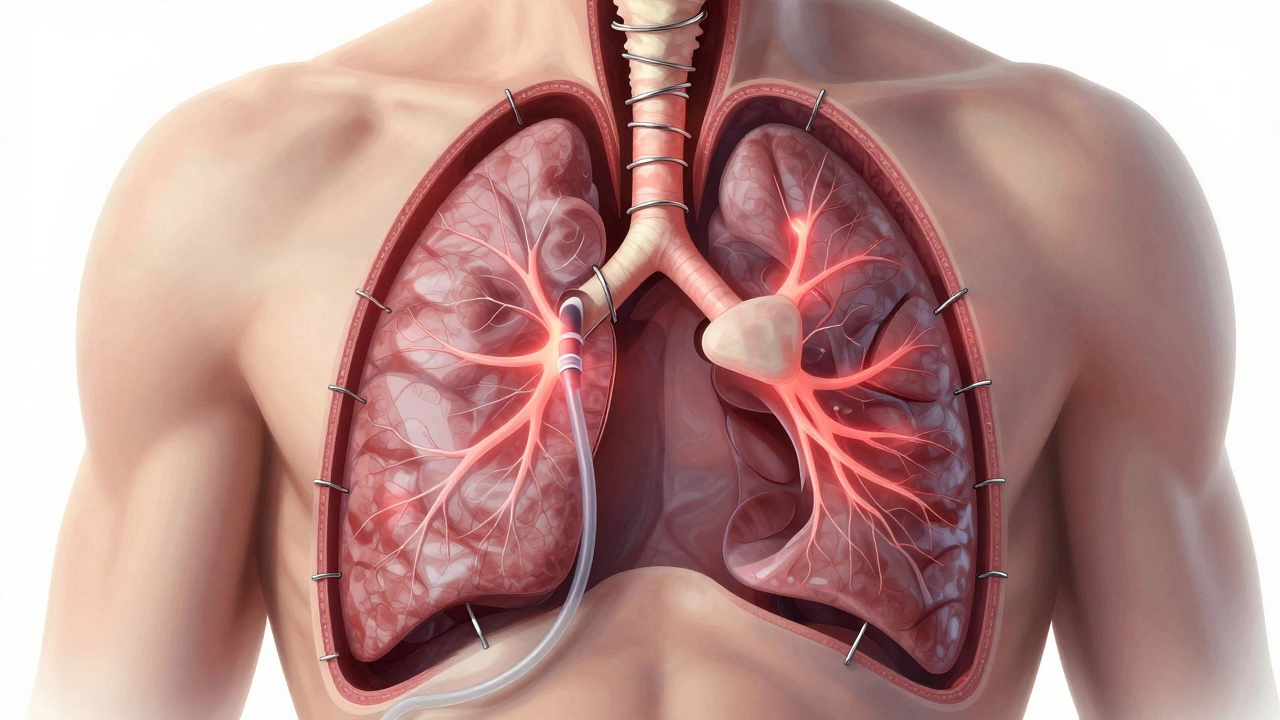
Surgeons make an 8- to 10-inch cut down the center of the chest, saw through the breastbone (sternum), and spread the ribs apart. That’s not a small cut. That’s a full structural break. The sternum doesn’t just heal-it has to be wired back together with stainless steel cables. And those wires stay in forever. You can’t sneeze without feeling it.
Patients often describe the pain as deep, constant, and crushing. It’s not the sharp sting of a cut or the ache of a sprained ankle. It’s the kind of pain that lives in your bones, your lungs, and your chest cavity. One patient from Melbourne, 68, said: "It felt like someone had taken a crowbar and pried my ribs open, then left them that way. Every breath was a battle."
It’s Not Just the Cut
The pain doesn’t come from the incision alone. The real source? The aftermath.
- Sternal healing: The sternum takes 3-6 months to fully fuse. During that time, even light pressure-like hugging someone-can trigger sharp, electric pain.
- Lung collapse: After surgery, your lungs don’t expand well. You’re given breathing exercises, but each deep breath feels like glass in your chest.
- Nerve damage: Cutting through tissue and moving ribs can damage intercostal nerves. That leads to burning, tingling, or stabbing pain that lasts for months.
- Drain tubes: Tubes are inserted to pull fluid out of the chest. They’re removed after a day or two, but pulling them out? Many say it’s worse than the initial surgery.
One study from the Journal of Thoracic and Cardiovascular Surgery tracked 412 patients after CABG. Over 70% reported moderate to severe pain at day three. Even at six weeks, nearly 30% still had pain rated 6 or higher on a 10-point scale. That’s not normal recovery. That’s lingering trauma.
How It Compares to Other "Painful" Surgeries
People often mention amputations, C-sections, or spinal fusions as the most painful. But those don’t match open heart surgery in three key ways:
| Surgery Type | Average Pain Score (1-10) at 72 Hours | Duration of Severe Pain | Long-Term Pain Risk |
|---|---|---|---|
| Open Heart Surgery | 7.8 | 4-12 weeks | High (25-30%) |
| Spinal Fusion | 7.1 | 6-10 weeks | Very High (40%) |
| Amputation | 7.5 | 8+ weeks | Extremely High (50-80%) |
| C-Section | 6.2 | 2-6 weeks | Low (5%) |
| Knee Replacement | 6.8 | 3-8 weeks | Low (8%) |
Spinal fusion has a higher long-term pain rate, but it’s slower to peak. Amputation causes phantom pain that never fully fades. But open heart surgery hits hard, fast, and in a way that traps you in your own body.
Why Recovery Feels Like a Marathon
Most surgeries let you get up and move within days. Not open heart. You can’t lift more than five pounds. You can’t drive. You can’t even roll over in bed without help. For weeks, you’re stuck in a half-recovery state: too weak to do anything, too sore to rest.
Patients often say the worst part isn’t the pain-it’s the isolation. You can’t hug your kids. You can’t sleep on your side. You can’t laugh hard without wincing. The emotional toll is heavy. Depression and anxiety are common in the first three months.
One nurse from Sydney who had CABG last year told me: "I thought I was strong. I was wrong. I cried every night for six weeks. Not because of the pain. Because I couldn’t do anything for myself. Not even scratch my own nose."
What Helps? Real Strategies, Not Just Pills
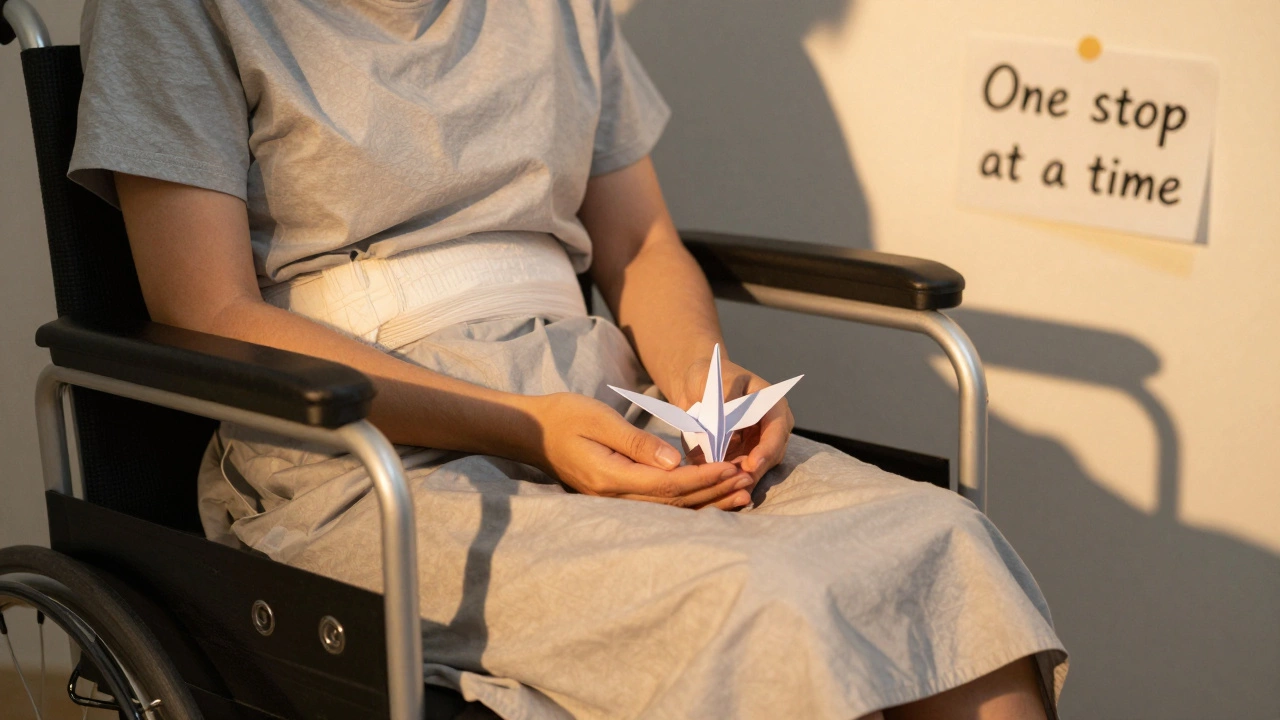
Pain meds help, but they’re not the whole answer. Here’s what actually works:
- Early breathing exercises: Using an incentive spirometer every hour helps prevent lung collapse and reduces chest tightness.
- Positioning: Sleeping in a recliner or propped up with pillows reduces pressure on the sternum.
- Warm compresses: Gentle heat on the shoulders and upper back eases muscle tension caused by bracing during recovery.
- Walking daily: Even 5 minutes a day, twice a day, improves circulation and reduces stiffness. It’s not about speed-it’s about motion.
- Support groups: Talking to others who’ve had the same surgery cuts loneliness and gives practical tips no doctor gives.
Some hospitals now use nerve blocks before surgery. Others use non-opioid pain pumps. But the biggest game-changer? Prehab. Patients who do physical therapy before surgery-strengthening their core, improving lung capacity, learning breathing techniques-recover faster and report 40% less pain.
When Does It Get Better?
Most patients say pain drops sharply after 4-6 weeks. But full healing? That’s 6 months to a year. The sternum doesn’t fuse like a broken arm. It slowly knits back together under tension, like a rope being pulled tight every time you breathe.
By month three, most can sleep on their side. By six months, they can lift their grandchild. By a year, they can mow the lawn without stopping. But the memory of that first month? It stays.
There’s no sugarcoating it: open heart surgery is one of the most physically brutal procedures in modern medicine. It’s not the scar that hurts-it’s the silence of your own body, the way your ribs won’t move the way they used to, the way every cough reminds you that you’re still healing.
But here’s the truth: people do recover. Not just survive-live. They go back to gardening, traveling, dancing with their spouses. They get stronger than before. And that’s the quiet miracle of this surgery-not that it’s painless-but that, against all odds, you come out the other side.
Is open heart surgery the most painful surgery ever?
Open heart surgery is widely considered among the most painful due to the deep trauma to the chest, sternum separation, nerve damage, and long healing time. While amputations and spinal fusions have higher rates of chronic pain, open heart surgery delivers the most intense acute pain and longest period of functional limitation. Patient reports and clinical studies consistently rank it at the top for pain severity in the first 6 weeks.
How long does pain last after open heart surgery?
Severe pain usually peaks in the first 72 hours and begins to ease after 2-4 weeks. Most patients feel much better by 6 weeks, but mild discomfort, stiffness, or sharp pains can last 3-6 months. Full sternum healing takes up to a year. Nerve-related pain (burning or tingling) may linger for over a year in some cases, but it typically fades with time and physical therapy.
Can you avoid pain after heart surgery?
You can’t avoid all pain, but you can significantly reduce it. Pre-surgery physical conditioning (prehab), using non-opioid pain controls, early mobility, proper breathing techniques, and avoiding smoking or alcohol all help. Nerve blocks before surgery and targeted physical therapy after are proven to cut pain levels by up to 40%. Pain management is not just about pills-it’s about preparation and movement.
Why does my chest hurt more at night?
At night, your body is still, and you’re more aware of sensations. Lying flat increases pressure on the sternum and lungs. Also, pain medications wear off overnight, and anxiety can heighten pain perception. Try sleeping in a recliner, using extra pillows to prop your upper body, and doing 5 minutes of slow breathing before bed. It helps more than you think.
Is it normal to still have pain a year after surgery?
Mild discomfort, occasional sharp twinges, or stiffness when reaching or twisting is normal for up to a year. But constant, burning, or worsening pain isn’t. That could mean nerve damage, scar tissue buildup, or even a new heart issue. If pain is getting worse or changing in quality, talk to your cardiologist. Don’t assume it’s just "part of healing."


Write a comment