
Motherhood Role Comparison Tool
This tool helps you understand the different aspects of motherhood when using donor eggs. Select a role below to learn about its significance, legal status, and emotional impact.
Biological Mother
The egg donor provides genetic material. Her DNA shapes the baby's traits.
Gestational Mother
The woman who carries and gives birth to the baby.
Social Mother
The person who raises the child daily and provides emotional connection.
Legal Considerations by Region
Select a country to see how legal recognition of motherhood varies.
Understanding Emotional Impact
Research shows children conceived via donor eggs develop better psychological outcomes when parents are open about origins early.
Human Fertilisation and Embryology Authority (HFEA) found children told before age 7 had better psychological outcomes.
When a couple uses a donor egg to have a baby, the question isn’t just medical-it’s personal, emotional, and often deeply confusing. Who is the real mother? Is it the woman who gave the egg? The one who carried the baby for nine months? Or the one who raises the child? There’s no single answer that fits every family, but understanding the science, law, and heart behind it helps clear the noise.
The biological mother: The egg donor
The egg donor provides the genetic material. Her DNA shapes the baby’s eye color, height potential, even certain personality traits. In a donor egg IVF cycle, her egg is fertilized with sperm-usually from the partner or a sperm donor-and becomes an embryo. That embryo carries her genes. So biologically, she is the genetic mother.But here’s the catch: she doesn’t carry the baby. She doesn’t give birth. She usually has no legal or parenting rights. Most egg donors sign away parental rights before the process begins. They’re not raising the child. They’re not changing diapers or attending school plays. For many donors, it’s a gift-a way to help someone else become a parent.
The gestational mother: The birth mother
This is the woman who carries the pregnancy. Her body changes. She feels kicks. She endures morning sickness, swollen feet, and labor. Her hormones shift. Her uterus grows to hold the baby. She’s the one who delivers.Medically, she’s called the gestational carrier. She has no genetic link to the baby if the egg came from someone else. But her body made the baby possible. She provided the environment. The placenta formed from her tissue. Her blood fed the baby. In many cultures, the woman who gives birth is seen as the true mother-and that’s not just tradition. Science shows that pregnancy affects gene expression through epigenetics. The birth mother’s health, stress levels, and nutrition during pregnancy can influence how the baby’s genes behave.
The social mother: The parenting mother
This is the woman who wakes up at 3 a.m. to feed the baby. Who reads bedtime stories. Who cries when the child gets hurt. Who teaches them to ride a bike and says "I love you" every night.In most legal systems, she’s the mother. She’s listed on the birth certificate. She has custody rights. She makes medical decisions. She’s the one the child calls "Mom." And for the child, she’s the only mother that matters.
Studies from the University of Cambridge show that children born through donor conception who are raised in open, honest families develop just as well emotionally as those born to genetic parents. The key isn’t biology-it’s love, consistency, and security.
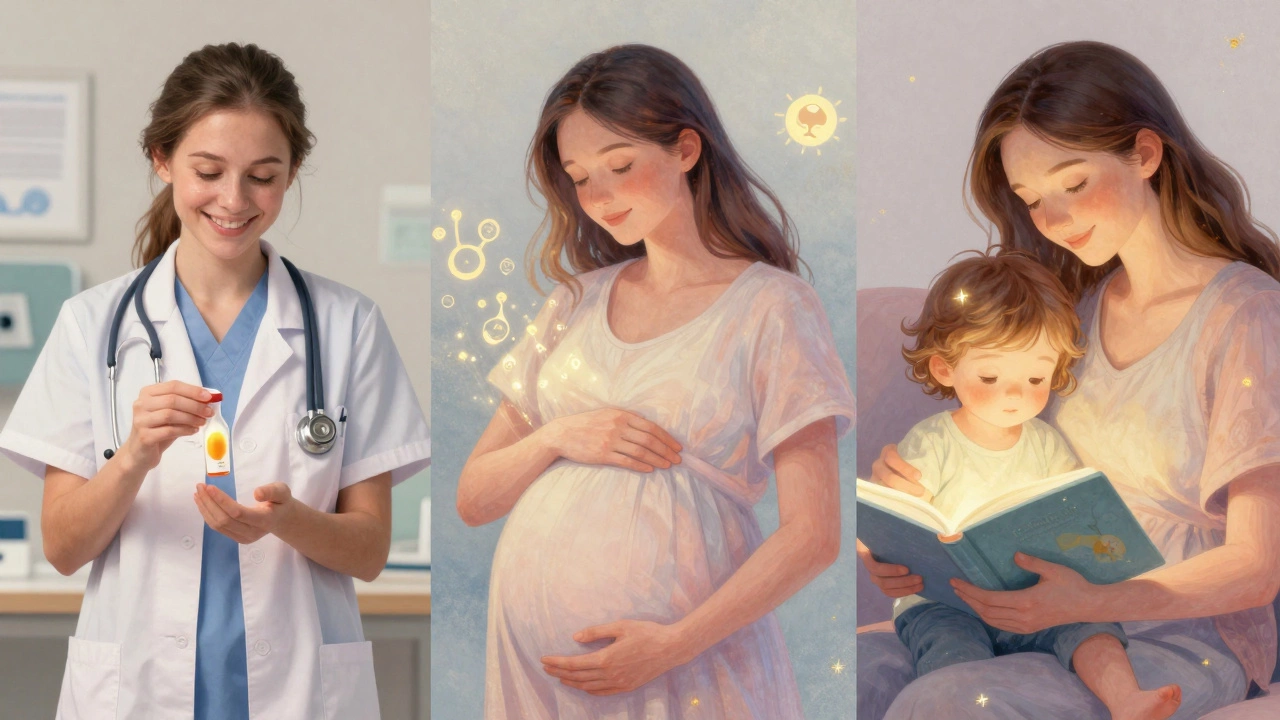
Legal definitions vary by country and state
In the United States, laws differ by state. In California, if a married woman uses donor eggs, her spouse is automatically recognized as the legal parent. In some states, intended parents must go through a second-parent adoption-even if they’re married-to secure full legal rights.In the UK, the woman who gives birth is automatically the legal mother, regardless of genetics. The intended mother must apply for a parental order to become the legal parent. In countries like India and Thailand, foreign couples used to travel for egg donation, but strict laws have changed that. Today, most countries require the intended mother to be legally recognized before birth.
Without proper legal steps, the birth mother could be considered the legal parent-even if she’s a surrogate or a friend helping out. That’s why working with a fertility lawyer is non-negotiable.
Emotional identity: How families navigate this
Many parents using donor eggs worry: "Will my child feel connected to me?" The answer, over time, is usually yes.Parents who talk openly about the egg donation from the start-using age-appropriate language-help their children feel secure. A child who knows they were conceived with the help of a kind stranger doesn’t feel like a secret. They feel like a loved and wanted child.
Some families keep the donor anonymous. Others choose known donors-like a sister or close friend. In those cases, relationships can become complex. A child might grow up knowing their genetic aunt or cousin. That’s not wrong. It’s just different.
Research from the Human Fertilisation and Embryology Authority (HFEA) in the UK found that children conceived via donor eggs who were told about their origins before age 7 had better psychological outcomes than those told later-or never told.
What about the egg donor’s feelings?
Most egg donors don’t see themselves as mothers. They understand they’re helping. Many donate because they’ve seen someone close struggle with infertility. They want to give the gift of parenthood.But some donors later wonder: "Did I make a child?" That’s rare, but it happens. That’s why reputable clinics require psychological screening before donation. Donors are counseled on the emotional impact. They’re reminded: you’re not giving away a baby. You’re giving a cell.

Who is the real mother? The answer is all three
There’s no one-size-fits-all answer. The egg donor gave the DNA. The birth mother gave the womb. The parenting mother gave the love.Think of it like a recipe. The egg donor is the flour. The birth mother is the oven. The parenting mother is the one who serves the cake and makes sure it’s eaten with joy.
For the child, the real mother is the one who holds them when they’re scared. The one who celebrates their first steps. The one who stays up all night when they’re sick.
Biological ties matter. But they don’t define motherhood. Love does.
Common myths about donor egg mothers
- Myth: The baby will feel more connected to the genetic mother.
Truth: Children bond with the person who cares for them daily, not the person who gave the egg. - Myth: Egg donation is like selling a baby.
Truth: Donors are compensated for time and medical burden, not for the child. It’s regulated and legal. - Myth: If you use donor eggs, you’re not "really" a mother.
Truth: Motherhood is built in the everyday moments-not in chromosomes.
What to do next if you’re considering donor eggs
- Speak with a fertility specialist to understand your options.
- Meet with a counselor who specializes in donor conception.
- Consult a lawyer to ensure your parental rights are protected.
- Start thinking about how you’ll explain your child’s origins-when, how, and with what words.
- Connect with other families who’ve used donor eggs. Their stories can help you feel less alone.
There’s no perfect path. But there are many happy endings. Thousands of children are thriving today because someone gave an egg, someone carried a baby, and someone chose to love them unconditionally.
Is the egg donor the legal mother of the baby?
No. In nearly all countries, egg donors sign legal documents giving up all parental rights before the procedure. The intended mother-usually the one who carries the pregnancy or adopts the child-is the legal parent. Courts recognize parenting based on intent and care, not genetics.
Can a woman be the mother if she didn’t give birth or provide the egg?
Absolutely. Many women who use donor eggs and don’t carry the pregnancy themselves still become legal and emotional mothers through adoption or surrogacy arrangements. The law in many places allows intended mothers to be listed on the birth certificate if they meet legal criteria. What matters most is the daily care, love, and commitment they show.
Do donor egg babies look like their mother?
They may resemble the egg donor, not the parenting mother. But families often choose donors who share physical traits with the intended mother-like eye color, hair texture, or facial structure-to help the child feel more connected. Still, environment, nutrition, and upbringing shape appearance too. Many children end up looking more like their parenting mother simply because they spend so much time together.
Is it possible to have a baby with my own egg and carry it if I’m over 40?
It’s possible, but success rates drop sharply after 40. A woman’s egg quality declines with age, leading to higher risks of miscarriage and chromosomal abnormalities. For women over 42, using donor eggs increases the chance of a live birth from under 5% to over 50%. Many choose donor eggs not because they can’t use their own, but because it gives them a much higher chance of having a healthy baby.
Should I tell my child they were conceived with donor eggs?
Experts strongly recommend it. Research shows children who learn about their origins early-before age 7-develop stronger self-esteem and trust in their parents. Keeping it a secret can lead to shock, betrayal, or identity issues later. Start with simple language: "You were made with the help of a very kind woman who gave us her egg. We chose her because we wanted you so much."


Write a comment