B12 Kidney Load Estimator
While Vitamin B12 is water-soluble, high doses can indirectly stress kidneys, especially if you have existing conditions or take specific forms. Use this tool to assess your risk profile.
Risk Assessment
Low RiskWhy this matters:
High doses of Cyanocobalamin require the liver and kidneys to process the cyanide group into thiocyanate. If kidney filtration is reduced, this byproduct can accumulate. Methylcobalamin bypasses this step. Additionally, added minerals like potassium pose a higher risk for those with CKD than the vitamin itself.
You’re popping a gummy or a pill because you want more energy. You read that Vitamin B12 is water-soluble, so your body just pees out whatever it doesn’t need. That sounds safe, right? But here’s the thing: while B12 itself isn’t directly toxic to your kidneys in the way some heavy metals are, taking massive doses can create indirect stress on your renal system, especially if you already have underlying issues. If you’re wondering whether your daily mega-dose is hurting your filters, you’re not alone. This article breaks down exactly what happens when you overload on B12 and who actually needs to worry.
The Myth of "Water-Soluble Means Harmless"
Most people assume that because Vitamin B12 (cobalamin) is a water-soluble vitamin essential for nerve function and DNA synthesis, there’s no upper limit. It’s true that healthy kidneys efficiently filter excess B12 into urine. However, "efficiently filtering" doesn't mean "zero cost." Think of your kidneys like a drain in a sink. A little extra water flows through fine. Dump a bucket of sludge in at once, and even if it eventually clears, you’ve stressed the pipes. With B12, the concern isn’t usually direct cellular toxicity from the vitamin itself, but rather how high concentrations interact with other compounds or existing conditions.
In Australia, the National Health and Medical Research Council (NHMRC) hasn’t set a strict Tolerable Upper Intake Level (UL) for B12 because toxicity is rare. But "rare" doesn’t mean "impossible," particularly for those with compromised renal function. If you’re taking 5,000 mcg or 10,000 mcg daily without a diagnosed deficiency, you might be pushing more than your kidneys need to handle comfortably.
How High Doses Indirectly Stress Renal Function
So, does B12 kill kidney cells? Not typically. The real risk comes from two specific scenarios: interaction with other substances and masking symptoms of actual kidney disease.
First, consider the additives. Many over-the-counter B12 supplements aren’t pure cobalamin. They contain fillers, sweeteners, or other vitamins. Some cheap herbal blends mix B12 with high levels of potassium or phosphorus. For someone with early-stage chronic kidney disease (CKD), these electrolytes are harder to process. If your supplement pack includes hidden minerals, you’re not just loading up on B12; you’re dumping a mineral cocktail into a struggling filtration system.
Second, high B12 levels can mask anemia. If you take huge doses of B12, your blood tests might show normal hemoglobin even if you have folate deficiency or other nutritional gaps. This false sense of security might delay diagnosis of conditions that actually do harm kidneys, such as uncontrolled diabetes or hypertension. You feel great, so you ignore the warning signs until the damage is done.
Who Is Actually At Risk?
Not everyone needs to panic about their morning multivitamin. The risk profile changes drastically depending on your current health status. Here’s a breakdown of who should be cautious:
- People with Chronic Kidney Disease (CKD): If your glomerular filtration rate (GFR) is below 60, your kidneys struggle to clear waste. While they can still excrete B12, the metabolic burden increases. Studies suggest that patients on dialysis often have elevated B12 levels naturally due to reduced clearance, so adding more via supplements can lead to accumulation.
- Those with Leber’s Hereditary Optic Neuropathy: This is a rare genetic condition. High doses of cyanocobalamin (the most common synthetic form of B12) can worsen optic nerve damage. Since this involves vascular health, it indirectly impacts microcirculation, including renal vessels.
- Individuals Taking Specific Medications: Metformin, commonly used for type 2 diabetes, lowers B12 absorption. People often compensate with high doses. However, metformin itself can affect kidney markers. Combining high-dose B12 with long-term metformin use requires monitoring, not necessarily stopping, but watching serum creatinine levels closely.
Cyanocobalamin vs. Methylcobalamin: Does Form Matter?
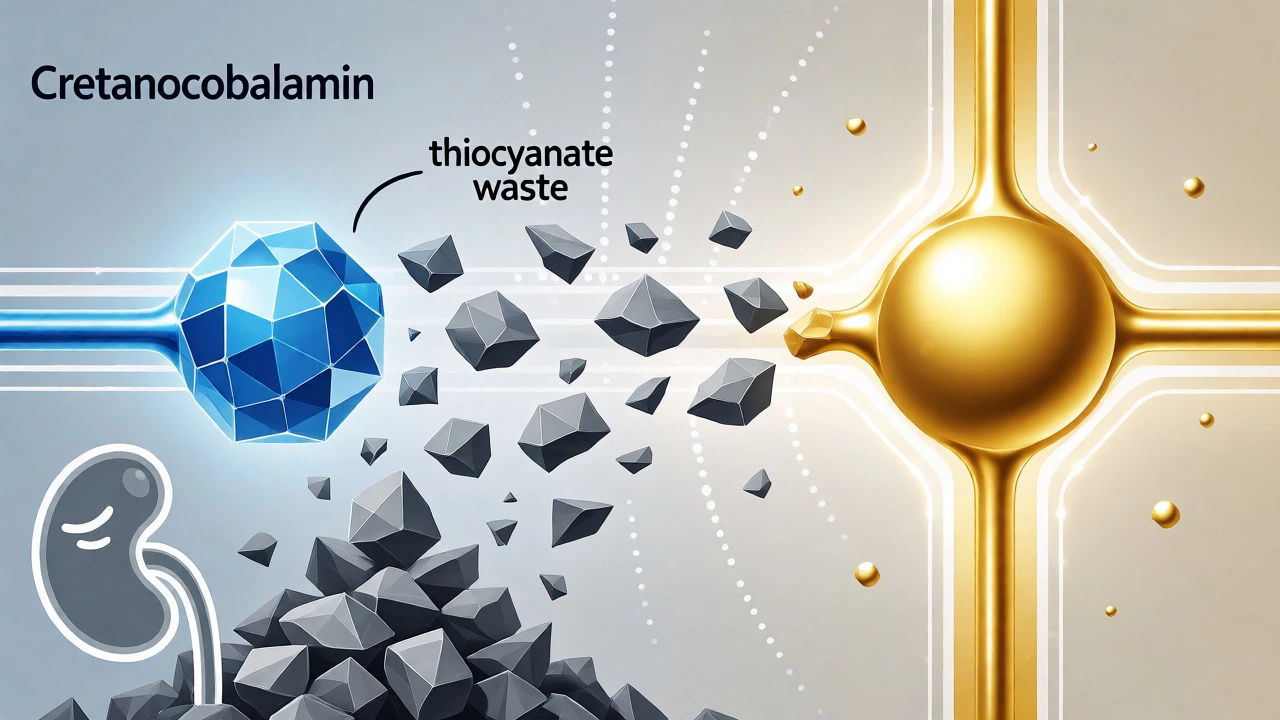
When discussing potential toxicity, the chemical form of B12 matters. Most affordable supplements use Cyanocobalamin. It contains a cyanide molecule attached to the cobalt center. Don’t let the word "cyanide" scare you-the amount is microscopic and safely metabolized by healthy livers and kidneys into thiocyanate, which is then excreted.
However, if your kidney function is impaired, clearing thiocyanate takes longer. In severe renal failure, thiocyanate can accumulate, potentially causing neurological symptoms that mimic B12 deficiency itself. On the other hand, Methylcobalamin is the active coenzyme form found in nature. It bypasses the cyanide step entirely. For anyone worried about renal load, methylcobalamin is generally considered the cleaner option because it doesn’t produce thiocyanate as a byproduct.
| Feature | Cyanocobalamin | Methylcobalamin |
|---|---|---|
| Chemical Structure | Synthetic, contains cyanide group | Natural, active coenzyme form |
| Metabolic Byproduct | Thiocyanate (requires renal excretion) | None significant |
| Stability | Highly stable, cheaper | Less stable, shorter shelf life |
| Best For | General population with healthy kidneys | Individuals with mild renal concerns or liver issues |
Signs You Might Be Overdoing It
Your body usually gives you feedback before serious damage occurs. If you’re taking high doses and notice these symptoms, pause and reassess:
- Acne-like outbreaks: High doses of B12 (and B6) can trigger skin reactions. While not kidney-specific, it signals systemic saturation.
- Jitteriness or Anxiety: Excess B-vitamins can overstimulate the nervous system. If you feel wired after supplementation, your body might be struggling to balance the influx.
- Changes in Urine Color: Bright yellow urine is normal with riboflavin (B2), but if you’re only taking B12 and see unusual sediment or foam, it could indicate protein leakage-a sign of kidney stress unrelated to B12 but worth checking.
It’s crucial to remember that many symptoms attributed to "too much B12" are actually caused by other ingredients in the supplement stack. Always check the label for added iron, calcium, or herbal extracts like ashwagandha, which have their own renal considerations.

What Do the Experts Say?
Australian dietitians generally recommend sticking to the Recommended Dietary Intake (RDI) unless prescribed otherwise. For adults, the RDI is around 2.4 mcg per day. Therapeutic doses for deficiency might range from 500 to 1,000 mcg orally or via injection. Anything above 2,000 mcg daily without medical supervision is entering the realm of self-experimentation.
A study published in the Journal of Clinical Medicine noted that while B12 is non-toxic, extremely high serum levels were associated with increased mortality in some cohorts. Why? Likely because high B12 is a marker of underlying inflammation or liver disease, not the cause. But correlation isn’t causation. If you’re healthy, you don’t need to fear a 1,000 mcg tablet. If you have CKD Stage 3 or higher, consult your nephrologist before starting any new supplement regimen.
Practical Steps for Safe Supplementation
You don’t need to throw away your bottle today. Just optimize how you use it. Here is a simple checklist to keep your kidneys happy while getting your B12 fix:
- Test, Don’t Guess: Get a blood test for Serum B12 and Homocysteine. If your B12 is already high-normal, you likely don’t need more. Supplementing when levels are sufficient adds unnecessary filtration load.
- Choose the Right Form: Switch to methylcobalamin if you have any history of kidney issues or liver sensitivity. It’s slightly more expensive but metabolically cleaner.
- Hydrate Properly: Water-soluble vitamins require adequate fluid intake to be flushed effectively. Aim for at least 2-2.5 liters of water daily in Sydney’s climate, especially if you’re active.
- Monitor Electrolytes: If your supplement has added minerals, ensure your potassium and phosphorus levels are within range. Ask your GP for a basic metabolic panel every six months if you’re on multiple supplements.
- Space Out Doses: If you take a large dose, split it into two smaller ones. This reduces the peak concentration hitting your kidneys at one time, allowing for smoother processing.
Frequently Asked Questions
Does Vitamin B12 cause kidney stones?
No, Vitamin B12 itself does not cause kidney stones. Stones are typically formed from calcium, oxalate, uric acid, or cystine. However, excessive intake of Vitamin C (ascorbic acid), often taken alongside B-complex vitamins, can increase oxalate production, which may contribute to stone formation. Check your multi-vitamin labels for high-dose Vitamin C.
Is 5000 mcg of B12 too much for my kidneys?
For most healthy individuals, 5000 mcg is safe and will be excreted. However, if you have Chronic Kidney Disease (CKD) or are elderly with reduced GFR, this dose is significantly higher than necessary. It won’t necessarily cause immediate damage, but it places an avoidable workload on your filtration system. Consult your doctor for a personalized dose.
Can B12 injections hurt my kidneys?
B12 injections deliver a bolus of the vitamin directly into the bloodstream, leading to very high serum levels quickly. While generally safe, frequent high-dose injections in patients with renal impairment can lead to transient spikes in plasma volume and solute load. Monitor your blood pressure and renal markers if you receive weekly injections long-term.
Which B vitamins are hardest on the kidneys?
Vitamin B6 (pyridoxine) is more concerning than B12. Long-term high doses of B6 (over 100 mg/day) can cause neuropathy and may accumulate in renal failure. Niacin (B3) in high doses can also impact liver and kidney function. B12 remains one of the safest B vitamins regarding direct organ toxicity.
Should I stop taking B12 if my levels are high?
If your blood test shows elevated B12 without supplementation, investigate the cause first. High B12 can signal liver disease, leukemia, or kidney dysfunction. If you are supplementing and levels are high, reducing the dose or frequency is wise. There is no benefit to maintaining excessively high levels beyond what your body uses.




Write a comment