
Heart Surgery Recovery Assessment Tool
This tool helps you assess your readiness for intimate activity based on medical guidelines from the article. It is not medical advice. Always consult your cardiologist.
Your Recovery Status
Key Safety Indicators
Your heart requires 6-8 weeks to heal before exertion. The American Heart Association recommends climbing two flights of stairs without symptoms as the safety benchmark.
Enter your information and click "Assess Safety" to see results
After heart surgery, many people wonder: can you have oral after heart surgery? It’s a quiet question-often left unasked because it feels awkward or embarrassing. But it’s a real concern, and the answer isn’t as simple as yes or no. The truth is, your body is healing, and your heart is still adjusting. What’s safe for one person might not be safe for another.
When does the heart actually heal after surgery?
Heart surgery isn’t like getting a cut stitched up. Even a simple coronary artery bypass graft (CABG) leaves your chest open, your sternum split, and your heart under stress. The sternum takes about 6 to 8 weeks to fuse back together. During that time, any activity that raises your heart rate or puts pressure on your chest can risk reopening the incision or triggering complications like arrhythmias or even a heart attack.
By week 8, most people are cleared for light physical activity-walking, climbing stairs, light housework. But intimacy? That’s a different level of exertion. Oral sex, for example, doesn’t involve full-body movement like intercourse, but it still requires physical effort. You’re using muscles in your neck, jaw, and core. Your heart rate can spike. Blood pressure can rise. For someone with a weakened heart, that’s risky.
What does the American Heart Association say?
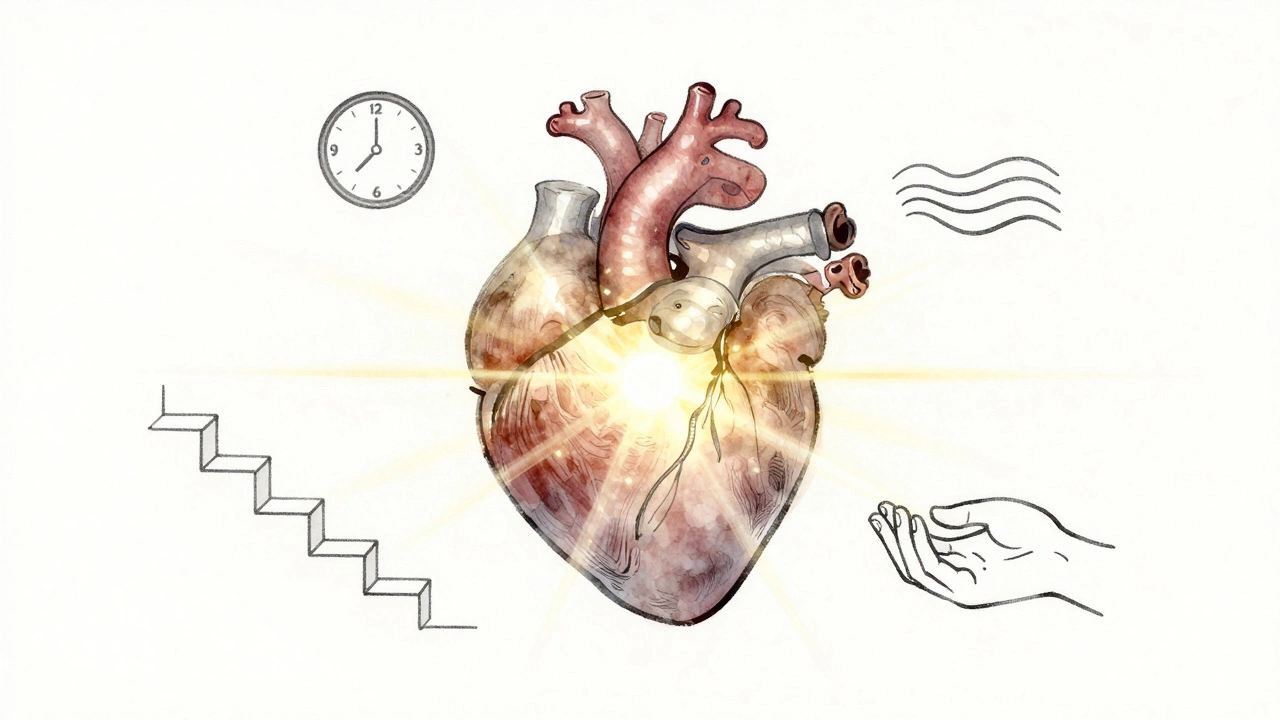
The American Heart Association doesn’t give a direct yes-or-no answer for oral sex after heart surgery. But they do say this: “Patients should resume sexual activity when they feel physically ready and can climb two flights of stairs without chest pain or shortness of breath.” That’s the standard test doctors use.
If you can walk up two flights of stairs without stopping, your heart is likely strong enough to handle the mild to moderate exertion of oral sex. But if you’re still getting winded at the first step, you’re not ready. And that’s okay. Healing isn’t a race.
What kind of exertion are we talking about?
Oral sex isn’t just a quick act. It can last 10 to 20 minutes. During that time, your heart rate might climb from 70 beats per minute to 110 or even 130. Blood pressure can rise by 20 to 40 points. For someone who just had bypass surgery, that’s a big jump.
Compare it to a brisk walk or light cycling. If you’re cleared for those, you’re likely cleared for oral sex-but with caution. You need to be in control. No rushing. No straining. No positions that put pressure on your chest. And definitely no performance anxiety. Stress spikes your adrenaline, which spikes your heart rate. That’s the last thing you want.
What about the risks?
The biggest risks after heart surgery aren’t infections or rejection-they’re sudden strain on the heart. A 2021 study in the Journal of the American College of Cardiology tracked 1,200 patients who resumed sexual activity after bypass surgery. Only 3% had any cardiac event within the first 3 months. But every single one of those events happened when the person pushed too hard, too fast.
Here’s what to watch for during or after any intimate activity:
- Chest pain or pressure
- Dizziness or lightheadedness
- Irregular heartbeat
- Shortness of breath that doesn’t go away after resting
- Unusual fatigue lasting more than an hour
If any of these happen, stop immediately. Call your doctor. Don’t wait. These aren’t normal side effects-they’re warning signs.
What do surgeons actually tell patients?
In clinics across Sydney, Melbourne, and Brisbane, cardiac surgeons don’t avoid this topic. They bring it up. They say: “Your heart is healing. Be gentle with it.” Most will give you a checklist:
- Wait at least 4 to 6 weeks after surgery before even thinking about intimacy.
- Start slow-kissing, holding hands, cuddling.
- Only move to oral sex if you’re not taking any pain meds that cause drowsiness or low blood pressure.
- Never let your partner be on top or press against your chest.
- Keep the room cool. Heat raises heart rate.
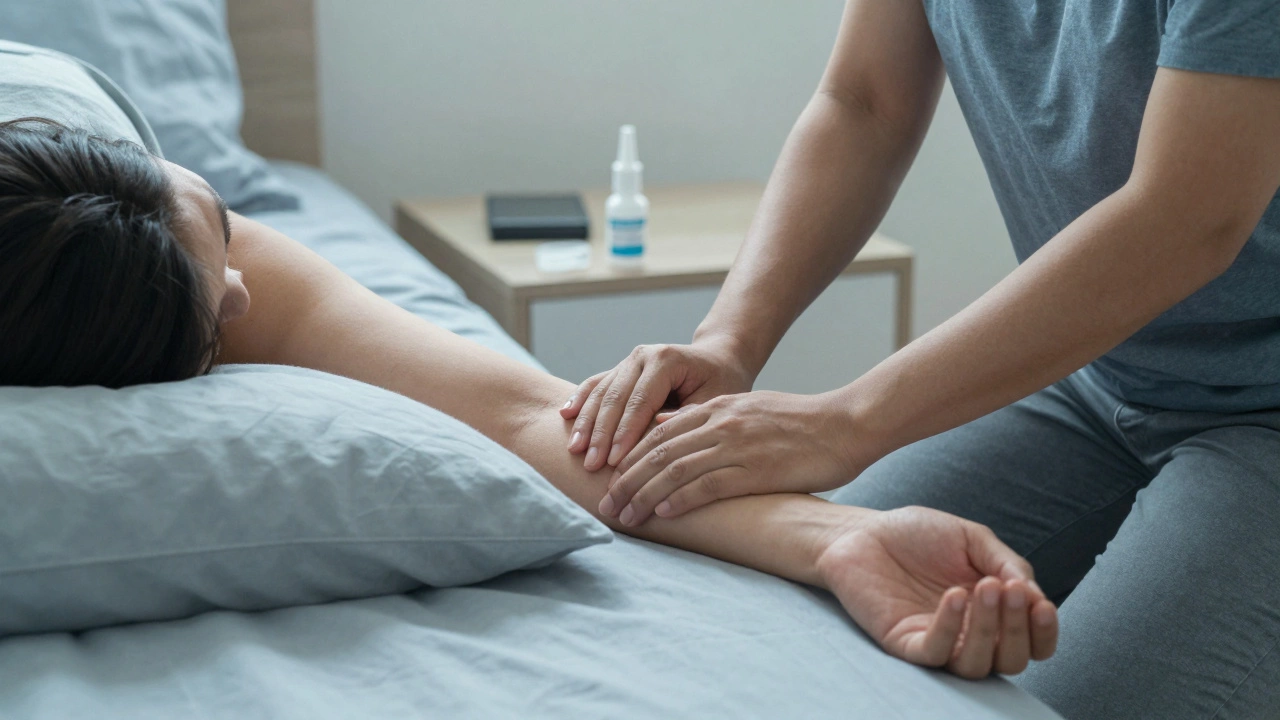
- Have your nitroglycerin spray handy if you were prescribed it.
- Stop if you feel any discomfort-even if it’s just a little.
Some patients report that their partners are nervous too. That’s normal. Many worry they’ll hurt you. Open communication helps. Say: “I want to be close to you, but I need to go slow.” That’s not weakness. That’s wisdom.
What about medications?
Many heart patients take beta-blockers, ACE inhibitors, or diuretics after surgery. These drugs can lower blood pressure and reduce heart rate-which sounds good, right? But they can also cause side effects like fatigue, low libido, or erectile dysfunction. That doesn’t mean oral sex is off-limits. It just means you might need to adjust expectations.
Some men report reduced sensation or slower arousal. Women may feel less lubricated. That’s not failure-it’s medicine. Talk to your cardiologist about whether your meds might be affecting your sexual response. Sometimes, a small dose change or timing adjustment helps.
When is it safe to try?
There’s no universal timeline. One person might feel ready at 5 weeks. Another might need 10. It depends on:
- What type of surgery you had (bypass, valve replacement, stent, etc.)
- Your age and overall health before surgery
- How well you followed rehab instructions
- Whether you have other conditions like diabetes or high blood pressure
Most doctors recommend a follow-up stress test around 6 to 8 weeks. That’s when they’ll check how your heart responds to physical strain. If you pass that test, you’re likely cleared for most activities-including oral sex-with the precautions above.
What if you’re not ready?
That’s completely normal. Recovery isn’t linear. Some people feel emotionally drained after heart surgery. Depression and anxiety are common. You might not feel like being intimate at all-and that’s okay.
Intimacy isn’t just physical. Holding hands, sharing a bath, watching a movie together, even just talking-those count. Don’t let societal pressure make you feel guilty. Your body just went through a major event. Give it time.
What about other types of intimacy?
Oral sex isn’t the only way to stay close. Many couples find comfort in:
- Massage (avoiding the chest area)
- Shared baths (warm, not hot)
- Reading together or listening to music
- Simple cuddling without pressure
These activities build emotional connection, which often matters more than physical performance. And they’re low-risk.
Final advice: Listen to your body, not the internet
Google will give you conflicting answers. Reddit threads will say “I did it at 3 weeks and was fine.” TikTok videos will make it look easy. But those aren’t medical guidelines. They’re anecdotes.
Your doctor knows your heart. Your rehab team knows your progress. Trust them. If you’re unsure, ask. No question is too small. No concern is too awkward. Heart surgery changes your life-but it doesn’t have to end your intimacy.
Take it slow. Be honest. Communicate. And remember: healing isn’t about getting back to how you were before. It’s about learning how to be close in a new way-with care, patience, and respect for your body’s limits.
Can I have oral sex 2 weeks after heart surgery?
No. Two weeks after heart surgery is too soon. Your sternum hasn’t healed, and your heart is still fragile. Most doctors recommend waiting at least 4 to 6 weeks, and only starting if you can climb two flights of stairs without symptoms. Rushing it risks reopening your incision or triggering a cardiac event.
Does oral sex raise blood pressure?
Yes. Oral sex can raise your heart rate and blood pressure by 20 to 40 points, similar to light exercise. For someone with a healthy heart, that’s fine. After heart surgery, even small increases can be risky. That’s why you need to wait until your heart is strong enough to handle the strain-and why you should go slow and stop if you feel any discomfort.
Is it safe to have oral sex if I have a pacemaker?
Yes, having a pacemaker doesn’t prevent you from having oral sex. Pacemakers are designed to regulate heart rhythm during normal activity, including sex. But you still need to follow the same recovery rules: wait 4-6 weeks, avoid chest pressure, and stop if you feel dizzy, short of breath, or have chest pain. The pacemaker helps, but it doesn’t make your heart invincible.
What if my partner wants to go faster than I do?
It’s common for partners to want to return to normal quickly-but your body isn’t ready. Be clear: say, “I love being close to you, but I need to go at my pace.” Offer alternatives like cuddling or massage. Most partners understand once they realize it’s about safety, not desire. If they push you, it’s not about love-it’s about their own discomfort. Your health comes first.
Can I take Viagra or other ED meds after heart surgery?
Maybe-but only with your cardiologist’s approval. Many ED medications like sildenafil (Viagra) interact dangerously with heart drugs like nitrates. Even if you’re not on nitrates, your heart may not handle the extra strain. Never self-prescribe. Talk to your doctor about safe options, if any.




Write a comment