
IVF Success Rate Estimator
Based on age and treatment options, estimate your potential live birth rates per cycle.
Your Estimated Statistics
Note: These estimates are based on general CDC/SART data standards. Individual results vary based on clinic quality, lifestyle factors, and specific medical history.
You sit in the clinic waiting room, clutching that plastic cup of urine. You’ve read the forums. You’ve heard the stories from friends who got pregnant on their first try, and you’ve also heard the ones who went through five cycles with nothing but heartbreak. It’s natural to hope for certainty. In a world where we can track our sleep, count our steps, and predict the weather down to the minute, why does building a family feel like rolling dice?
The short, hard answer is no. IVF success rate is not 100%. No reputable clinic will promise you that. If they do, run. But here is the good news: it isn’t random chaos either. Modern reproductive medicine has moved far beyond guesswork. We have data, we have technology, and we have a clear understanding of what drives those numbers up or down.
The Hard Truth About IVF Statistics
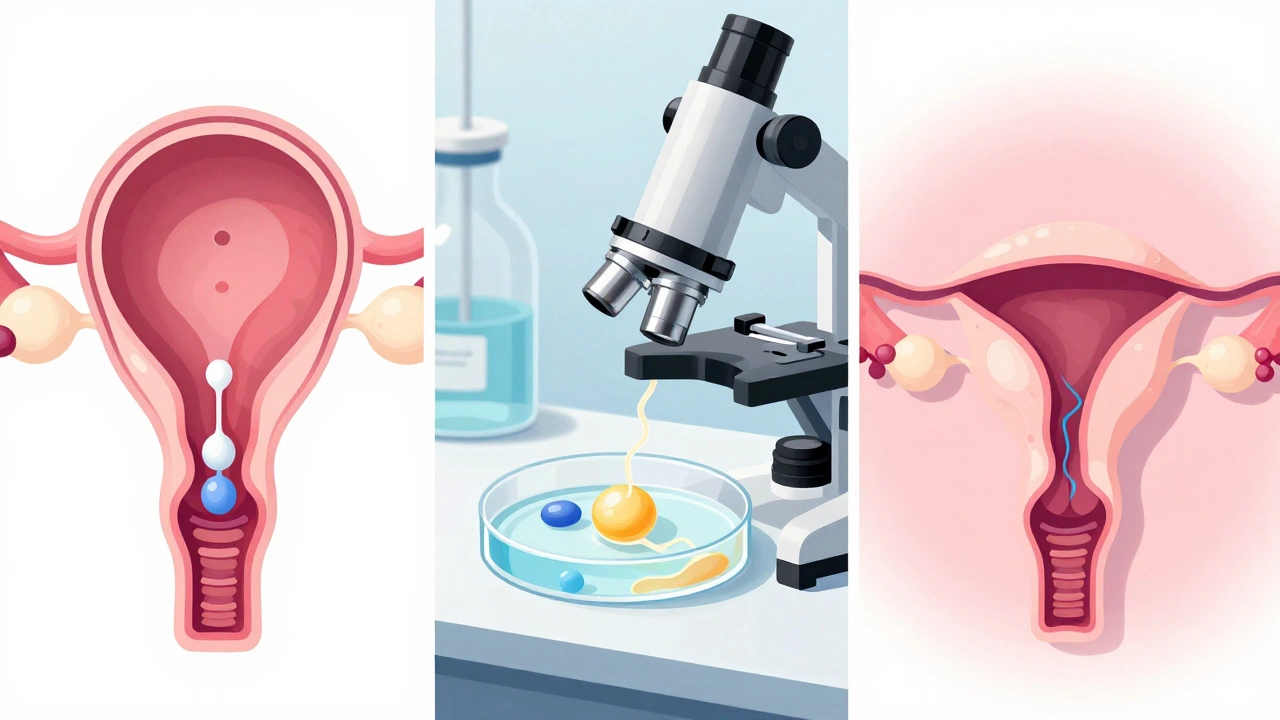
To understand why 100% is impossible, you have to look at biology, not just marketing. In Vitro Fertilization (IVF) is a complex assisted reproductive technology where eggs are retrieved from the ovaries and fertilized by sperm in a lab before being transferred to the uterus. Even with perfect execution, human reproduction has inherent failure points.
Think of it like this: if nature itself only results in pregnancy about 20-25% of the time per cycle for healthy couples under 35, asking a laboratory process to achieve 100% is asking it to defy basic biological probability. The body is an imperfect machine. Eggs can be chromosomally abnormal. Sperm might carry DNA fragmentation. The uterine lining might not be receptive in a given month.
| Age Group | Live Birth Rate Per Cycle | Cumulative Success (After 3 Cycles) |
|---|---|---|
| Under 35 | 40-50% | ~65-70% |
| 35-37 | 30-35% | ~50-55% |
| 38-40 | 20-25% | ~35-40% |
| 41-42 | 10-15% | ~20-25% |
| Over 42 | Less than 5% | ~10% |
These numbers aren't meant to scare you; they are meant to ground you. They show that age is the single biggest driver of success. A woman under 35 using her own eggs has a roughly 1 in 2 chance of a live birth per cycle. That is high, but it is still a coin flip. For women over 42, the odds drop significantly because the quantity and quality of remaining eggs decline sharply.
Why Isn't It 100%? The Biological Bottlenecks
Even when everything goes right in the lab, several hurdles remain. Understanding these helps manage expectations and reduces the feeling of personal failure when a cycle doesn't work.
- Egg Quality: This is the non-negotiable factor. An egg must have the correct number of chromosomes (euploid) to implant and develop into a healthy baby. As we age, the percentage of abnormal eggs rises. By age 40, more than half of all eggs may be chromosomally abnormal.
- Embryo Development: Not every fertilized egg becomes a viable embryo. Some stop dividing on day 2, others on day 5. Labs select the best morphological candidates, but appearance doesn't always guarantee genetic normality.
- Implantation Failure: The embryo must attach to the uterine lining. Sometimes the window of implantation is off, or there are subtle immune responses that prevent attachment.
- Early Miscarriage: Many pregnancies fail in the first few weeks due to chromosomal errors. This is nature's way of filtering out non-viable embryos, even if they looked perfect under a microscope.
So, while the lab can create ideal conditions, it cannot fix a fundamentally flawed egg or sperm cell without advanced genetic screening, and even then, success is not guaranteed.
How to Boost Your Personal Odds
While you can't change your age, you can optimize other variables. Think of your body as a garden. You can't control the weather (age/genetics), but you can control the soil health, watering, and sunlight.
Lifestyle Adjustments: Smoking, excessive alcohol, and high caffeine intake are known to reduce egg and sperm quality. Studies consistently show that quitting smoking before starting treatment improves outcomes. Maintaining a healthy BMI (Body Mass Index) is also crucial. Being significantly underweight or overweight can disrupt hormonal balance and affect how medications work during stimulation.
Clinic Selection Matters: Not all IVF clinics are created equal. Look for clinics with high transparency in their reporting. Ask about their "live birth rate per embryo transfer" rather than just "pregnancy rate." Pregnancy rates can be inflated by multiple births or early miscarriages that don't result in a baby going home. In Australia, clinics report to the Australian Assisted Reproduction Register (AARR), which provides unbiased data. Check these public records.
Protocol Personalization: There is no one-size-fits-all medication plan. A good reproductive endocrinologist will tailor your stimulation protocol based on your ovarian reserve (measured by AMH and AFC tests). Over-stimulating can lead to poor egg quality, while under-stimulating yields too few eggs. Finding the sweet spot requires experience.
The Game Changer: PGT-A Testing
If you are wondering how some couples seem to bypass the age-related drop in success, the answer often lies in Preimplantation Genetic Testing for Aneuploidy (PGT-A) is a screening method used during IVF to check embryos for chromosomal abnormalities before transfer.
Here is how it works: After embryos reach the blastocyst stage (day 5 or 6), a biopsy takes a few cells from the outer layer (which becomes the placenta, not the baby). These cells are tested to see if the embryo has the correct number of chromosomes. Only euploid (normal) embryos are transferred.
For women over 35, or those with recurrent miscarriages, PGT-A can dramatically increase the success rate *per transfer*. Why? Because you aren't transferring an embryo that is likely to fail or miscarry. However, there is a catch: PGT-A doesn't create more good embryos. If you have four embryos and three are abnormal, you only have one to transfer. And sometimes, all embryos are abnormal. So while it increases efficiency, it doesn't guarantee a baby if no normal embryos are found.
When to Consider Donor Eggs
This is the most sensitive part of the conversation, but it is necessary for complete honesty. If a woman is over 42, or has diminished ovarian reserve despite aggressive treatment, the limiting factor is almost always egg quality, not the uterus.
A uterus of a 45-year-old woman can absolutely carry a pregnancy if the embryo is healthy. This is why using donor eggs from a young, healthy donor can raise success rates back to the 60-70% range, regardless of the recipient's age. It is a difficult emotional journey, involving the use of another person's genetic material, but for many, it is the bridge to parenthood that their own eggs could not provide.
It is important to view donor eggs not as a "failure," but as a different path to the same goal. Many successful families are built this way. The key is counseling and support to navigate the emotional complexities.
Managing the Emotional Rollercoaster
IVF is physically demanding, but emotionally, it is exhausting. The two-week wait between transfer and test is agonizing. The financial cost adds pressure. The social isolation-when everyone else is talking about weekend plans and you are lying on the couch injecting hormones-can be profound.
Do not underestimate the value of mental health support. Therapy specifically tailored for infertility can help you cope with uncertainty. Joining support groups, whether online or in-person in Sydney or elsewhere, connects you with people who truly understand the specific grief and hope of this journey. You are not alone in feeling overwhelmed.
Red Flags to Watch Out For
In your search for answers, you might encounter clinics or practitioners making unrealistic promises. Be wary of:
- Guaranteed Results: Any clinic offering a money-back guarantee or promising 100% success is misleading you. Biology does not work that way.
- Unproven Add-ons: The industry is full of expensive "extras" like endometrial scratching, PRP injections, or stem cell therapies that lack robust scientific evidence. Stick to protocols supported by major guidelines (like ASRM or ESHRE).
- Ignoring Your History: If a clinic treats every patient with the exact same protocol regardless of age, history, or diagnosis, they are not practicing personalized medicine.
Final Thoughts on Hope and Reality
Does IVF have a 100% success rate? No. But it has a very real, tangible chance of giving you the child you want. For many, it happens in the first cycle. For others, it takes two or three. For some, it requires changing the strategy entirely with donor gametes or adoption.
Your journey is unique. Do not compare your chapter one to someone else's chapter ten. Focus on optimizing what you can control: your health, your choice of clinic, and your mental well-being. Arm yourself with accurate data, ask tough questions, and surround yourself with support. The path may not be straight, but for millions of families, it leads to the outcome they dreamed of.
What is the average success rate of IVF for women under 35?
For women under 35 using their own eggs, the live birth rate per IVF cycle is typically between 40% and 50%. This means that for every two cycles, one results in a live birth on average. Cumulative success rates after three cycles can reach around 65-70%.
Does IVF success rate drop significantly after age 40?
Yes. After age 40, the success rate drops to approximately 20-25% per cycle. By age 42, it falls below 15%, and over 42, it is often less than 5%. This decline is primarily due to decreased egg quality and higher rates of chromosomal abnormalities in eggs.
Can PGT-A testing guarantee a successful pregnancy?
No, PGT-A does not guarantee success. It screens embryos for chromosomal normality, which increases the likelihood of implantation and reduces miscarriage risk per transfer. However, it does not ensure that a normal embryo will exist, nor does it account for other factors like uterine receptivity or rare genetic issues not covered by the test.
How does lifestyle affect IVF success?
Lifestyle plays a significant role. Smoking, heavy alcohol consumption, obesity, and extreme underweight status can negatively impact egg and sperm quality, as well as response to stimulation medications. Quitting smoking and achieving a healthy BMI before starting treatment can improve outcomes.
Is it better to freeze embryos or transfer fresh?
Many clinics now recommend freezing embryos (Frozen Embryo Transfer or FET) and transferring them in a subsequent cycle. This allows the uterus to recover from stimulation medications, potentially creating a more receptive environment. Studies suggest FET may have slightly higher success rates and lower risks of certain complications compared to fresh transfers.
What should I ask my fertility clinic about their success rates?
Ask for "live birth rates per embryo transfer" broken down by age group. Avoid clinics that only share "pregnancy rates" or "clinical pregnancy rates," as these can include miscarriages and multiple births. Also, inquire about their cancellation rates and how they handle patients with low ovarian reserve.




Write a comment