
Orthopedic Surgery Duration Calculator
Select Procedure Type
Additional Factors
When you're scheduled for orthopedic surgery, one of the first things you wonder is: how long will it actually take? It’s not just about the clock-it’s about recovery, planning time off work, and knowing what to expect. The answer isn’t one-size-fits-all. A simple ankle repair takes less time than a full hip replacement, and complications can change everything. Let’s break down real-world surgery times for the most common orthopedic procedures, based on data from hospitals in Australia and the U.S.
Minor Orthopedic Surgeries: Under an Hour
Not all orthopedic surgeries mean hours in the operating room. Many are quick, outpatient procedures. For example, a carpal tunnel release usually takes 15 to 30 minutes. You walk in, get local anesthesia, have the nerve released, and leave within a few hours. Same with trigger finger release or removing a small bone spur from the foot. These are low-risk, highly predictable. Surgeons often do several in a row. Recovery starts the same day. Most people return to light duties within a week.
Arthroscopic shoulder surgery for a torn rotator cuff follows a similar pattern. Even though it sounds serious, the actual cutting and stitching takes 45 to 60 minutes. The prep and recovery add another hour or two. Total time in the hospital? Usually under four hours. Patients often go home the same day. No overnight stay needed.
Moderate Procedures: 1 to 2 Hours
This group includes most common joint repairs. A knee arthroscopy with meniscus repair typically runs 60 to 90 minutes. If there’s damage to the cartilage or ligaments, the surgeon might clean up debris, trim torn tissue, or stitch the meniscus. It’s not a full replacement-just a fix. Recovery is faster than you’d think. Many patients are walking with crutches the next day.
Wrist fusion, ankle fusion, and some spinal decompressions also fall in this 1- to 2-hour window. These aren’t minor. They require general anesthesia and precise alignment. But they’re still shorter than major joint replacements. Surgeons use imaging during the procedure to ensure the bones line up perfectly. That adds time, but not as much as you’d expect.
Major Joint Replacements: 2 to 3 Hours
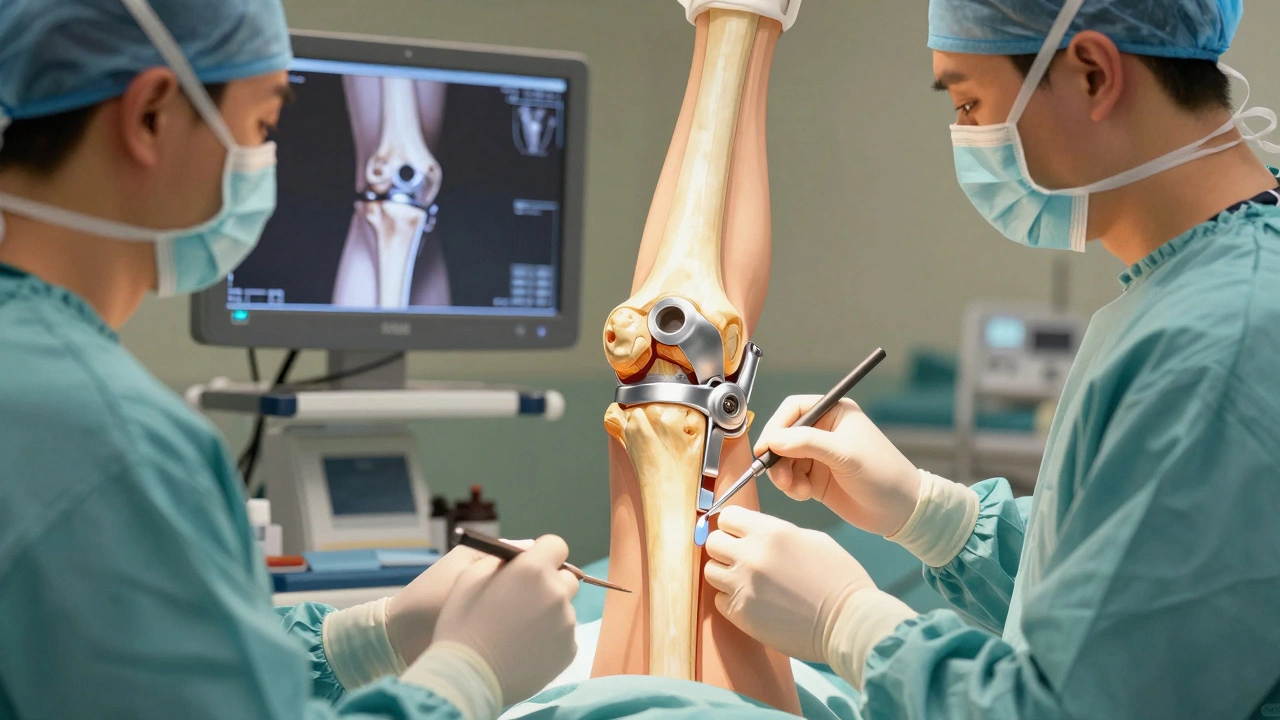
This is where most people think surgery takes forever. And yes, hip and knee replacements are the big ones. A primary total hip replacement usually takes 90 to 120 minutes. That includes positioning the patient, making the incision, removing damaged bone, inserting the metal and plastic components, and checking the fit and movement. Surgeons don’t rush this. Every millimeter matters. The implant must sit just right, or it’ll wear out faster or dislocate.
Total knee replacement? Also 2 to 3 hours. The knee is trickier. It’s not just one joint-it’s three compartments. The surgeon has to balance ligaments, shave bone evenly, and align the implant to within 1 degree. If it’s off, you’ll feel it when you walk. That’s why time matters. Rushing leads to poor outcomes. Hospitals track this closely. In Sydney, the average time for a primary knee replacement is 108 minutes. That’s based on over 5,000 cases tracked since 2023.
What about revision surgeries? If you’ve had a replacement before and it’s failing, things get longer. Scar tissue builds up. Implants are harder to remove. The surgeon might need special tools or even bone grafts. Revision hip or knee surgeries can take 3 to 4 hours. That’s why surgeons warn patients: second surgeries are more complex.
Complex Spine and Trauma Surgeries: 3+ Hours
Spinal fusion for severe degeneration or scoliosis? That’s often 3 to 6 hours. The more levels fused (like L3 to S1), the longer it takes. Each level requires screws, rods, and bone grafts. Surgeons use real-time X-rays to place hardware. One mistake can pinch a nerve. That’s why they take their time.
Open fracture repairs, especially for the pelvis or femur, can run 4 to 6 hours. These are trauma cases. Blood loss is high. The body is unstable. Surgeons have to stabilize the patient first, then rebuild the bone. Sometimes they use external fixators first, then switch to internal plates later. It’s not a single surgery-it’s a process. Patients often need ICU time after.
What Else Affects Surgery Time?
Time in the OR isn’t just the cut-and-stitch part. There’s prep and recovery. Anesthesia alone can take 20 to 40 minutes. You’re not under the knife the whole time. Surgeons also pause to check imaging, change instruments, or consult with assistants. If you have diabetes, obesity, or poor circulation, the team moves slower. They have to be extra careful.
Surgeon experience matters too. A surgeon who does 150 hip replacements a year will typically finish faster than one who does 30. But speed isn’t everything. The best surgeons are deliberate. They don’t cut corners. A 2-hour surgery done right beats a 90-minute one done fast.
Technology helps. Robotic-assisted knee replacements used to add 20 minutes to the clock. Now, with better planning tools, the extra time is down to 5 to 10 minutes. And outcomes are better. The robot doesn’t replace the surgeon-it helps them be more precise.
What Happens After the Surgery Ends?
Just because the surgeon says “done” doesn’t mean you’re out. You’ll spend 30 to 90 minutes in recovery. Nurses monitor your vitals, manage pain, and make sure you’re awake and stable. For major surgeries, you might go to the ICU. For minor ones, you’ll head to a day-stay unit.
Most patients go home the same day if it’s a knee or shoulder procedure. Hip replacements? Often require one night. Spine or trauma cases? Usually 3 to 5 days. Recovery time is separate from surgery time. Don’t confuse the two.
How to Prepare for the Time Commitment
Plan ahead. If your surgery takes 2 hours, assume you’ll be gone for 5 to 6 hours total. Arrange transport. Don’t drive yourself. Have someone stay with you the first night. Stock up on meals. Make your bathroom accessible. Remove rugs. You’ll need help for a few days, even if the surgery was quick.
Ask your surgeon for their average time on this procedure. Hospitals track this. They’ll give you a range. Don’t panic if it’s longer than you expected. It’s not about how fast they work-it’s about how well they work.
And remember: every minute in the OR is meant to protect your long-term mobility. That’s why it takes time. Rushing risks failure. Taking time means you’ll walk better for years to come.




Write a comment