
Metformin Weight Change Predictor
Predict your potential weight change after stopping metformin based on your lifestyle habits. This tool uses clinical study data and is not medical advice.
Your Prediction
Enter your information to see your potential weight change.
Many people start metformin to help manage type 2 diabetes-and many notice they lose weight while taking it. So when they think about stopping, a common fear pops up: Will I gain weight after stopping metformin? The short answer? Maybe. But it’s not because metformin magically burns fat. It’s because your body goes back to how it worked before the drug stepped in.
How Metformin Affects Weight
Metformin doesn’t make you lose weight the way a diet pill does. It doesn’t suppress appetite or speed up metabolism. Instead, it helps your body use insulin better. That means less sugar floating in your blood, fewer insulin spikes, and less fat storage.
When insulin levels drop, your body stops holding onto extra calories as fat. You might also feel less hungry because metformin reduces cravings, especially for carbs. Studies show people on metformin lose about 2-4 kg on average over six months-not dramatic, but noticeable.
That’s why when you stop taking it, your body doesn’t suddenly explode in weight gain. But if your eating habits, activity level, or insulin resistance haven’t changed, your body will start storing fat again-just like before you started metformin.
Who’s Most Likely to Gain Weight After Stopping
Not everyone gains weight. But some people are at higher risk:
- Those who relied on metformin to control cravings, especially for bread, pasta, or sweets
- People who didn’t improve their diet or exercise while on the drug
- Those with insulin resistance that hasn’t improved over time
- Anyone who stops metformin without medical supervision
A 2023 study in the Journal of Clinical Endocrinology & Metabolism followed 312 people who stopped metformin after two years. About 68% gained back some weight within six months. The average gain? 2.3 kg. But those who kept eating the same way gained over 5 kg.
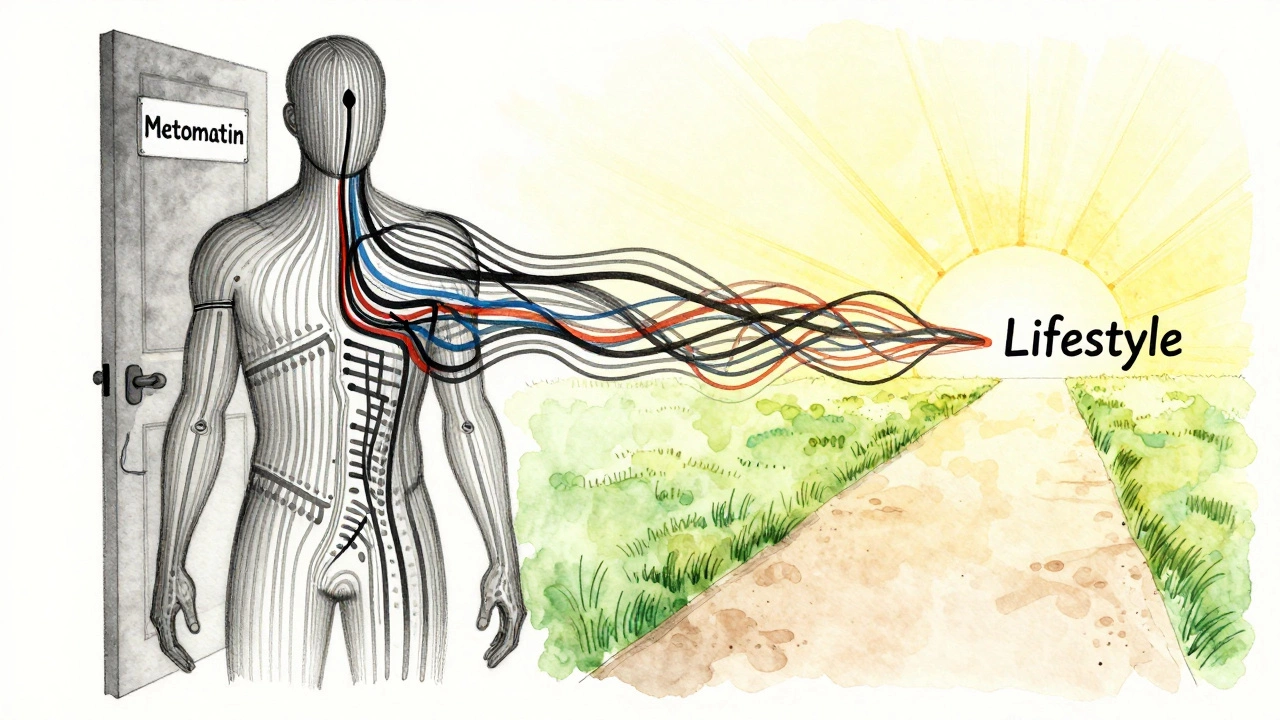
The key isn’t the drug itself-it’s what you do after you stop.
What Happens in Your Body When You Quit
Within days of stopping metformin, your liver starts releasing more glucose. Your muscles become less sensitive to insulin. Blood sugar rises. And when blood sugar spikes, your body makes more insulin to handle it.
Insulin is a fat-storage hormone. More insulin = more fat stored, especially around your belly. You might also feel hungrier, especially for carbs. That’s because your body is trying to get energy from glucose-and it’s not getting it efficiently anymore.
Some people report feeling more tired or sluggish after stopping. That’s not just in their head. Without metformin’s mild effect on energy metabolism, you might feel like you’re running on low fuel. That can lead to less movement, less activity, and more sitting.

How to Avoid Weight Gain After Stopping
You don’t have to accept weight gain as inevitable. Here’s what actually works:
- Keep eating whole foods. Focus on vegetables, lean protein, legumes, nuts, and whole grains. Avoid sugary drinks, white bread, and processed snacks.
- Move every day. You don’t need to run a marathon. A 30-minute walk after meals helps lower blood sugar and keeps insulin in check.
- Track your portions. Metformin helped mask overeating. Without it, portion control matters more than ever.
- Don’t skip meals. Skipping meals leads to blood sugar crashes and then bingeing later.
- Get enough sleep. Poor sleep increases cortisol and insulin resistance-two big drivers of weight gain.
One patient in Sydney, 52, stopped metformin after her A1C dropped to 5.8%. She didn’t change her diet at first-and gained 4.5 kg in three months. Then she started walking daily, cut out soda, and added two servings of vegetables to every meal. She lost it all back in six weeks.
When Should You Stop Metformin?
Never stop on your own. Metformin isn’t just a weight drug-it’s a diabetes medication. Stopping it without a plan can raise your blood sugar to dangerous levels.
Your doctor might suggest stopping if:
- Your A1C has stayed below 5.7% for at least six months
- You’ve lost weight and improved your diet and activity
- Your liver and kidney function are normal
- You’re under regular monitoring
Even then, it’s often done slowly-cutting the dose in half for a few weeks before stopping completely. This gives your body time to adjust.
Alternatives to Metformin for Weight Control
If you’re worried about weight gain after stopping, talk to your doctor about other options:
- GLP-1 agonists like semaglutide (Ozempic, Wegovy) help with weight loss and blood sugar-but they’re expensive and need injections.
- SGLT2 inhibitors like empagliflozin make your kidneys flush out sugar, which can lead to modest weight loss.
- Lifestyle changes remain the most effective long-term tool. A 2024 trial showed that people who lost 5% of their body weight through diet and exercise reversed type 2 diabetes in 70% of cases-without any drugs.
Metformin was a tool. It helped you get to a better place. But it wasn’t the destination.
Real Stories: What People Actually Experienced
Emma, 48, stopped metformin after three years. She lost 6 kg on it. She thought she’d stay thin because she ate "clean." But she didn’t track portions. Within four months, she gained back 5 kg. She started meal prepping, walking after dinner, and checking her blood sugar twice a week. She lost the weight again.
Mark, 61, stopped metformin because of stomach issues. He didn’t change anything. He gained 7 kg in five months. His doctor put him on a low-carb plan and started him on a low-dose SGLT2 inhibitor. His weight stabilized.
The pattern? People who stayed active and ate mindfully didn’t gain. People who thought "the drug did the work" did.
Bottom Line: It’s Not the Drug-It’s You
Metformin doesn’t cause weight loss. It creates space for you to make better choices. When you stop, that space closes. But it doesn’t have to stay closed.
You don’t need metformin to stay lean. You need consistent habits: whole foods, regular movement, enough sleep, and stress management. If you’ve built those while on metformin, you can keep them after. If you haven’t, now’s the time to start.
Stopping metformin isn’t the end of your journey. It’s the next chapter. And you’re the author.
Will I definitely gain weight after stopping metformin?
No, not definitely. Weight gain after stopping metformin depends on your diet, activity level, and insulin resistance. People who maintain healthy habits usually don’t gain weight. Those who return to old eating patterns often do.
How long does it take to gain weight after stopping metformin?
Some people notice changes in appetite and energy within days. Weight gain usually becomes noticeable within 4-12 weeks, especially if eating habits haven’t changed. The average weight gain in studies is 2-5 kg over six months.
Can I stop metformin cold turkey?
No. Stopping suddenly can cause blood sugar spikes and increase your risk of diabetic complications. Always work with your doctor to taper off slowly and monitor your glucose levels during the process.
Does metformin cause belly fat loss?
Metformin can help reduce visceral fat (belly fat) indirectly by improving insulin sensitivity. But it doesn’t target belly fat specifically. The fat loss you see is usually a result of better blood sugar control and reduced cravings-not direct fat burning.
What should I do if I gain weight after stopping metformin?
Start by tracking your food intake and activity. Focus on whole foods, reduce added sugar, and move daily-even a 20-minute walk helps. Check your blood sugar if you can. Talk to your doctor about whether you need another medication or if lifestyle changes alone can bring your numbers back down.




Write a comment