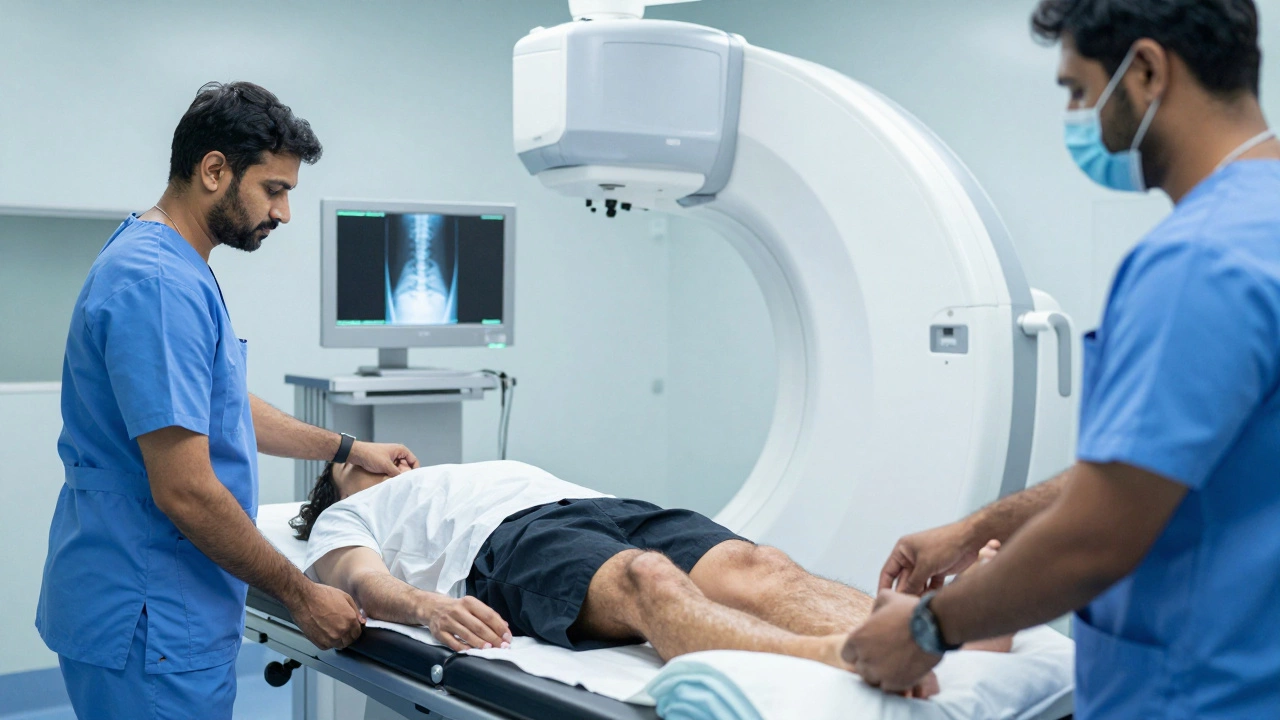
Bone Surgery Timeline Estimator
You’re staring at the surgical schedule, heart pounding, and the one question burning in your mind is simple: "How long will I be under the knife?" It’s a fair question. Time under anesthesia matters. Recovery planning depends on it. But if you ask five different surgeons, you might get five different answers. Why? Because "bone surgery" isn’t a single event-it’s an umbrella term covering everything from a quick fix for a broken wrist to a complex reconstruction of a spine.
The short answer? Most routine bone surgeries take between one and three hours. But that clock starts ticking only after the anesthesia kicks in. The real story involves prep, positioning, and the surgeon’s meticulous work inside the body. Let’s break down exactly what happens, why times vary so wildly, and what you should actually expect when you step into an orthopedic hospital.
Why There Is No Single Answer for Bone Surgery Duration
Imagine asking, "How long does it take to fix a car?" If it’s an oil change, maybe twenty minutes. If it’s a transmission rebuild, you’re looking at days. Bone surgery works the same way. The duration depends heavily on three factors: the type of procedure, the complexity of the injury or condition, and the patient’s individual anatomy.
First, consider the location. A fracture in a small finger bone (phalange) is vastly different from a femur break. Second, look at the method. Are they using screws, plates, rods, or artificial joints? Each hardware choice adds steps. Third, think about the patient. Dense bone takes longer to drill than osteoporotic bone. Scar tissue from previous surgeries can turn a straightforward operation into a puzzle.
In Sydney hospitals and clinics worldwide, surgeons prioritize precision over speed. Rushing a bone alignment can lead to chronic pain or failed implants later. So, while efficiency matters, safety always wins. This mindset means some procedures run longer than textbook estimates suggest.
Common Bone Surgeries and Their Typical Timelines
To give you a realistic picture, let’s look at specific procedures. These times refer to the actual surgical intervention, not including pre-op prep or post-op wake-up time.
- Arthroscopic Knee Surgery: Minimally invasive repair of meniscus tears or ligaments typically lasts 45 minutes to 1.5 hours.
- Wrist or Ankle Fracture Fixation: Setting bones with plates and screws usually takes 1 to 2 hours.
- Total Hip Replacement: Replacing the hip joint generally requires 1.5 to 3 hours, depending on whether it’s a primary or revision case.
- Total Knee Replacement: This major procedure often takes 1 to 2 hours for the surgery itself.
- Spinal Fusion: Complex back surgeries involving multiple vertebrae can last 3 to 6 hours or more.
- Rotator Cuff Repair: Shoulder tendon repairs typically range from 1 to 2.5 hours.
Note that these are averages. A young athlete with a clean tear might be done faster than an older patient with arthritis and bone spurs. Always ask your surgeon for their specific estimate based on your scans.
The Hidden Hours: Prep and Positioning
Here’s where most patients get confused. You sign in at 8 AM, but the surgeon doesn’t cut until 9:30 AM. Did they lose your slot? No. That’s the hidden phase of bone surgery.
Before any incision, several critical steps must happen:
- Anesthesia Induction: Getting you safely asleep or numb takes 15-30 minutes. The anesthesiologist monitors your vitals closely.
- Sterilization and Draping: The surgical team cleans the area thoroughly to prevent infection. This is non-negotiable in orthopedics.
- Positioning: For a hip or shoulder surgery, you need to be positioned perfectly. Incorrect positioning can damage nerves or make the surgery impossible. This alone can take 20-40 minutes.
- Imaging Check: Many orthopedic surgeries use fluoroscopy (live X-ray) to guide the surgeon. Setting up this equipment adds time.
So, if your surgery is listed as "1 hour," expect to be in the operating room suite for closer to 2.5 hours total. Understanding this gap reduces anxiety. You aren’t being ignored; you’re being prepared.
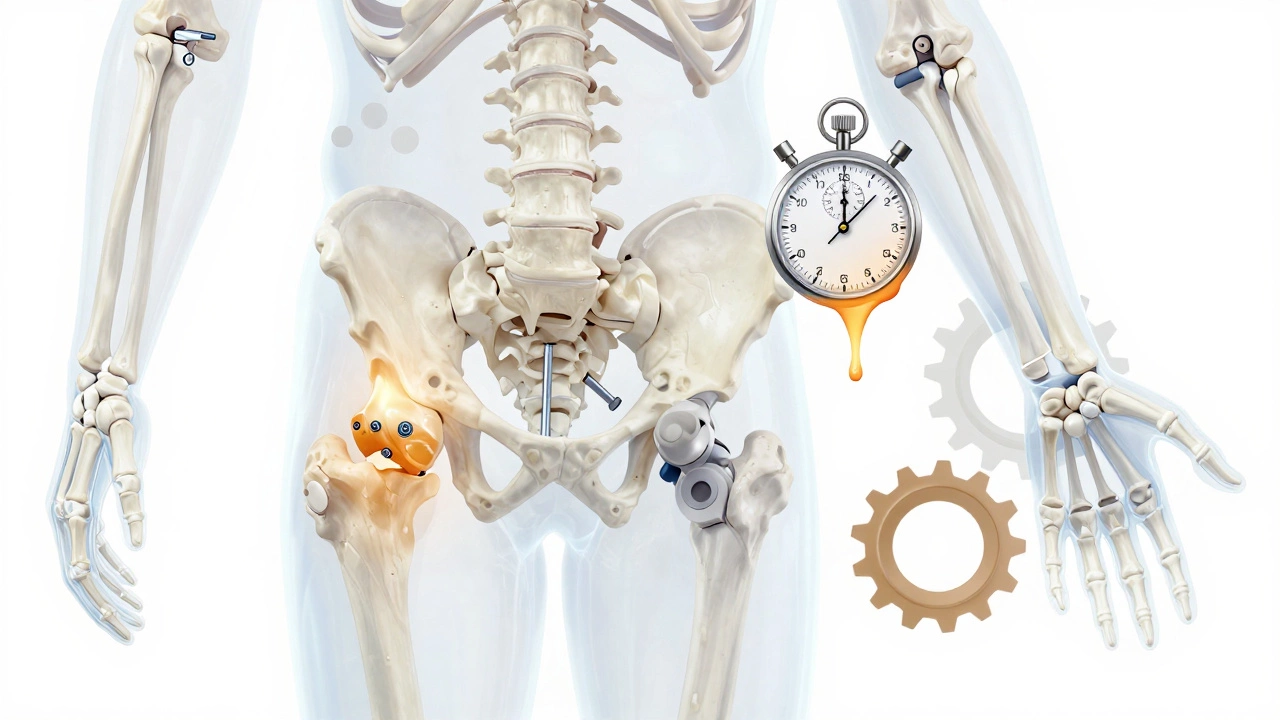
Factors That Can Extend Your Surgery Time
Even with a standard procedure, things can take longer. Here are the common culprits:
| Factor | Impact on Time | Why It Matters |
|---|---|---|
| Revision Surgery | +30% to +100% | Removing old hardware and dealing with scar tissue is slower than first-time surgery. |
| Osteoporosis | +15% to +25% | Soft bone requires careful handling to avoid fractures during screw insertion. |
| Obesity | +20% to +40% | Deeper tissue layers mean longer incisions and harder access to the bone. |
| Complex Fractures | +50% to +100% | Multiple bone fragments need precise reassembly like a 3D puzzle. |
| Blood Loss Management | Variable | If bleeding is higher than expected, the surgeon pauses to control it. |
Don’t panic if your surgeon mentions these risks. They are planning ahead. A longer surgery isn’t necessarily a bad outcome-it often means the surgeon is taking extra care to ensure stability and longevity of the repair.
What Happens After the Knife Stops?
The surgery ends, but your day isn’t over. Post-operative care is part of the timeline.
You’ll move to the Post-Anesthesia Care Unit (PACU). Here, nurses monitor your waking process. This usually takes 1 to 2 hours. During this time, they check for nausea, pain levels, and circulation in the operated limb. For major surgeries like spinal fusions or double joint replacements, you might stay in PACU longer or move directly to an intensive care unit.
Once stable, you return to your hospital room. Total time from arrival to discharge (for outpatient surgeries) is often 4 to 6 hours. For inpatient stays, you’ll likely remain overnight or longer. Remember, the "surgery time" is just one slice of the pie.

How to Prepare for the Unknown
Since exact timing is impossible to guarantee, preparation is key. Here’s how to handle the uncertainty:
- Tell your support person: Let your driver know it could take half a day. Ask them to bring snacks and water-they’ll be waiting too.
- Empty pockets: Leave valuables at home. You won’t have access to them during the prep and surgery phases.
- Ask about "turnaround": Some hospitals offer updates every hour. Others wait until the surgeon is free. Know your hospital’s policy.
- Focus on recovery, not the clock: A slightly longer surgery that ensures perfect alignment saves you years of pain. Trust the process.
In Australia, public hospitals may have longer waits due to high demand, while private facilities might offer tighter scheduling. However, clinical standards remain consistent across both sectors. The quality of the bone fixation matters more than the minute-by-minute log.
When Longer Is Better
There’s a myth in medicine that faster is better. In orthopedics, this is dangerous. Cutting corners on a spinal fusion or a hip replacement can lead to implant loosening, infection, or non-union (bones failing to heal).
A skilled surgeon spends time verifying nerve placement, checking blood flow, and ensuring hardware sits flush against the bone. These steps add minutes but subtract months of potential complications. If your surgery runs long, view it as a sign of thoroughness, not trouble.
For example, in minimally invasive spine surgery, the surgeon might spend extra time navigating around delicate nerves to preserve function. This precision prevents permanent numbness or weakness. The trade-off is clear: patience now protects mobility later.
Final Thoughts on Timing and Trust
Knowing how many hours bone surgery takes helps you plan logistics, but it shouldn’t drive your anxiety. The variability is normal. The hidden prep time is necessary. The extensions due to complexity are signs of careful work.
Your best move? Have an open conversation with your orthopedic surgeon before the day arrives. Ask: "Based on my MRI/X-rays, what is your estimated time? What could make it longer?" Write down their answer. Then, trust their expertise when the clock starts ticking. Your body deserves the time it needs to heal right.
Does general anesthesia affect how long bone surgery takes?
General anesthesia itself doesn't significantly extend the surgical time, but the induction (putting you to sleep) and emergence (waking up) phases add 15-30 minutes each. Regional anesthesia (like spinal blocks) might save a few minutes in induction but requires careful positioning which can add time. The core surgical duration remains largely dependent on the procedure complexity, not the anesthesia type.
Why does my friend's knee surgery take less time than mine?
Individual anatomy varies greatly. Your friend might have had a simple meniscus trim, while you might require a full ligament reconstruction. Additionally, factors like bone density, presence of arthritis, or previous injuries can slow down the process. Surgeons also have different techniques and paces; some prioritize speed, others precision. Neither approach is inherently wrong, but they yield different timelines.
Can I go home the same day after bone surgery?
Many bone surgeries are now performed as outpatient procedures, meaning you go home the same day. This includes arthroscopies, minor fracture fixations, and some joint replacements. However, major surgeries like spinal fusions or complex trauma repairs usually require an overnight stay or longer. Your surgeon will determine this based on your health status and the procedure's invasiveness.
Is it dangerous if bone surgery takes longer than expected?
Not necessarily. While prolonged anesthesia carries slight risks, modern monitoring makes it very safe. A longer surgery often indicates the surgeon is encountering unexpected complexity, such as scar tissue or difficult bone structure, and is taking the necessary time to address it safely. Rushing to finish early could compromise the result. Communicate with your family outside; they will be updated if there are genuine concerns.
How does age impact the duration of bone surgery?
Age can influence surgery time indirectly. Older patients often have osteoporosis (weaker bones), which requires more careful drilling and screw placement to prevent fractures. They may also have more comorbidities (like diabetes or heart issues) that require slower, more monitored anesthesia. Younger patients typically have denser bone and fewer health complications, potentially leading to slightly faster procedures, though not always.




Write a comment