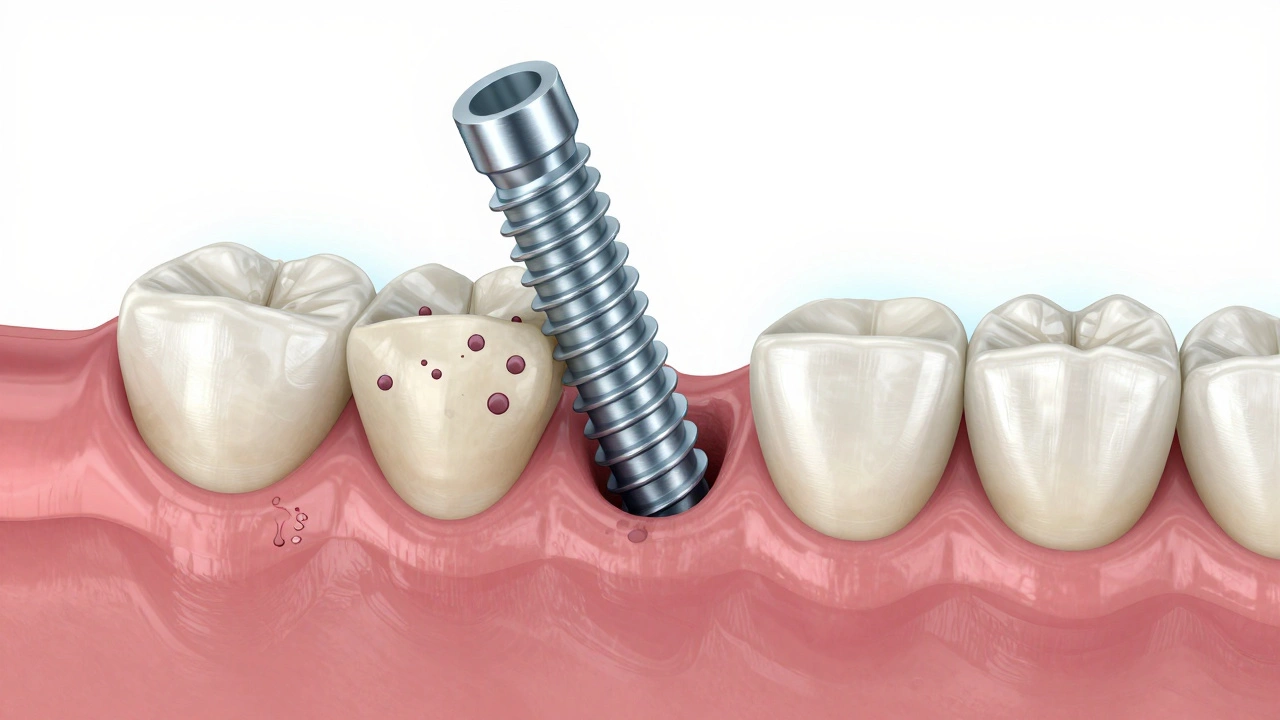
Dental Implant Healing Timeline & Risk Calculator
Calculate Your Estimated Recovery Time
Smoker
Diabetes
Osteoporosis
Poor Hygiene
Healing Stages Timeline
Click on any marker to learn about that stage
Stage 1: Immediate Post-Surgery (Days 1–7)
- Manage swelling with cold compresses
- Eat only soft, cold foods (yogurt, smoothies)
- Avoid hot liquids for 24 hours
- Rinse gently with warm salt water after meals
- Rest completely—no heavy exercise
Your Personalized Risk Assessment
You have a low-risk profile. Follow standard post-operative care instructions and maintain good oral hygiene for optimal healing.
You’ve just sat in the dentist’s chair. The procedure is over. You’re excited to get that missing tooth back, but there’s one nagging question: when can I actually eat steak again? When can I smile without worrying? The short answer is that it takes time-usually between three and six months for the jawbone to fuse with the titanium screw. But the full journey from extraction to final crown involves several distinct phases, each with its own timeline and care requirements.
Understanding this timeline isn’t just about patience; it’s about protecting your investment. Rushing the process can lead to implant failure, which means starting all over again. Let’s break down exactly what happens inside your mouth, how long each stage lasts, and what you can do to speed up your recovery safely.
The Critical Phase: Osseointegration
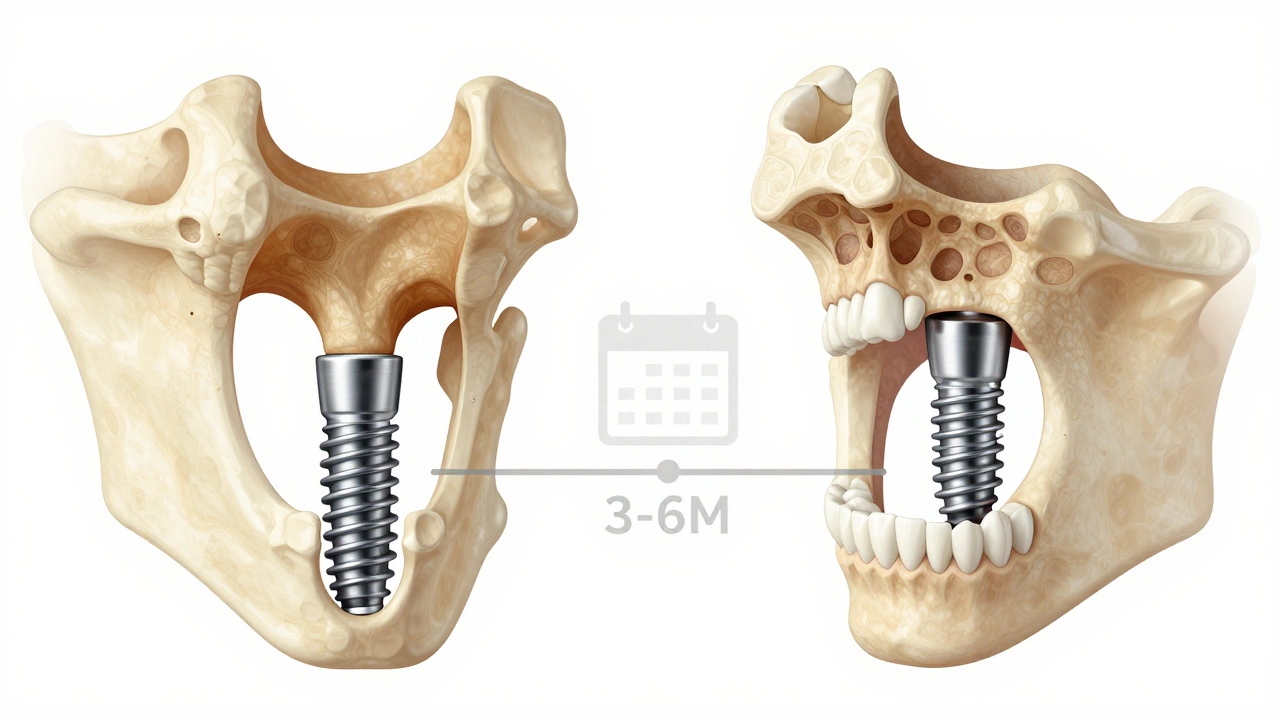
The most important part of getting a dental implant is a titanium post surgically placed into the jawbone to replace a tooth root isn’t the surgery itself-it’s what happens afterward. This process is called osseointegration is the biological fusion of bone tissue with the surface of the titanium implant. Think of it like planting a tree. You don’t just stick a sapling in the dirt and expect it to hold up a heavy branch immediately. The roots need time to grow deep and anchor firmly into the soil.
In your jaw, the bone cells (osteoblasts) slowly grow onto the microscopic roughness of the titanium surface. This creates a mechanical lock that is incredibly strong-often stronger than natural tooth roots. If you place the final crown too early, before this bond is solid, the implant can wobble. That micro-movement prevents the bone from fusing, leading to infection or rejection.
| Jaw Area | Average Healing Time | Why the Difference? |
|---|---|---|
| Lower Jaw (Mandible) | 3-4 Months | Denser bone structure allows faster integration. |
| Upper Jaw (Maxilla) | 5-6 Months | Spongier, less dense bone requires more time to stabilize. |
| With Bone Grafting | 6-9+ Months | Grafted material must mature before implant placement. |
The lower jaw typically heals faster because the bone there is denser and has better blood supply. The upper jaw is spongier, so it takes longer for the bone to knit around the implant. If you had a bone graft beforehand-a common procedure if you’ve lost teeth for years-the clock resets. You might wait four to six months for the graft to heal, then another three to six months for the implant itself. Total time? Up to a year. It sounds long, but it’s the price of stability.
Stage 1: Immediate Post-Surgery (Days 1-7)
The first week is all about managing inflammation and preventing infection. You’ll likely experience some swelling, bruising, and minor bleeding. This is normal. Your body is sending immune cells to clean the surgical site and begin the repair process.
- Pain Management: Most people manage with over-the-counter painkillers like ibuprofen. Prescription opioids are rarely needed unless multiple implants were placed.
- Diet: Stick to cold, soft foods. Yogurt, smoothies, and mashed potatoes are your friends. Avoid hot liquids for the first 24 hours, as heat increases blood flow and swelling.
- Oral Hygiene: Don’t brush the surgical site directly. Instead, rinse gently with warm salt water after meals. This keeps food debris away without disturbing the clot.
- Activity: Rest. No heavy lifting or vigorous exercise. Increased heart rate can raise blood pressure in the head, causing throbbing or renewed bleeding.
If you smoke during this phase, you significantly increase the risk of dry socket or implant failure. Nicotine constricts blood vessels, starving the healing tissue of oxygen. If you can quit, even temporarily, you’ll heal much faster.
Stage 2: Soft Tissue Healing (Weeks 2-4)
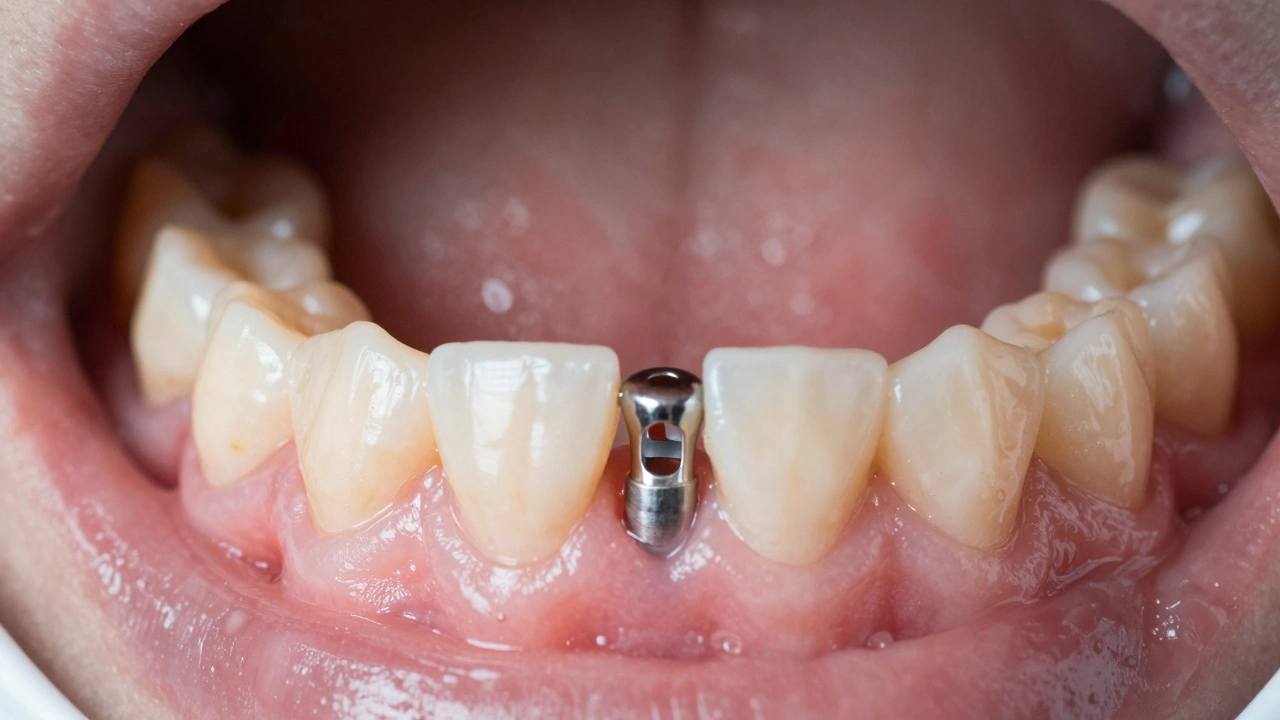
By the second week, the visible signs of surgery fade. Swelling goes down, and the gums start to close over the implant site. In many cases, your dentist will place a healing abutment-a small connector that shapes the gum tissue around the implant. This helps create a natural-looking gum line for the final crown.
During this period, you can gradually reintroduce softer solids. Think scrambled eggs, pasta, and well-cooked vegetables. Still avoid chewing directly on the implant site. Even though it feels fine, the underlying bone is still working hard. Chewing forces can disrupt the delicate new bone formation.
Your dentist may schedule a follow-up appointment around week two to remove sutures if they weren’t dissolvable. They’ll also check for signs of infection: excessive redness, pus, or persistent bad taste. If you notice these, call them immediately. Early intervention saves implants.
Stage 3: The Waiting Game (Months 2-6)
This is the longest and most frustrating part. Externally, everything looks normal. You’re eating reasonably well. You’re smiling. But internally, the magic is happening. The bone is growing onto the titanium. You can’t see it, and you can’t speed it up with pills or supplements. You can only support it.
What can you do during these months?
- Maintain Oral Hygiene: Brush twice daily and floss carefully around the healing abutment. Plaque buildup can cause peri-implantitis, an inflammatory condition similar to gum disease that attacks the bone around the implant.
- Nutrition: Eat foods rich in calcium and vitamin D. These nutrients support bone density. Leafy greens, dairy, and fortified cereals help. Consider a supplement if your diet is lacking, but consult your doctor first.
- Avoid Trauma: Don’t bite into hard objects like ice, pens, or hard candy. Accidental impact can damage the implant before it’s fully integrated.
- Regular Check-ups: Your dentist may take X-rays at month three to assess bone growth. This ensures the implant is stable and moving forward as planned.
If you’re wearing a temporary flipper or bridge during this time, be careful. These appliances can put pressure on the implant site if not fitted properly. Report any discomfort or looseness to your dentist.
Stage 4: Abutment Placement and Crown Fabrication (Month 6-7)
Once osseointegration is confirmed, the next step is attaching the abutment. This is the piece that connects the implant screw to the final crown. Sometimes, the abutment is placed at the same time as the implant, but often it’s done later to allow undisturbed healing.
After the abutment is secured, your dentist will take impressions of your mouth. These molds are sent to a dental lab where technicians craft your custom crown. This usually takes two to three weeks. During this time, you’ll wear a temporary crown if needed, especially if the implant is in a visible area.
The final crown is made from porcelain or zirconia, materials chosen for their strength and natural appearance. When it’s ready, you’ll return to the office for fitting. The dentist checks the bite, color, and fit. Minor adjustments are common. Once everything looks perfect, the crown is cemented or screwed into place.
Factors That Can Delay Healing
Not everyone heals at the same pace. Several factors can extend the timeline or complicate the process:
- Smoking: Smokers have a 30-40% higher risk of implant failure. Nicotine reduces blood flow, delaying bone growth and increasing infection risk.
- Diabetes: Uncontrolled diabetes impairs wound healing. Keep your blood sugar levels stable before and after surgery.
- Osteoporosis: Low bone density makes integration harder. Medications like bisphosphonates can also affect bone turnover. Discuss your medical history with your surgeon.
- Poor Oral Hygiene: Gum disease doesn’t disappear just because you got an implant. Peri-implantitis is a real threat. Regular cleanings and good home care are non-negotiable.
- Bone Quality: As mentioned, the upper jaw heals slower. Previous trauma or long-term tooth loss can reduce bone volume, requiring grafts that add months to the timeline.
If you fall into any of these categories, work closely with your dental team. They may adjust your treatment plan, use different implant surfaces, or prescribe antibiotics to mitigate risks.
When Is It Safe to Chew Normally?
This is the big question. Most dentists recommend waiting until the final crown is placed before chewing heavily on the implant side. However, once the crown is in, you can usually resume a normal diet within a few days. Start with softer foods and gradually introduce tougher items like apples or steak as you feel comfortable.
Remember, an implant is designed to last a lifetime with proper care. But it’s not indestructible. Avoid using your teeth as tools to open packages or crack nuts. Treat your implant like a natural tooth-brush, floss, and see your dentist regularly.
Can I eat normally while waiting for my dental implant to heal?
No, you should avoid chewing directly on the implant site for at least three to six months. Stick to soft foods and chew on the opposite side of your mouth. Hard, crunchy, or sticky foods can disrupt the healing bone or damage the temporary restoration.
How do I know if my dental implant is failing?
Signs of implant failure include persistent pain, swelling, redness, bleeding, or a loose implant. You might also notice a bad taste or pus around the site. If you experience any of these symptoms, contact your dentist immediately. Early detection can save the implant.
Does smoking affect dental implant healing time?
Yes, smoking significantly delays healing and increases the risk of failure. Nicotine restricts blood vessels, reducing oxygen and nutrient delivery to the bone. Smokers are advised to quit at least two weeks before surgery and avoid smoking for several months after.
Can I get a temporary tooth while waiting for osseointegration?
Yes, your dentist can provide a temporary flipper, bridge, or removable partial denture. These appliances restore aesthetics and function but must be adjusted to avoid putting pressure on the healing implant site.
Is bone grafting necessary for every dental implant?
No, bone grafting is only needed if you lack sufficient bone volume or density. This is common after long-term tooth loss, gum disease, or trauma. If grafting is required, add four to six months to your total treatment time.



Write a comment