
Knee Replacement Timing Readiness Tool
Symptom & Risk Checklist
Answer the following questions based on your daily experience over the last 3 months.You've been dealing with that nagging ache in your knee for years. Maybe you've tried every cream, brace, and physical therapy routine in the book. You tell yourself you'll just "tough it out" for another year, or perhaps you're waiting for a "better time" that never seems to arrive. But here is the truth: your joints aren't static. While waiting for surgery can feel like a safe bet to avoid the operating room, pushing it too far can actually make the eventual recovery much harder. The goal isn't to rush into a major procedure, but to understand the tipping point where waiting stops being a strategy and starts becoming a risk.
Quick Takeaways
- Waiting too long can lead to muscle atrophy, making post-op rehab slower.
- Severe joint deformity can complicate the surgical approach.
- Chronic pain often leads to a sedentary lifestyle, increasing risks for heart disease.
- Mental health declines as independence and mobility vanish.
- Age and overall health can eventually make you a "higher risk" candidate for anesthesia.
The Hidden Cost of "Toughing it Out"
Many people view Knee Replacement is a surgical procedure where a damaged knee joint is replaced by an artificial prosthesis as a last resort. While that's technically true, the timing of that "last resort" matters. When you delay surgery despite severe symptoms, you aren't just managing pain; you're allowing your body to adapt to a disabled state.
Think about how you walk when your knee is shot. You probably limp, shift your weight to the other leg, or lean heavily on a cane. This is called compensatory movement. Over months and years, this changes how your hips, back, and ankles function. By the time you finally get on the operating table, you're not just fixing a knee; you're fighting years of misalignment in your entire lower body.
Muscle Wasting and the Rehab Struggle
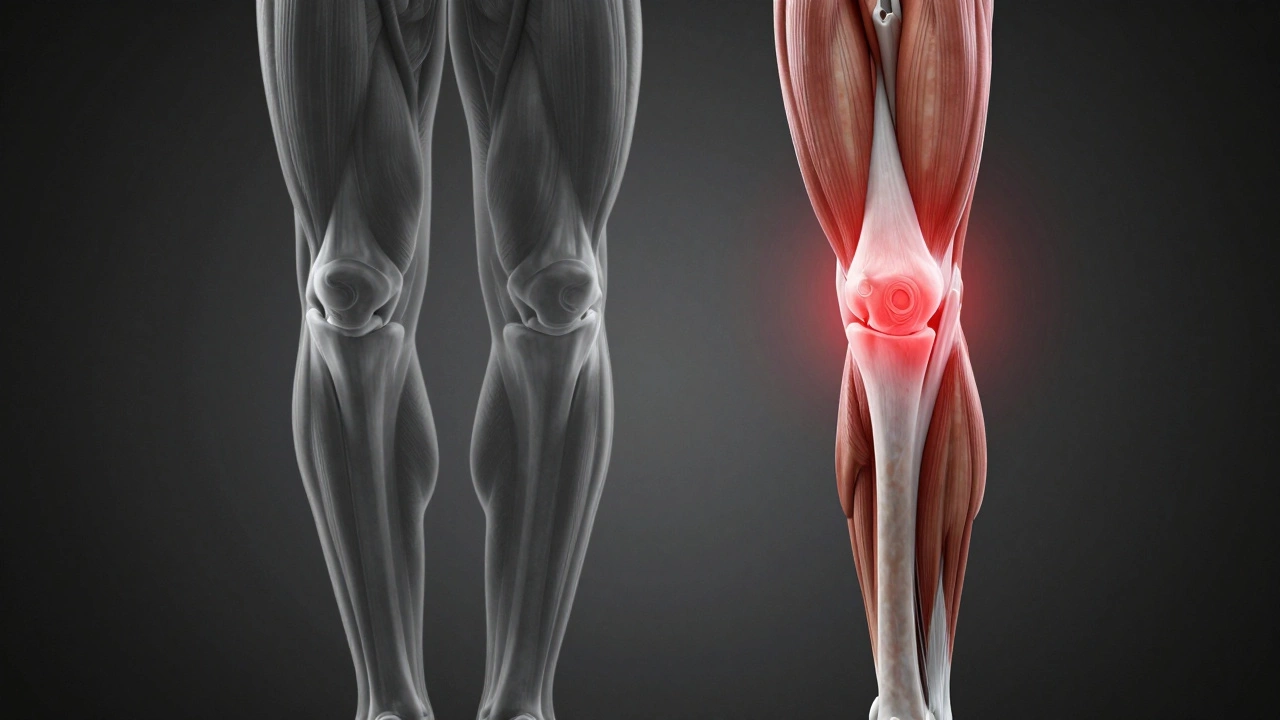
One of the biggest dangers of waiting too long is Muscle Atrophy is the wasting away of muscle tissue due to lack of use or chronic illness. If you stop walking or exercising because the pain is unbearable, your quadriceps and hamstrings begin to shrink. This is a vicious cycle: the weaker your muscles get, the more pressure falls on the joint, which increases the pain, which further limits your movement.
Why does this matter for surgery? The success of a total knee replacement depends heavily on the strength of the muscles surrounding the joint. If you enter surgery with severely wasted muscles, your recovery window extends. You'll find it harder to hit those early physical therapy milestones-like bending the knee to 90 degrees-because there's simply no muscle power to drive the movement. You're essentially asking a weakened engine to pull a heavy load.
Bone Loss and Surgical Complexity
In cases of severe Osteoarthritis is a degenerative joint disease that occurs when the protective cartilage on the ends of your bones wears down over time, the joint doesn't just "wear out." In advanced stages, the bone itself can start to erode. When the cartilage is completely gone, you have bone-on-bone contact. Over time, this can lead to the formation of bone spurs or significant joint deformity.
If the joint has collapsed or shifted significantly, the surgeon's job becomes much more complex. Instead of a standard replacement, they may need to use bone grafts or specialized augments to fill in the gaps where bone has been lost. A "simple" surgery can turn into a complex reconstruction, which often means a longer time under anesthesia and a more intense postoperative period.
| Factor | Timely Intervention | Delayed Intervention |
|---|---|---|
| Muscle Mass | Maintained / Strong | Significant Atrophy |
| Bone Integrity | Good support for implant | Possible bone loss/erosion |
| Rehab Speed | Faster return to baseline | Slower, more laborious recovery |
| Overall Health | Active, lower comorbidities | Sedentary, higher health risks |
The Ripple Effect on General Health
It is a mistake to think of knee pain as just a "leg problem." When you can't walk, you stop doing everything else. You stop gardening, you stop walking the dog, and you stop visiting friends. This sedentary lifestyle is a gateway to other systemic issues. Research into geriatric mobility shows that patients who delay joint replacement often develop secondary conditions like hypertension or type 2 diabetes because they've lost their primary way of staying active.
There is also the mental toll. Chronic pain drains your emotional reserves. When you can't even get to the bathroom or the kitchen without a struggle, your world shrinks. This isolation often leads to depression and anxiety. By the time some patients finally agree to surgery, they aren't just fighting knee pain-they're fighting a loss of spirit and a diminished quality of life that can take years to rebuild even after the physical pain is gone.
The Anesthesia Paradox
Many people wait because they are afraid of surgery as they get older. They think, "I'll just wait until I'm 80 so I only have to do this once." This is a dangerous logic. General Anesthesia is a drug-induced state of unconsciousness used to provide pain relief and immobility during surgery is much harder on an 80-year-old body than a 65-year-old body. As you age, your heart, lungs, and kidneys become less resilient.
If you wait too long, you might reach a point where your surgeon tells you that you are "too high risk" for the procedure. Imagine the frustration of needing the surgery desperately but being told your heart can no longer handle the stress of the operating room. The best window for surgery is when you are healthy enough to recover quickly but symptomatic enough that the surgery will significantly change your life.

How to Know When the Wait is Over
So, how do you know if you've waited too long or if it's finally time? There are a few concrete red flags that suggest you should stop managing the pain and start scheduling the procedure. If you find that pain medication is no longer working, or if you are waking up multiple times a night because of the ache, your quality of life is already compromised.
Another sign is the "activity wall." If you've stopped doing things you love-like playing with grandkids or walking to the local shop-because the pain is too much, you've hit the wall. A rule of thumb used by many orthopedic specialists is the "three-month rule": if you've spent three months unable to perform basic daily activities without significant pain, the conservative treatments have failed. At this point, the risk of continuing to wait outweighs the risk of the surgery.
Frequently Asked Questions
Will waiting longer make the surgery more successful?
No. While surgeons don't want to operate on a healthy knee, waiting until the joint is completely destroyed often makes the surgery more difficult and the recovery longer. It doesn't make the outcome "better"; it often makes the process more complicated due to muscle loss and bone erosion.
Can physical therapy replace the need for surgery if I wait?
Physical therapy is great for managing symptoms and strengthening muscles, but it cannot regrow cartilage or fix a bone-on-bone joint. If you have severe osteoarthritis, therapy is a tool to keep you mobile until surgery, not a permanent cure.
Does age affect the success rate of knee replacement?
The surgery itself is highly successful across most age groups. However, the recovery is significantly easier for younger, healthier patients. Older patients generally face a slower rehabilitation process and a higher risk of complications from anesthesia.
What are the risks of having the surgery too early?
The primary risk is that the artificial joint has a lifespan (usually 15-25 years). If you get a replacement at 40, you will almost certainly need a second, more complex "revision surgery" later in life. This is why surgeons balance the need for quality of life against the longevity of the implant.
Can I avoid surgery if I lose weight?
Weight loss reduces the load on the joint, which can certainly slow down the progression of wear and tear and reduce pain. However, if the cartilage is already gone, weight loss alone won't bring it back. It may, however, make you a safer candidate for surgery.
Next Steps and Troubleshooting
If you're feeling conflicted about the timing, start by documenting your daily limitations. Keep a simple log for two weeks: how many times did you struggle to stand up? How many activities did you cancel? Take this log to your orthopedic surgeon.
If you are currently unable to undergo surgery due to other health issues (like uncontrolled diabetes or high blood pressure), don't just wait. Focus on "pre-habilitation." Work with a physical therapist to maintain whatever muscle mass you have left. The stronger you are going into the procedure, the faster you'll get back on your feet. If you're feeling overwhelmed by the prospect of recovery, ask your surgeon about "enhanced recovery protocols" which use specific medications and early-movement strategies to shorten the hospital stay.




Write a comment