Surgery Cardiac Arrest Risk Calculator
Risk Assessment Tool
This calculator estimates your relative risk of cardiac arrest during heart surgery based on factors discussed in the article. Results are relative to baseline risk (under 1% for planned surgery).
Your Risk Assessment
Estimated risk: 1.2%
Based on your inputs: Age 55, Planned surgery, No other risk factors
When you’re scheduled for heart surgery, you trust the team to keep you alive. But what if your heart stops right in the middle of the procedure? It sounds terrifying - and it’s one of the most common fears people have before going under the knife. The truth? It happens. Not often, but it does. And when it does, the surgical team doesn’t panic. They have a plan - and it’s been refined over decades.
Heart stops? That’s not always an emergency
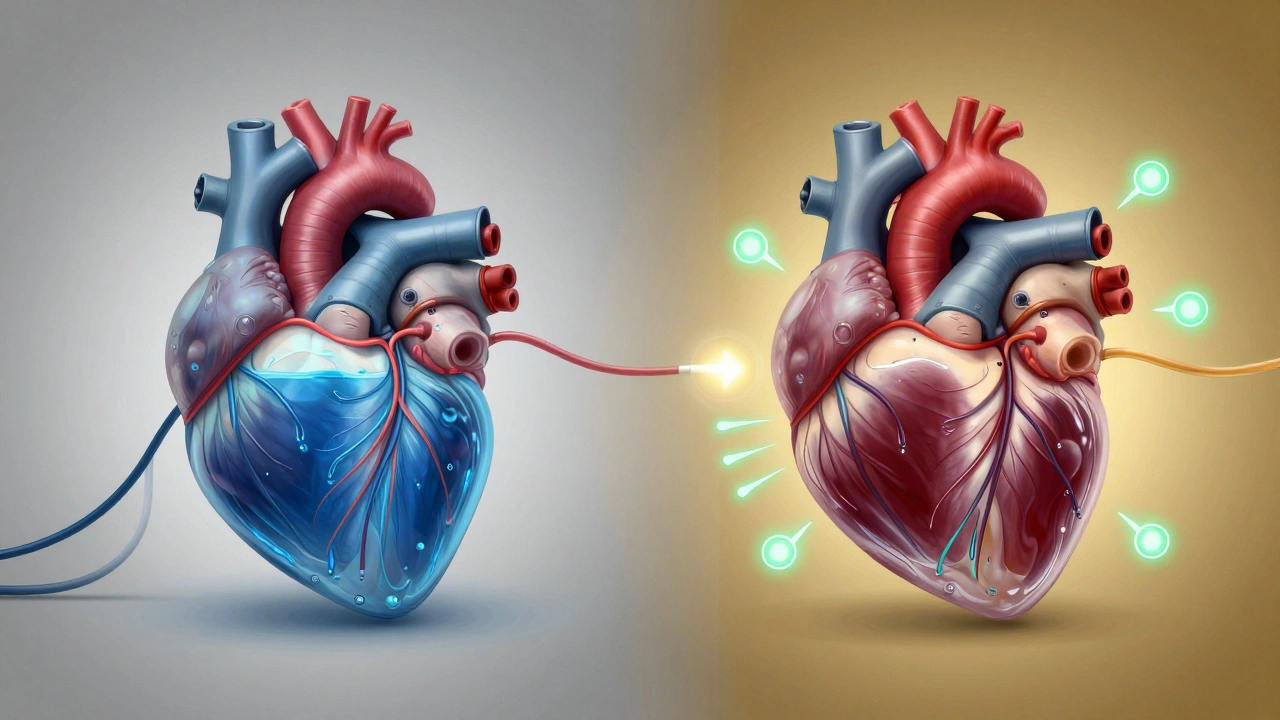
In some heart surgeries, doctors actually stop the heart on purpose. Take coronary artery bypass grafting (CABG), for example. To sew a new blood vessel onto a tiny artery, the heart needs to be still. So, they use a heart-lung machine to take over. Blood gets pumped out, oxygenated, and returned to your body. The heart? It’s paused. This is called cardioplegia. It’s not an accident. It’s controlled. A chemical solution is injected into the heart to stop it safely, and the team monitors it like a clock.
But when the heart stops unexpectedly, that’s different. That’s cardiac arrest during surgery. It can happen because of low blood pressure, electrolyte imbalances, anesthesia reactions, or even a blood clot. It’s rare - studies show it occurs in less than 1% of open-heart procedures - but when it does, every second counts.
How the team responds
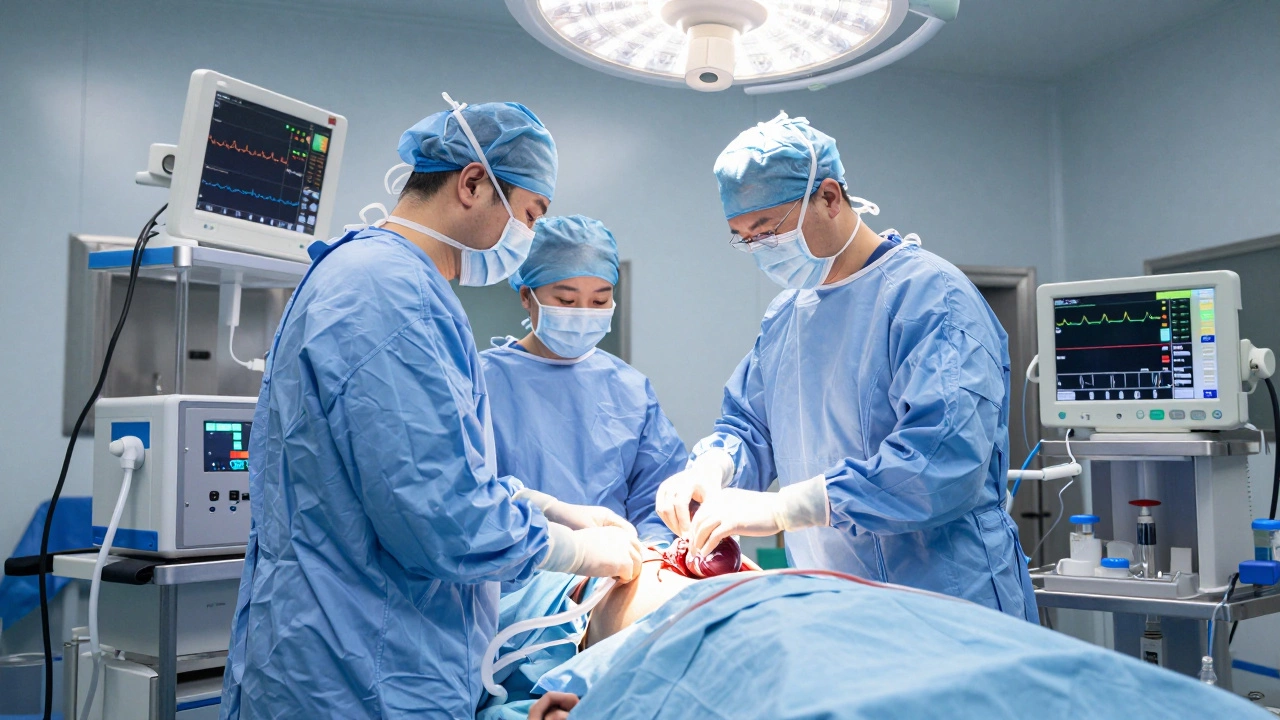
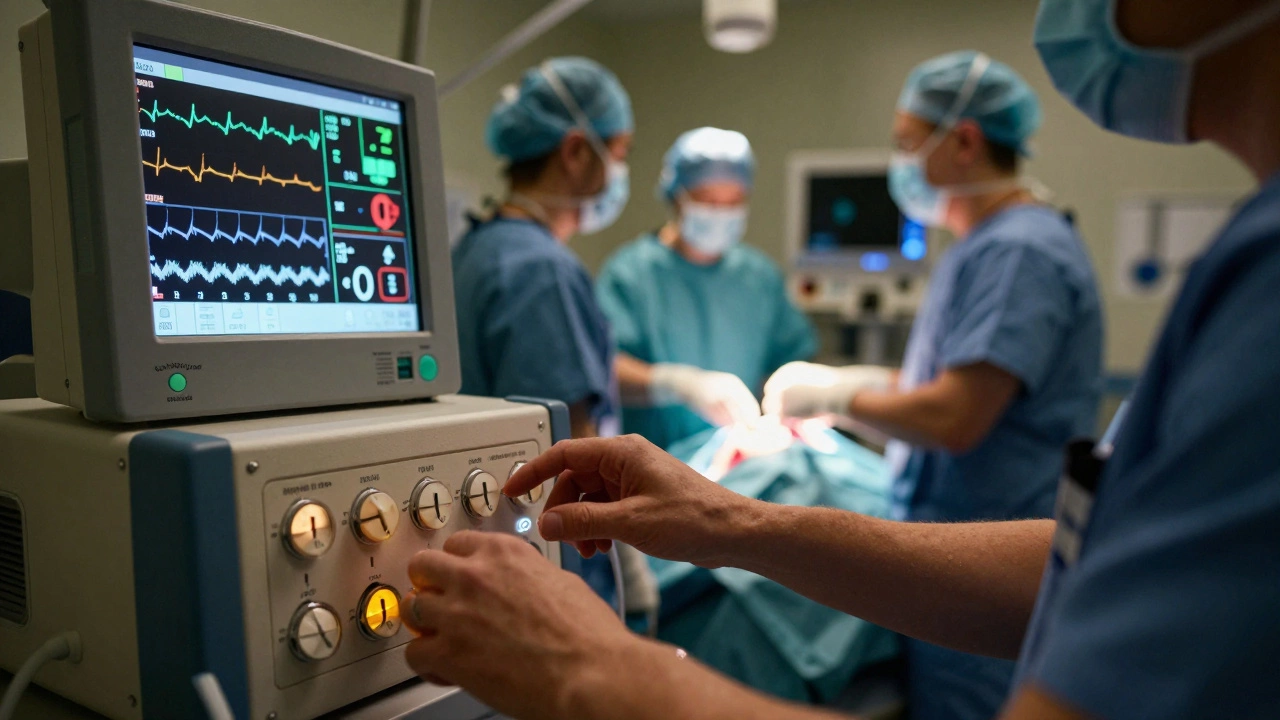
Operating rooms aren’t quiet places. There’s beeping, talking, clinking tools. But when the heart stops, everything changes. The anesthesiologist calls out, “No pulse!” The surgeon freezes. The perfusionist - the specialist who runs the heart-lung machine - immediately switches it into full support mode. They don’t wait for orders. They act.
At the same time, the team checks the EKG. Is it flatlining? Or is it ventricular fibrillation - a chaotic, useless rhythm? That determines what happens next. If it’s fibrillation, they deliver a shock. If it’s asystole - a true flatline - they start chest compressions right there on the table. Yes, while you’re still open. Surgeons will literally press down on your heart with their hands. It’s not something you see in movies. It’s standard practice.
Medications like epinephrine are given through IV lines to stimulate the heart. Calcium is added if levels are low. Potassium is corrected. Blood is warmed. Oxygen is pushed harder. Every system is checked: Are you bleeding? Is your blood too thin? Is your body too cold? Each of these can trigger cardiac arrest. The team works like a well-oiled machine, each person knowing their role without needing to be told.
Why it doesn’t always mean death
People assume if your heart stops during surgery, you’re done. That’s not true. In fact, survival rates after intraoperative cardiac arrest are better than you’d think. A 2023 study from the Journal of Thoracic and Cardiovascular Surgery tracked 1,200 cases over five years. Of those, 78% of patients regained a stable rhythm within 10 minutes. About 65% left the hospital alive. And 52% were still alive a year later.
Why so high? Because surgery happens in a controlled environment. You’re already monitored with every possible sensor. You’re connected to machines that can support you. You’re not alone in a hallway. You’re surrounded by specialists trained for this exact moment. In a hospital ward, cardiac arrest is a crisis. In the OR, it’s a protocol.
What increases the risk?
Not everyone has the same chance of this happening. Certain factors raise the risk:
- Emergency surgery - if you’re having surgery because of a heart attack or a ruptured aneurysm, your heart is already weakened.
- Older age - people over 70 have a higher chance of rhythm problems during surgery.
- Previous heart attacks - scar tissue from past damage doesn’t respond well to stress.
- Diabetes or kidney disease - these mess with electrolytes and blood flow, making the heart more fragile.
- Long surgeries - the longer you’re under, the more chances for complications to creep in.
That’s why surgeons talk to you before the procedure. They don’t just say, “You’re at risk.” They say, “Your heart has some scarring, so we’ll keep your potassium high and your temperature stable.” They adjust. They prepare. They don’t just hope for the best.
What happens after?
If your heart restarts, you’re not out of the woods. You’ll be moved to the ICU, not back to your room. You’ll be on a ventilator. You’ll have monitors tracking your brain, kidneys, and heart around the clock. Why? Because even if the heart starts again, the body has been through trauma. The brain might have had low oxygen. The kidneys might be stressed. The heart itself might be bruised from compressions.
Doctors check for troponin levels - a protein that leaks when heart muscle is damaged. They do echocardiograms to see if the heart is pumping properly. They watch for arrhythmias for the next 48 hours. Most patients recover fully. But some need a temporary pacemaker. A few need long-term meds. It’s not a guarantee of smooth sailing, but it’s not the end either.
Can it be prevented?
Yes - as much as it can be. Pre-op checks are more thorough than ever. Blood tests are done right before surgery. Heart function is measured with ultrasound. Anesthesiologists use advanced monitors that predict rhythm changes before they happen. Some hospitals use AI tools that flag subtle EKG changes minutes before a cardiac event.
Patients with high risk might get a temporary pacemaker inserted before the surgery even begins. Others get extra fluids or medications to stabilize their rhythm. It’s not about avoiding risk - it’s about managing it. And it works.
Bottom line
If your heart stops during surgery, it’s not a death sentence. It’s a known complication - one that medical teams train for, rehearse for, and have systems ready to handle. The fear is real. But the reality? Modern heart surgery has become incredibly safe because of how well we handle these moments. You’re not just trusting your surgeon. You’re trusting a whole system designed to keep you alive - even when your heart doesn’t.
Can your heart stop during routine heart surgery?
Yes, but it’s rare. In planned surgeries like bypass or valve replacement, the heart is often stopped on purpose using chemicals and a heart-lung machine. Unexpected cardiac arrest happens in under 1% of cases. The team is trained to respond immediately.
How long can the brain survive if the heart stops during surgery?
The heart-lung machine keeps oxygen flowing to the brain even when the heart isn’t beating. In cases of unexpected arrest, brain damage is rare if circulation is restored within 5-10 minutes. That’s why the team acts fast - they have minutes, not seconds.
Do surgeons really perform chest compressions on an open chest?
Yes. When the chest is open - which it is during most heart surgeries - direct cardiac massage is faster and more effective than external CPR. The surgeon uses their hands to squeeze the heart directly. It’s standard and often lifesaving.
Is there a higher chance of heart stopping during emergency heart surgery?
Yes. Emergency surgeries - like for a ruptured aorta or acute heart attack - involve patients with already unstable hearts. The risk of cardiac arrest during these procedures is 3-5 times higher than in planned surgeries.
What are the long-term outcomes after a cardiac arrest during surgery?
About 65% of patients survive to hospital discharge. Over half are still alive one year later. Recovery depends on how long the heart was stopped, how quickly it was restarted, and whether other organs were damaged. Many return to normal life with no lasting effects.



Write a comment