
CoQ10 Dosage & Form Finder
Find out which type of CoQ10 is best for you and what dosage might be appropriate based on your profile.
Fill in the details on the left to get your personalized CoQ10 guide.
You’ve probably heard the buzz around CoQ10, or Coenzyme Q10, a naturally occurring antioxidant found in every cell of your body that helps generate energy. But does it actually live up to the hype? If you’re feeling sluggish, worried about your heart, or dealing with muscle pain from cholesterol meds, you might be wondering if this supplement is worth your cash. It’s not magic, but for specific groups-especially older adults and those on certain medications-it can make a tangible difference.
Key Takeaways
- Energy Production: CoQ10 is essential for mitochondrial function, helping convert food into ATP (energy).
- Heart Health: It may improve symptoms of heart failure and reduce blood pressure slightly.
- Statin Relief: Statins deplete natural CoQ10 levels; supplementation often reduces associated muscle pain.
- Age Factor: Natural production drops significantly after age 40, making supplementation more relevant for older adults.
- Safety Profile: Generally safe with mild side effects like digestive upset; consult a doctor if on blood thinners.
The Science Behind the Spark: How CoQ10 Works
Think of your cells as tiny power plants. Inside these power plants are structures called mitochondria. Their job is to turn the food you eat into adenosine triphosphate (ATP), the fuel your body runs on. CoQ10 plays a critical role in this electron transport chain. Without enough of it, the machinery slows down.
Your liver makes CoQ10, and you get small amounts from foods like fatty fish, organ meats, and whole grains. The problem? Your body’s ability to produce it peaks in your early 20s and declines steadily thereafter. By the time you hit your 60s, your levels can be half of what they were at 20. This decline isn’t just a number on a lab report; it correlates with reduced cellular efficiency, which contributes to fatigue and slower recovery.
Why People Take It: Primary Health Benefits
So, why do millions of people pop this capsule daily? It usually comes down to three main goals: boosting energy, protecting the heart, and managing medication side effects.
Boosting Cellular Energy and Reducing Fatigue
If you suffer from chronic fatigue syndrome (CFS) or fibromyalgia, you know how draining it feels to have no battery left. A study published in the Journal of Clinical Medicine suggested that CoQ10 supplementation could improve markers of oxidative stress and inflammation in CFS patients. While it won’t give you a caffeine-like jolt, users often report a steadier baseline of energy over several weeks. It’s less about a sudden spike and more about removing a bottleneck in your energy production line.
Heart Health and Blood Pressure Control
The heart is the most energy-demanding organ in your body. It beats roughly 100,000 times a day, requiring massive amounts of ATP. Consequently, heart tissue has some of the highest concentrations of CoQ10. Research indicates that CoQ10 may help manage congestive heart failure by improving cardiac output and reducing hospitalizations. Some meta-analyses also show a modest reduction in systolic blood pressure-typically around 5-7 mmHg. It’s not a replacement for prescribed antihypertensives, but it can be a helpful adjunct.
Combating Statin-Induced Muscle Pain
This is perhaps the most common reason people start taking CoQ10. Statins, drugs used to lower LDL cholesterol, work by blocking an enzyme in the liver. Unfortunately, this same pathway produces CoQ10. When you block the pathway, you lower cholesterol, but you also starve your muscles of CoQ10. This depletion is linked to myalgia (muscle pain) and weakness, which causes many patients to quit their statins altogether. Supplementing with 100-200 mg of CoQ10 daily has been shown in multiple trials to alleviate these symptoms without interfering with the statin’s cholesterol-lowering effect.

Choosing the Right Form and Dosage
Not all CoQ10 supplements are created equal. You’ll generally see two forms on the shelf: Ubiquinone and Ubiquinol. Understanding the difference saves you money and ensures absorption.
| Feature | Ubiquinone | Ubiquinol |
|---|---|---|
| Form | Oxidized form | Reduced (active) form |
| Absorption | Lower bioavailability; body must convert it | Higher bioavailability; ready for use |
| Best For | Younger adults (<40 years) | Older adults (>40 years) or those with metabolic issues |
| Cost | Generally cheaper | Premium price |
If you are under 40 and healthy, standard Ubiquinone is likely sufficient because your body converts it efficiently. If you are over 40, have heart conditions, or take statins, Ubiquinol is often recommended because your conversion ability diminishes with age. Look for brands that use softgel capsules with oil bases (like olive or soybean oil), as CoQ10 is fat-soluble. Taking it with a meal containing fat significantly boosts absorption compared to taking it on an empty stomach.
Potential Side Effects and Interactions
CoQ10 is remarkably well-tolerated. In clinical trials, adverse events were rare and mostly mild. However, "natural" doesn't mean "risk-free." Here’s what to watch out for:
- Digestive Upset: Nausea, diarrhea, or upper abdominal pain can occur, especially with high doses (above 300 mg). Splitting the dose throughout the day often helps.
- Blood Thinning: CoQ10 has a structure similar to Vitamin K. It can potentially decrease the effectiveness of warfarin (Coumadin), increasing the risk of clotting. If you are on blood thinners, monitor your INR levels closely when starting CoQ10.
- Blood Sugar: There is some evidence that CoQ10 may lower blood sugar levels. Diabetics should monitor glucose levels carefully to avoid hypoglycemia.
Food Sources vs. Supplements
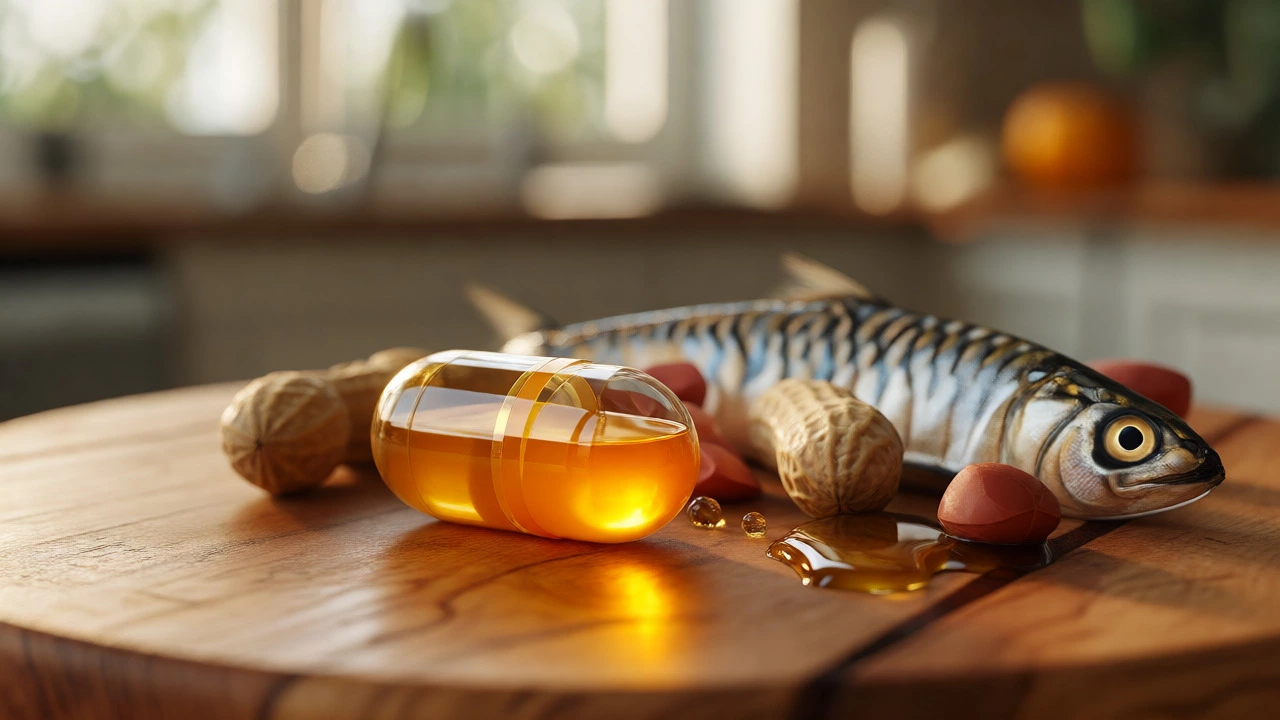
Can you just eat your way to optimal CoQ10 levels? Technically, yes, but practically, it’s tough. To get the therapeutic dose of 100 mg used in many studies, you’d need to eat about 900 grams of sardines or 5 kg of peanuts daily. That’s not feasible for most people. While a diet rich in organ meats, fatty fish (mackerel, sardines, trout), and nuts supports baseline levels, supplementation is the only reliable way to achieve the higher concentrations needed for therapeutic benefits like heart support or statin relief.
Who Should Skip It?
While beneficial for many, CoQ10 isn’t for everyone. Pregnant or breastfeeding women should avoid it due to a lack of safety data. Children generally don’t need it unless directed by a pediatrician for specific genetic disorders affecting mitochondrial function. Always check with your healthcare provider before adding new supplements, especially if you have complex medical histories.
How long does it take for CoQ10 to work?
It varies by condition. For general energy or statin-related muscle pain, some users notice improvements within 2-4 weeks. For heart health markers or blood pressure, it typically takes 8-12 weeks of consistent daily use to see measurable changes. Patience is key, as CoQ10 builds up in tissues over time.
Is CoQ10 safe to take with other supplements?
Generally, yes. It pairs well with Omega-3 fatty acids and Magnesium, both of which support heart health. However, caution is advised with blood-thinning supplements like high-dose Vitamin E or Ginkgo Biloba, as additive effects could theoretically increase bleeding risk, though this is rare. Always inform your doctor about all supplements you take.
Does CoQ10 cause insomnia?
For a small percentage of people, yes. Because it plays a role in energy production, taking it too late in the day might interfere with sleep for sensitive individuals. If you find yourself feeling wired at night, try taking your full dose in the morning or splitting it between breakfast and lunch.
What is the recommended daily dosage?
Most studies use doses ranging from 100 mg to 300 mg per day. For general wellness and statin support, 100-200 mg is a common starting point. Higher doses (up to 600 mg) are sometimes used under medical supervision for severe heart failure or specific neurological conditions. Start low and assess tolerance.
Can CoQ10 help with migraines?
There is promising evidence suggesting CoQ10 may reduce the frequency and duration of migraines. A study in the journal Cephalalgia found that participants taking 300 mg daily experienced fewer migraine days compared to placebo. It is thought to work by stabilizing mitochondrial function in brain cells.




Write a comment