Doctor Salary Calculator
Medical Tourism Insight: In countries like Thailand, surgeons often earn less per procedure but serve international patients who pay premium rates. This creates new income streams beyond local markets.
When people ask what the highest paid doctor is, they’re often thinking about the flashy headlines - surgeons earning millions, doctors in luxury clinics, or specialists flying private jets to perform operations. But the truth is more layered. It’s not just about the title. It’s about where you work, what you do, and how much demand outpaces supply. In 2025, the highest paid doctor isn’t just a neurosurgeon in New York or a cardiologist in London. It’s the one who’s solving problems no one else can - and doing it in places where patients are willing to pay a premium.
Neurosurgeons Lead the Pack - But Why?
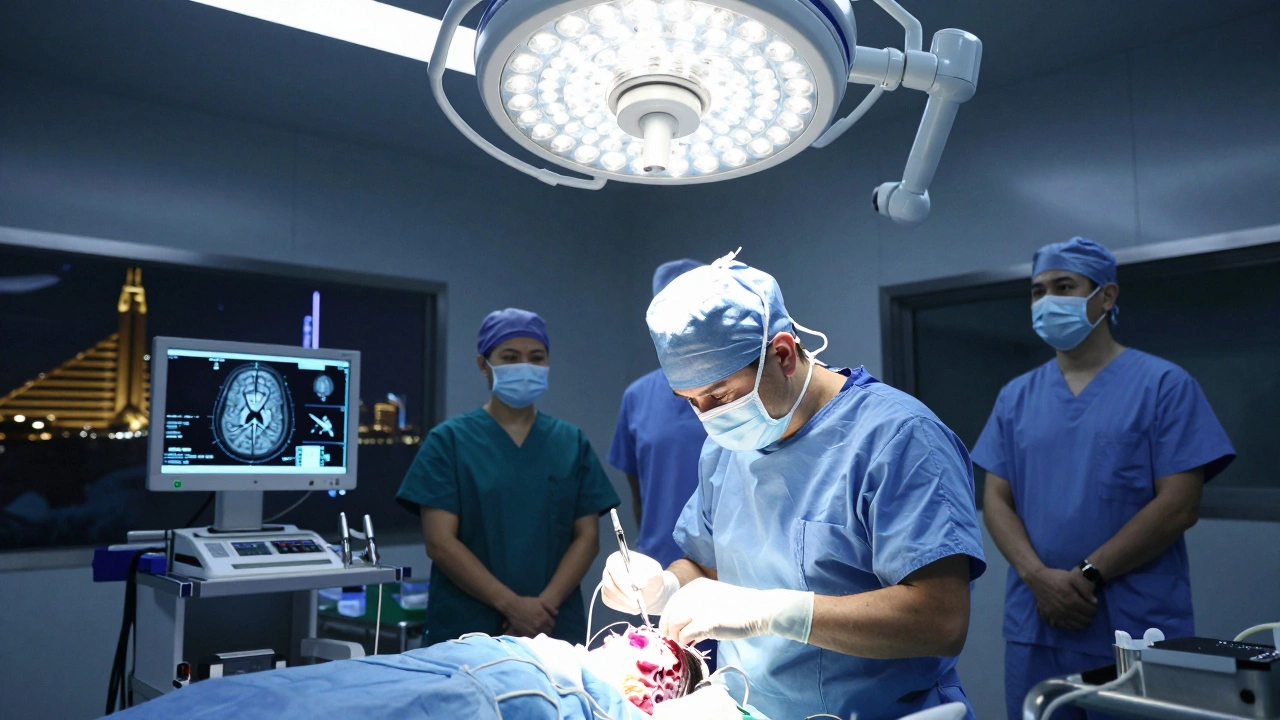
Neurosurgeons consistently top the list of highest-paid physicians globally. In the United States, median annual earnings hover around $790,000, with top performers in major metropolitan areas clearing over $1.2 million. In Switzerland, Germany, and the UAE, neurosurgeons earn similar figures, adjusted for cost of living. Why? Because the brain is unforgiving. One slip during a tumor removal or aneurysm repair can mean life or death. There’s no room for error. Training takes 15+ years - medical school, internship, residency, and a fellowship. Few people make it through. And those who do? They’re in short supply.
But here’s the twist: neurosurgeons in India or Thailand don’t earn the same. A top neurosurgeon in Mumbai might make $150,000 - still a fortune locally - but it’s a fraction of what they’d make in the U.S. or Switzerland. That’s where medical tourism comes in. Patients from Europe, Australia, and North America fly to places like India, Thailand, or Mexico for brain surgery at 70% less cost. The doctor still earns well - but not at U.S. levels. The money flows to the patient’s home country, not the surgeon’s bank account.
Other High-Paying Specialties
Neurosurgery isn’t alone. Other specialties command top dollar because of complexity, risk, and demand:
- Cardiothoracic surgeons - $680,000-$950,000/year. They operate on hearts and lungs. One mistake, and the patient doesn’t wake up.
- Orthopedic surgeons - $550,000-$800,000/year. Especially those specializing in spine or joint replacements. With aging populations worldwide, demand is rising fast.
- Plastic surgeons - $500,000-$750,000/year. Not just cosmetic. Reconstructive work after trauma or cancer is in high demand. Many work in private clinics, charging premium rates.
- Radiation oncologists - $520,000-$700,000/year. They use high-tech machines to target cancer. The equipment costs millions. Few hospitals can afford it - so those who run them get paid accordingly.
- Interventional radiologists - $500,000-$700,000/year. They do minimally invasive procedures using imaging. Less time in the OR, but high skill and tech dependency.
These aren’t just jobs. They’re high-stakes crafts. You don’t become one by accident. You train for over a decade. You sacrifice sleep, relationships, and weekends. And even then, you’re not guaranteed success.
Location Matters More Than You Think
Here’s the real secret: the highest paid doctor isn’t always the one with the fanciest title. It’s the one in the right location.
In the U.S., doctors in states like California, New York, and Massachusetts earn more - not just because patients are wealthier, but because malpractice insurance, real estate, and overhead are sky-high. A surgeon in rural Nebraska might make $400,000 - less than half of what their peer in Los Angeles earns - even if they do the same procedure.
But what about outside the U.S.? In the Gulf states - Saudi Arabia, Qatar, UAE - foreign doctors are offered salaries of $500,000-$800,000, tax-free, with luxury housing and private schools for kids. No student debt. No insurance premiums. No state taxes. A neurosurgeon from Australia or Canada can double their income just by moving to Abu Dhabi.
And then there’s medical tourism hubs. In Thailand, top surgeons at Bumrungrad or Bangkok Hospital earn $250,000-$400,000 a year. They treat patients from Australia, the UK, and the U.S. - and they’re paid in U.S. dollars. That’s more than most Australian specialists make. The difference? They’re serving a global market, not just locals.

Why Medical Tourism Changes the Game
Medical tourism isn’t just about cheap surgery. It’s about redefining value. A patient from Sydney might pay $150,000 for a spinal fusion in the U.S. - or $40,000 in Malaysia. The surgeon in Kuala Lumpur doesn’t earn $1 million, but they earn $300,000 - and they’re treating 50 patients a year from abroad. That’s more than most Australian orthopedic surgeons handle in a lifetime.
These surgeons don’t work in government hospitals. They’re in private, internationally accredited facilities with English-speaking staff, luxury recovery suites, and fast-track visas. They’re not cutting corners. They’re using the same implants, the same protocols, the same training as U.S. hospitals. But their overhead is lower. Their salaries reflect that balance.
For the doctor, it’s a win. For the patient, it’s a win. For the country? It’s a growing export industry. Thailand, India, Singapore, and Mexico now compete with the U.S. and Germany for top surgical talent.
What About the Lowest Paid Doctors?
It’s easy to focus on the top earners. But the gap is widening. Pediatricians, family doctors, and public health physicians often earn $180,000-$250,000 - even in the U.S. Many work 60-hour weeks, deal with insurance bureaucracy, and still can’t pay off student loans. In Australia, a GP in a rural town might make $200,000 - but they’re on call every third night and rarely take vacation.
The highest paid doctors aren’t necessarily the most compassionate or the most dedicated. They’re the ones who operate in markets where demand is high, supply is low, and patients can pay. It’s economics, not just medicine.
Is It Worth It?
Would you trade a $1.2 million salary for 15 years of training, 80-hour weeks, and constant stress? For many, yes. But for others, the cost is too high. Burnout rates among top surgeons are above 50%. Divorce rates are high. Mental health struggles are common.
And here’s something most don’t say: the highest paid doctors often don’t stay in practice long. Many move into administration, consulting, or medical device startups by their late 40s. The real money isn’t in the OR - it’s in the boardroom.
So when you ask what the highest paid doctor is, the answer isn’t just a job title. It’s a system - one built on years of training, global demand, and the willingness of patients to pay for certainty in the face of life-or-death risk.

Who Makes the Most - and Why?
Let’s cut through the noise. Here’s who earns the most in 2025, based on real data from physician salary surveys in the U.S., Europe, and Asia:
| Specialty | U.S. Median | UAE Median | Thailand (for medical tourists) | Australia Median |
|---|---|---|---|---|
| Neurosurgeon | $790,000 | $850,000 | $380,000 | $520,000 |
| Cardiothoracic Surgeon | $820,000 | $780,000 | $350,000 | $500,000 |
| Orthopedic Surgeon | $650,000 | $620,000 | $320,000 | $480,000 |
| Plastic Surgeon | $580,000 | $550,000 | $300,000 | $450,000 |
| Interventional Radiologist | $610,000 | $590,000 | $290,000 | $420,000 |
Notice something? The gap between the U.S. and Thailand isn’t just about pay - it’s about patient volume. A neurosurgeon in Bangkok might do 120 complex cases a year. In New York, the same doctor might do 60, but charge $100,000 per case. The total revenue is similar. But the doctor in Bangkok gets paid less per case - and has lower overhead.
What’s Next for High-Paid Doctors?
The trend is clear: the highest paid doctors aren’t just the most skilled. They’re the most mobile. More are working across borders. More are joining international hospital networks. More are partnering with medical tourism agencies.
AI won’t replace them - but it will make them more efficient. Robotic-assisted surgery, real-time imaging, and AI-driven diagnostics mean fewer complications and faster recoveries. That means more patients. More procedures. More income.
But the human element still matters. A robot can’t reassure a terrified parent whose child needs brain surgery. A machine can’t explain why a spinal fusion will take six months to heal. That’s where the top earners still win - not just because of their hands, but because of their voice.
Is a neurosurgeon really the highest paid doctor?
Yes, in most countries, neurosurgeons earn the highest median salary among physicians. In the U.S., they make an average of $790,000 annually, with top earners exceeding $1.2 million. This is due to the extreme complexity of brain and spine surgery, the length of training (15+ years), and the high risk involved. Other specialties like cardiothoracic surgery and orthopedic surgery are close behind, but neurosurgery consistently leads.
Do doctors in other countries earn less than in the U.S.?
Generally, yes - but not always. Doctors in countries like India, Thailand, and Mexico earn significantly less in local currency than U.S. doctors. However, many work in private, internationally accredited hospitals that treat foreign patients. These doctors often earn in U.S. dollars and may make $300,000-$400,000 per year - more than many Australian or Canadian specialists. Their cost of living is lower, so their purchasing power can be surprisingly high.
Why do some doctors move to the UAE or Gulf countries?
The Gulf states offer tax-free salaries, luxury housing, private education for children, and minimal malpractice insurance costs. A neurosurgeon or orthopedic surgeon can earn $700,000-$900,000 per year - often more than they would in the U.S. - with far less financial pressure. Many doctors from Australia, Canada, and the UK take these roles for 3-5 years to pay off debt, save aggressively, or retire early.
Can medical tourism lower the pay of top surgeons?
No - it actually creates new income streams. Surgeons in Thailand, India, and Mexico earn less per procedure than their U.S. counterparts, but they perform many more. A top surgeon in Bangkok might do 100 spinal fusions a year for international patients, each paying $40,000. That’s $4 million in revenue. Even after overhead, they take home $300,000-$400,000 - which is more than most Australian surgeons earn. Medical tourism doesn’t lower pay; it redistributes it.
Are high salaries justified for top doctors?
It depends on how you measure value. Neurosurgeons and cardiothoracic surgeons train longer than most professionals - often over a decade after college. They carry life-or-death responsibility. Their mistakes can be irreversible. They work nights, weekends, and holidays. Their salaries reflect not just skill, but risk, stress, and scarcity. In markets where patients have the means to pay, those salaries are sustainable - and often necessary to attract and retain talent.
Final Thought
The highest paid doctor isn’t the one with the loudest title. It’s the one who’s solving the hardest problems, in the right place, at the right time. Whether that’s in a high-rise hospital in Dubai, a private clinic in Bangkok, or a trauma center in Chicago - the real value isn’t just in the paycheck. It’s in the trust patients place in them when everything else is uncertain.




Write a comment