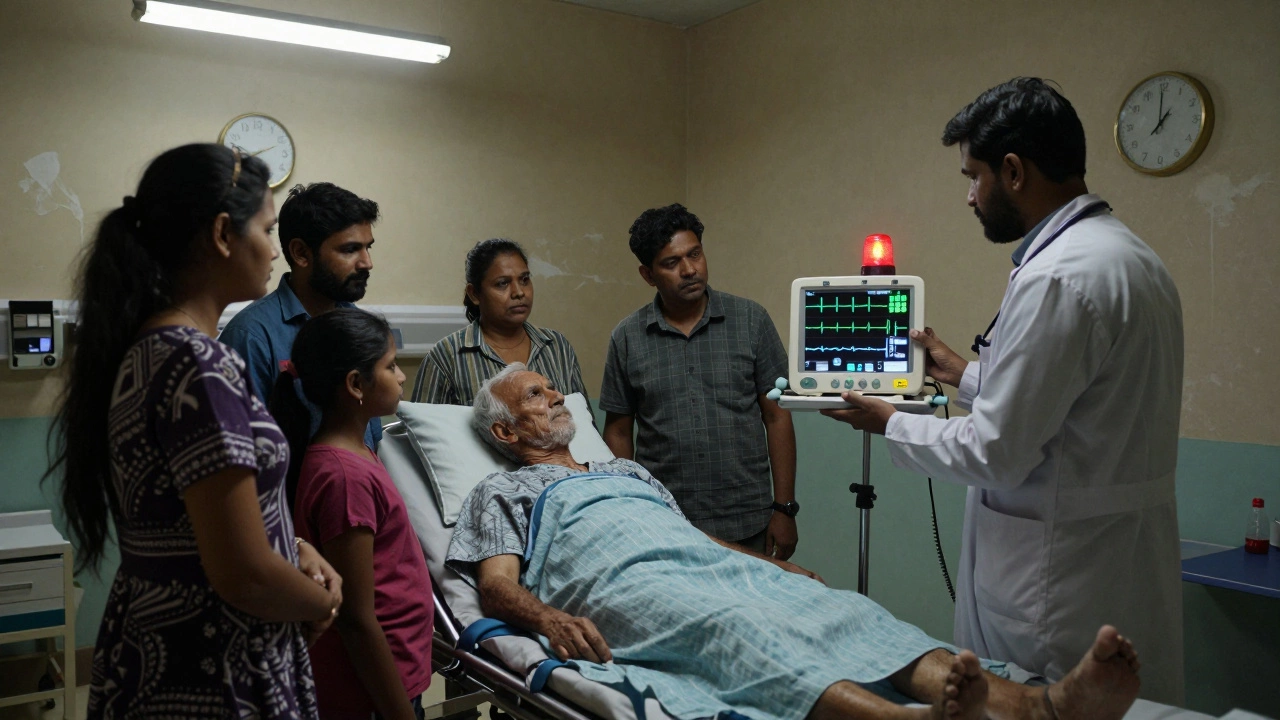
Cardiac Care Cost Comparison Tool
Compare your current country's costs for cardiac procedures against medical tourism destinations. This tool shows potential savings while highlighting important considerations for quality care.
Procedure Selection
Select a procedure and your country to see the comparison.
Note: All prices include surgery, hospital stay, and surgeon fees. Travel costs, insurance, and recovery time are not included in these calculations.
When you hear "the number one sickness in the world," you might think of cancer, diabetes, or even the flu. But the real answer is simpler-and far more deadly-than most people realize. Cardiovascular disease is the leading cause of death on the planet. Not cancer. Not COVID-19. Not even diabetes. It kills more people every year than all other causes combined. And it’s not just a problem in rich countries. It’s everywhere.
In 2025, the World Health Organization reported that cardiovascular disease claimed 18.6 million lives. That’s one death every 1.7 seconds. Compare that to cancer, which took 9.7 million lives the same year. The gap isn’t close. And here’s the kicker: over 75% of those deaths happened in low- and middle-income countries. People who can’t afford timely care, who live far from hospitals, or who don’t even know the early warning signs. That’s where medical tourism comes in.
Why Cardiovascular Disease Is So Deadly
Heart disease isn’t one thing. It’s a group of conditions: heart attacks, strokes, heart failure, arrhythmias, and high blood pressure. Most of these are preventable. But prevention requires access to healthy food, regular check-ups, medication, and lifestyle changes. In places like rural India, parts of sub-Saharan Africa, or even remote areas of Australia, those things are out of reach.
Take high blood pressure, for example. It’s called the "silent killer" because it shows no symptoms until it’s too late. A 2024 study in the Lancet found that nearly half of adults in Southeast Asia with hypertension didn’t know they had it. By the time they felt chest pain or numbness, their arteries were already clogged. Emergency care? Often hours away. Cardiac catheterization? Not available locally. That’s when families start asking: "Where can we go?"
How Medical Tourism Is Changing the Game
Medical tourism isn’t just about luxury spas and cosmetic surgery anymore. For millions, it’s a lifeline. Countries like India, Thailand, Malaysia, and Turkey have built world-class cardiac centers that offer bypass surgery, angioplasty, and valve replacements at a fraction of the cost in the U.S. or Australia.
For instance, a coronary artery bypass graft (CABG) in the U.S. can cost $150,000. In India, it’s $5,000. Same hospital standards. Same board-certified surgeons. Same JCI-accredited facilities. Patients from Australia, the UK, and Canada are flying in for these procedures-and often saving 60-80%.
One patient from Perth, 62-year-old Linda Carter, had three blocked arteries. Her local hospital quoted her a 14-month wait. She flew to Mumbai, had surgery at Apollo Hospitals, and was back home in six weeks. "I didn’t think it was real," she told a health reporter. "But the doctors spoke perfect English. My room had a view of the ocean. And I paid less than my monthly rent."

What Makes a Country a Leader in Cardiac Medical Tourism
Not every country that offers cheap care is safe or reliable. The best destinations share a few key traits:
- Accreditation: JCI (Joint Commission International) or ISO certification means they meet global safety standards.
- Specialized teams: Surgeons who do 500+ heart procedures a year, not just one or two.
- Language access: English-speaking nurses, translators, and discharge planners.
- Post-op support: Follow-up care, telehealth check-ins, and local partner clinics back home.
India leads in volume, with over 120,000 international cardiac patients annually. Thailand is known for its high-end private hospitals and recovery resorts. Turkey has become a hub for patients from Europe and the Middle East thanks to its proximity and low costs. Malaysia is rising fast, with its government-backed medical visa program and clean, modern facilities.
The Hidden Risks (And How to Avoid Them)
Medical tourism sounds perfect-but it’s not risk-free. Some clinics cut corners. Some surgeons have minimal experience. Some patients skip pre-travel screenings and end up in ICU.
Here’s what actually works:
- Check the hospital’s JCI accreditation on the official website-not just what’s on their brochure.
- Ask for the surgeon’s annual case volume. If they can’t tell you, walk away.
- Get a full pre-op evaluation from your local doctor. Don’t assume the foreign hospital will do it right.
- Book travel insurance that covers medical complications and emergency evacuation.
- Plan at least 10-14 days for recovery before flying home. Rushing it increases stroke risk.
A 2023 study in the Journal of Medical Tourism found that 89% of patients who followed these steps had no major complications. Those who didn’t? One in three had to be readmitted within 30 days.

What You Can Do Right Now
If you or someone you know is dealing with heart disease and can’t get timely care:
- Start with your GP. Ask: "Are there internationally accredited options outside my country?"
- Use verified platforms like Meddit, HealthTrip, or PatientsBeyondBorders. These aren’t travel agencies-they vet hospitals and surgeons.
- Compare not just price, but outcomes. Look for survival rates, infection rates, and average hospital stay.
- Don’t rush. A well-planned trip can save your life. A rushed one can end it.
Cardiovascular disease doesn’t care where you live. But your access to care does. The number one sickness in the world isn’t going away. But thanks to medical tourism, it’s no longer a death sentence for those willing to seek help beyond borders.
Why This Matters More Than Ever in 2026
Climate change is making heart disease worse. Heatwaves spike blood pressure. Air pollution damages arteries. Stress from economic instability drives unhealthy eating and inactivity. The World Heart Federation predicts a 25% increase in global cardiovascular deaths by 2030.
Medical tourism isn’t a luxury. It’s becoming a necessity. As public health systems strain under rising demand, more people will look overseas-not for vacation, but for survival. The question isn’t whether you’ll hear about it. It’s whether you’ll be ready when it affects you.



Write a comment