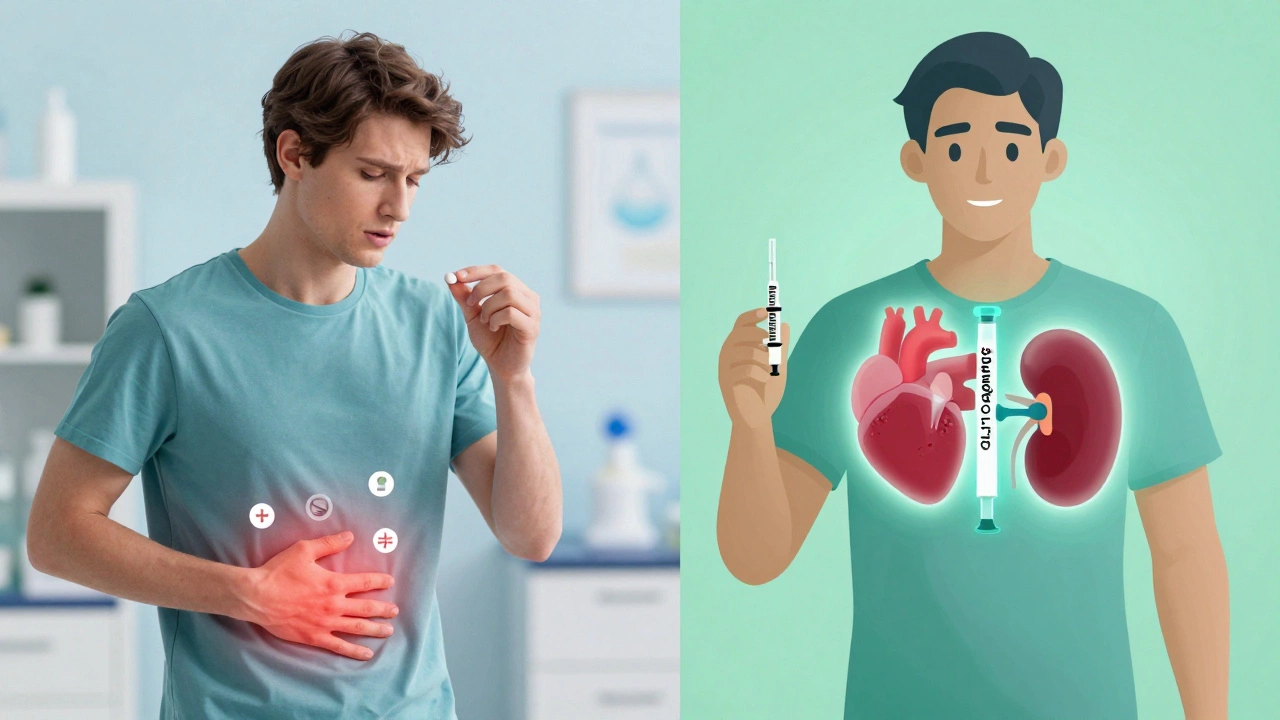
Metformin has been the go-to pill for type 2 diabetes for over 60 years. It’s cheap, safe, and works well for most people. But if you’ve been to your doctor lately, you might’ve heard them say, "We’re moving away from metformin." It’s not that metformin is broken-it’s that better options now exist. And for many patients, those newer drugs aren’t just alternatives-they’re improvements.
Why metformin isn’t the only choice anymore
Metformin lowers blood sugar by reducing how much glucose your liver makes and helping your body use insulin better. It doesn’t cause weight gain. It doesn’t cause low blood sugar on its own. And it cuts heart disease risk by about 30% in some studies. But here’s the catch: it doesn’t work for everyone. About 20% of people can’t take it because of stomach issues-nausea, diarrhea, bloating. For others, it just doesn’t bring A1c down enough, even at the highest dose.
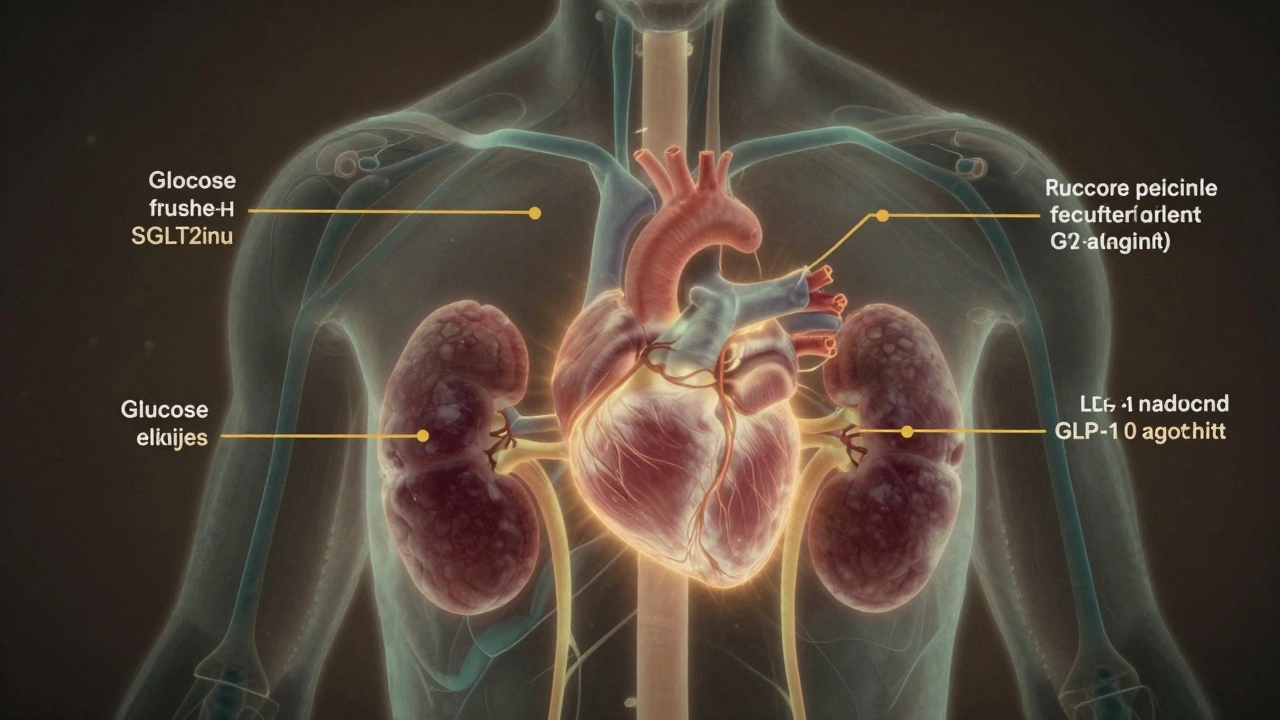
Plus, metformin doesn’t protect your heart or kidneys the way newer drugs do. That’s the big shift. Today, doctors aren’t just treating high blood sugar. They’re protecting organs. And that changes everything.
The two main replacements: GLP-1 agonists and SGLT2 inhibitors
Two classes of drugs have taken center stage: GLP-1 receptor agonists and SGLT2 inhibitors. They’re not just replacements-they’re upgrades.
GLP-1 agonists like semaglutide (Wegovy, Ozempic), liraglutide (Victoza), and dulaglutide (Trulicity) mimic a hormone your gut makes after eating. This hormone tells your pancreas to release insulin only when blood sugar is high. It also slows digestion, reduces appetite, and helps you lose weight. In clinical trials, people on semaglutide lost 10-15% of their body weight on average. That’s more than most diets ever achieve.
But the real win? These drugs cut heart attacks, strokes, and heart failure hospitalizations by up to 26%. For someone with diabetes and heart disease, that’s life-changing.
SGLT2 inhibitors like empagliflozin (Jardiance), dapagliflozin (Farxiga), and canagliflozin (Invokana) work differently. They tell your kidneys to dump excess sugar out through urine. It’s like flushing out extra glucose every time you pee. This lowers blood sugar without insulin. It also reduces blood pressure and fluid retention.
Studies show SGLT2 inhibitors cut heart failure hospitalizations by 30-40% and slow kidney disease progression-even in people without diabetes. In one major trial, patients on empagliflozin were 38% less likely to die from heart or kidney causes over 3 years.
Who gets what? It depends on your health
There’s no one-size-fits-all. Your doctor picks based on what else is going on in your body.
- If you have heart failure or are at high risk, SGLT2 inhibitors are often first.
- If you have obesity or need to lose weight, GLP-1 agonists are the clear winner.
- If you have chronic kidney disease, both classes help-but SGLT2 inhibitors have the strongest data.
- If you’re on a tight budget, metformin still wins. GLP-1 drugs can cost $800-$1,200 a month without insurance.
Many patients now start on one of these newer drugs right away-especially if their A1c is above 8% or they already have heart or kidney damage. In 2024, the American Diabetes Association updated its guidelines to say: "For patients with established cardiovascular disease, heart failure, or chronic kidney disease, GLP-1 agonists or SGLT2 inhibitors should be initiated regardless of metformin use."
What about combination pills?
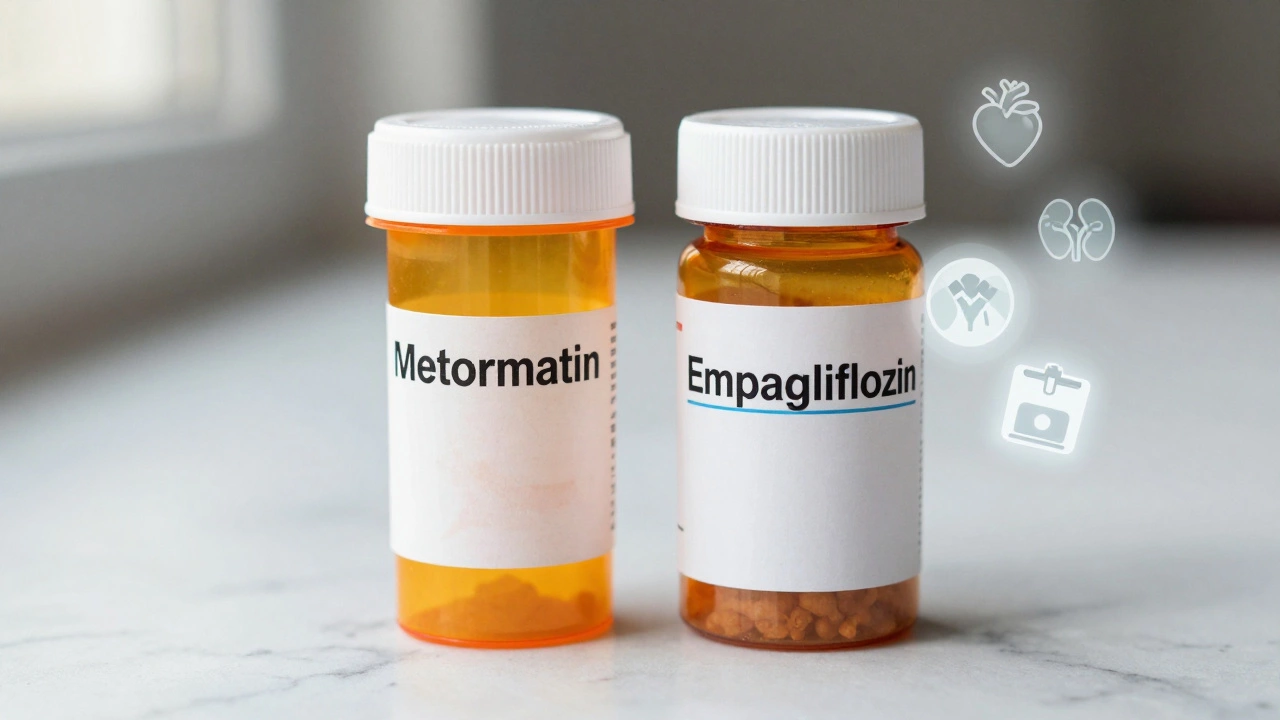
Doctors aren’t abandoning metformin entirely. They’re combining it with the new drugs. There are now combo pills like:
- Metformin + empagliflozin (Synjardy)
- Metformin + dapagliflozin (Xigduo)
- Metformin + semaglutide (in development, expected 2026)
These are useful for people who still need metformin’s benefits but want the added protection of the newer drugs. They reduce pill burden and improve adherence.
But here’s the reality: if you’re on metformin alone and your A1c is still above 7%, you’re not doing well enough. The goal isn’t just to lower sugar. It’s to live longer, healthier, and without dialysis or a heart attack.
The cost problem
These new drugs are expensive. In Australia, without PBS subsidy, semaglutide can cost over $1,000 a month. But things are changing. In 2025, the Pharmaceutical Benefits Scheme (PBS) expanded coverage for SGLT2 inhibitors and GLP-1 agonists for people with type 2 diabetes who have heart disease, kidney disease, or obesity. Now, many patients pay less than $30 per script.
If you’re paying full price, talk to your doctor about generic options. Dapagliflozin and empagliflozin are now available as generics in Australia. Some pharmacies offer discount programs. Don’t give up because of cost-there are pathways to access.
What about the side effects?
GLP-1 agonists can cause nausea, vomiting, or constipation-especially at first. These usually fade after a few weeks. Rarely, they can cause pancreatitis or gallbladder issues. People with a history of medullary thyroid cancer or multiple endocrine neoplasia should avoid them.
SGLT2 inhibitors carry a small risk of genital yeast infections and urinary tract infections. They can also cause dehydration, especially in older adults. There’s a rare but serious risk of diabetic ketoacidosis-even when blood sugar isn’t very high. If you feel unusually tired, nauseous, or breathless, get checked.
Metformin’s side effects are mostly GI and tend to improve over time. But if you have kidney problems, you can’t take it. SGLT2 inhibitors and GLP-1 drugs are safer for kidneys.
Is metformin obsolete?
No. Not yet. For people with prediabetes, early type 2 diabetes, no heart or kidney disease, and no weight issues-metformin is still a great first step. It’s been studied in over 100,000 patients. Its long-term safety is unmatched.
But for the majority of people diagnosed with type 2 diabetes today-especially those over 50, overweight, or with high blood pressure-metformin is no longer the best first choice. It’s a starting point, not the finish line.
Think of it this way: if you were told to take aspirin to prevent a heart attack in the 1980s, you’d take it. But now, we have statins, blood pressure meds, and lifestyle programs that do more. Metformin is like that aspirin-it helped, but now we have better tools.
What should you do if you’re on metformin?
Don’t stop taking it without talking to your doctor. But do ask these questions:
- What’s my A1c, and is it below 7%?
- Do I have high blood pressure, heart disease, or kidney problems?
- Have I lost weight since starting metformin-or gained?
- Am I having side effects that make it hard to take daily?
- Has my doctor checked my kidney function in the last 6 months?
If you answered yes to any of those, it’s time to have a real conversation about alternatives. Don’t wait for your next annual checkup. Schedule an appointment now.
The future: one pill, one goal
The next wave of diabetes drugs is even more powerful. Oral GLP-1 agonists are coming soon-no injections needed. New drugs that target multiple hormones at once (GLP-1, GIP, glucagon) are in phase 3 trials. One called tirzepatide (Mounjaro) already combines GLP-1 and GIP action and is showing 20% weight loss and A1c drops to 5.5% in some patients.
Diabetes care is no longer about sugar numbers alone. It’s about survival. It’s about walking without heart failure. It’s about keeping your kidneys working so you don’t need dialysis. It’s about living longer with quality.
Metformin helped millions. But the future of diabetes care is here-and it’s better.



Write a comment