
Knee Replacement Hospital Stay Estimator
Select the factors that apply to you to estimate your typical hospital stay duration.
Estimated Timeline
Select your factors and click calculate to see your estimated range.
Standard recovery for low-risk patients
It’s the question that keeps you up at night before surgery. You’re staring at the ceiling, wondering exactly how many days you’ll be stuck in a sterile hospital bed. Will it be three days? Five? Or will they kick you out on Tuesday morning?
The short answer is: most people go home within 24 to 48 hours after a total knee replacement.
But "most" doesn’t mean "everyone." Your actual stay depends on your health, your home setup, and whether you hit specific recovery milestones. If you think you just need a number, you might end up rushing back too soon or staying longer than necessary. Let’s break down what actually determines when you leave, what happens if you stay longer, and how to make sure you’re ready for the real work-recovery at home.
Why Hospital Stays Are Getting Shorter
Not so long ago, staying five to seven days was normal. Today, thanks to better anesthesia techniques and faster rehabilitation protocols, hospitals are pushing for "enhanced recovery after surgery" (ERAS). The goal isn’t just to save money; it’s to get you moving sooner because movement prevents complications like blood clots and pneumonia.
In Sydney and across Australia, the standard model has shifted dramatically. Many orthopedic centers now operate as "day surgery" or "23-hour observation" units for low-risk patients. This means you come in the morning, have the surgery, recover overnight, and head home the next day. For others, a two-night stay is the sweet spot. It gives medical staff enough time to manage initial pain and ensure you can walk with assistance before you’re alone.
This shift relies heavily on pre-habilitation. Patients who strengthen their muscles before surgery often bounce back faster. It’s not magic; it’s biology. Stronger quadriceps mean less strain on the new joint during those first critical steps.
The Checklist: When Can You Actually Go Home?
Hospital discharge isn’t about a calendar date. It’s about passing a series of functional tests. Doctors don’t care if it’s been 24 hours if you can’t lift your leg. They care if you are safe to leave. Here is the typical checklist your surgical team will use:
- Pain Control: Can you manage your pain with oral medications (pills) rather than IV drips? If you still need strong IV opioids, you likely aren’t ready.
- Mobility: Can you transfer from the bed to a chair using a walker or crutches? You don’t need to run a marathon, but you must be able to move independently with help.
- Bowel and Bladder Function: Have you urinated since surgery? Anesthesia and pain meds can slow things down. Being able to use the toilet safely is non-negotiable.
- Vital Signs Stability: Is your temperature normal? No signs of infection or fever. Blood pressure should be stable without constant medication adjustments.
- Wound Check: The incision site should show no excessive bleeding or unusual swelling.
If you miss one of these marks, you stay another day. There’s no shame in this. In fact, staying an extra night to get your pain under control can prevent a dangerous readmission later.
Who Needs a Longer Stay?
While the average is short, some patients require more time. This usually falls into two categories: medical complexity and social support gaps.
Medically, patients with multiple comorbidities-like severe diabetes, heart disease, or obesity-often need closer monitoring. Diabetes, for instance, affects wound healing. If your blood sugar spikes post-surgery, doctors may keep you to adjust insulin levels and watch for infection risks. Similarly, if you develop a complication like a deep vein thrombosis (DVT) or a urinary tract infection, your stay extends until those issues are stabilized.
Socially, living alone changes the equation. If you live by yourself and have no family or friends nearby to help with meals, laundry, or getting groceries, the hospital might arrange for a few days in a rehabilitation facility instead of sending you straight home. In Australia, public hospitals sometimes face bed shortages, which can ironically delay discharge even if you are medically ready. Private patients often have more flexibility here, accessing private rehab beds or home-care packages quickly.
| Factor | Impact on Stay | Typical Adjustment |
|---|---|---|
| Age (65+) | May require slower mobilization | +1-2 days |
| Living Alone | Lack of immediate support | Rehab referral or +2 days |
| Obesity (BMI >30) | Higher risk of complications | +1-3 days |
| Diabetes | Wound healing concerns | +1-2 days |
| Complications (Infection/DVT) | Medical instability | +5-7+ days |
What Happens During Those First Few Days?
Your time in the hospital is intense. It’s not a vacation. From the moment you wake up, the clock starts ticking on your rehabilitation.
Day 0 (Surgery Day): You’ll meet a physiotherapist within hours of waking up. Yes, really. They want you to stand up and take a few steps with a walker while nurses monitor your vitals. Pain will be significant, but manageable with nerve blocks or epidurals. You’ll also start wearing compression stockings or using intermittent pneumatic compression devices to prevent blood clots.
Day 1: This is the big test. You need to prove you can navigate the bathroom, climb stairs (if your home has them), and manage your dressing. Nurses will teach you how to change the bandage and look for signs of infection. You’ll switch from IV painkillers to oral tablets. If you’re struggling with pain or balance, this is when they decide if you need a second night.
Day 2 (If applicable): Focus shifts to endurance. Can you walk further? Can you do your prescribed exercises without excessive fatigue? Social workers might step in to arrange home care services or equipment delivery, like a raised toilet seat or a shower chair.
Preparing for Discharge: The Home Setup
Leaving the hospital is only half the battle. If your home isn’t ready, you’re setting yourself up for failure. Before you even book the surgery, audit your living space.
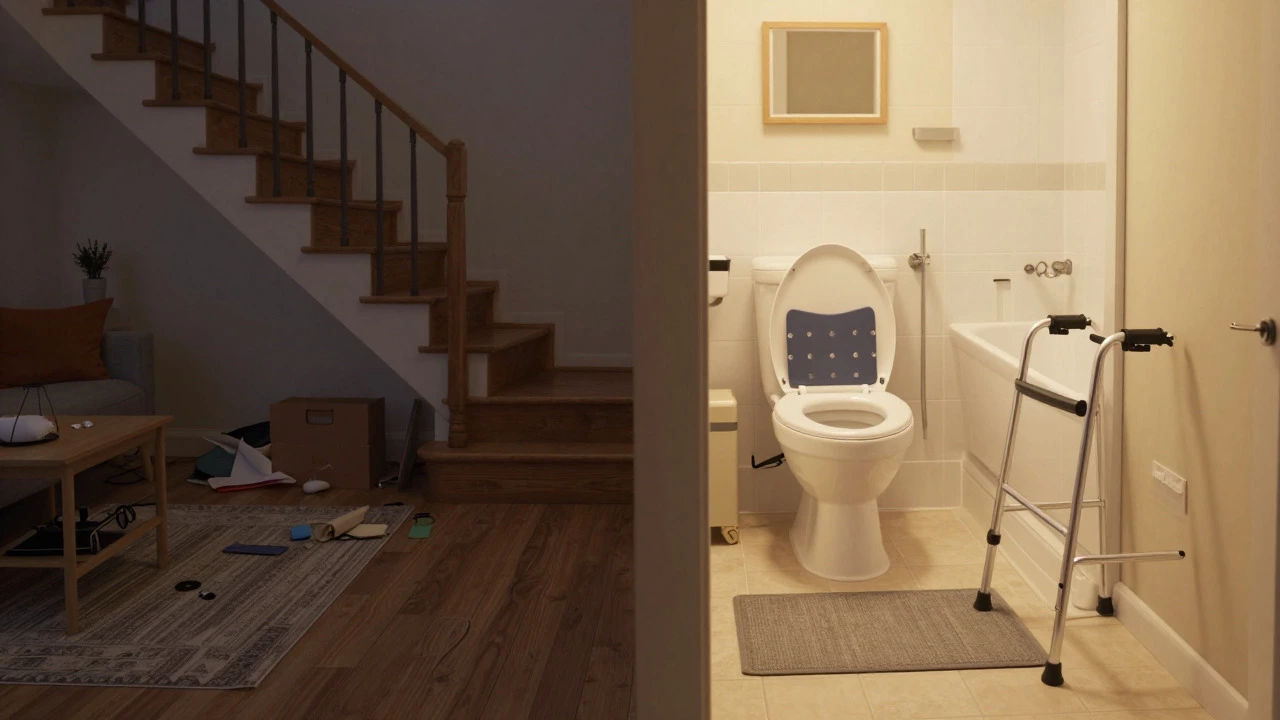
Remove tripping hazards. Throw rugs are enemies. Secure loose cables. Make sure your bedroom and bathroom are on the same floor if possible. If you have stairs, you need a plan. Can you use a stairlift? Do you have help carrying groceries upstairs?
You’ll need specific equipment. A walker is mandatory for the first few weeks. Crutches are rarely used for knee replacements because they require too much upper body strength and balance. A raised toilet seat is crucial-it saves your knee from bending too deeply too soon. A shower chair lets you bathe safely without slipping. Keep water bottles and snacks on every level of your house so you aren’t trekking to the kitchen constantly.
In Australia, Medicare covers some aspects of rehabilitation, but private health insurance often speeds up access to allied health professionals like physiotherapists. Check your policy. You might be eligible for bulk-billed physio sessions through a Chronic Disease Management Plan from your GP.

Costs and Insurance Considerations
How long you stay directly impacts your costs. In public hospitals, there’s no direct cost to you, but wait times can be months. In private hospitals, each additional day adds to your bill. While private health insurance covers a portion, gap fees can accumulate.
However, don’t try to rush discharge to save money if you aren’t ready. Readmissions due to falls or infections cost far more than an extra night in the hospital. Talk to your surgeon and insurer about package deals. Some providers offer bundled pricing for the surgery, hospital stay, and initial physiotherapy, which simplifies budgeting.
Red Flags: When to Call the Doctor After Going Home
Once you’re home, you’re on your own. But you’re not helpless. Know the warning signs that mean you shouldn’t have left yet-or that you need immediate attention.
- Fever over 38°C: Could indicate infection.
- Excessive Bleeding: Soaking through bandages repeatedly.
- Calf Pain or Swelling: Especially if one calf is larger than the other, this could signal a DVT.
- Shortness of Breath: A sign of a pulmonary embolism (a clot moving to the lungs).
- Uncontrolled Pain: If pills aren’t touching the pain, something might be wrong.
Don’t tough it out. Call your surgeon’s office or go to the emergency department. Early detection of complications makes treatment much easier.
Next Steps for Different Scenarios
If you are planning surgery soon, start pre-hab now. Strengthen your quads and glutes. Clear your home. Arrange help for the first week. If you are currently in the hospital, focus on hitting those mobility milestones. Ask questions. Demand clarity on your discharge plan. If you’ve already gone home, stick to your physio schedule. Consistency beats intensity in early recovery.
Can I go home the same day as my knee replacement?
Yes, for select low-risk patients. This is known as ambulatory or day-case surgery. You must pass strict criteria including pain control, mobility, and having a supportive home environment. It is not suitable for everyone, particularly older adults or those with complex health issues.
What if I live alone after knee surgery?
Living alone requires careful planning. You may need to stay in a rehabilitation center for a few days instead of going straight home. Alternatively, hire a private carer for the first week to help with meals, medication, and household tasks. Ensure your home is fully modified with safety equipment before discharge.
How much does a hospital stay cost in Australia?
In public hospitals, the stay is free. In private hospitals, costs vary widely. A typical stay might cost between $10,000 and $20,000 AUD, depending on the hospital and surgeon fees. Private health insurance covers a significant portion, but gap fees apply. Always check with your provider for exact estimates.
When can I drive again after knee replacement?
Usually, you can resume driving after 4 to 6 weeks. However, this depends on which knee was operated on. If it’s your right knee (in countries where we drive on the left), you need full control of the accelerator and brake. Consult your doctor before getting behind the wheel, as pain medication can also impair reaction times.
Is physical therapy included in the hospital stay?
Initial physiotherapy is provided during your hospital stay to get you mobile. Long-term rehabilitation happens after discharge. In Australia, you may need to see a private physiotherapist. Your GP can write a Chronic Disease Management Plan to help subsidize these costs through Medicare.




Write a comment