
Cancer Staging Reality Checker
Enter a scenario or question below to see the medical reality regarding cancer progression and staging.
You’ve probably heard someone say they have "stage 5" cancer. Maybe it was in a movie, on social media, or even from a worried friend trying to describe how bad things are. It sounds terrifying-like the absolute worst possible outcome. But here is the hard truth: stage 5 cancer does not exist in modern medicine.
If you or a loved one has been diagnosed with advanced cancer, hearing this might feel confusing or even dismissive of your fear. But understanding why there is no stage 5 is crucial for navigating treatment options and having realistic conversations with doctors. The standard cancer staging systems simply stop at stage 4. When people use the term "stage 5," they are usually describing something else entirely-often a misunderstanding of medical terminology or an emotional way to express that the disease has progressed beyond what they thought was possible.
The Reality of Cancer Staging Systems
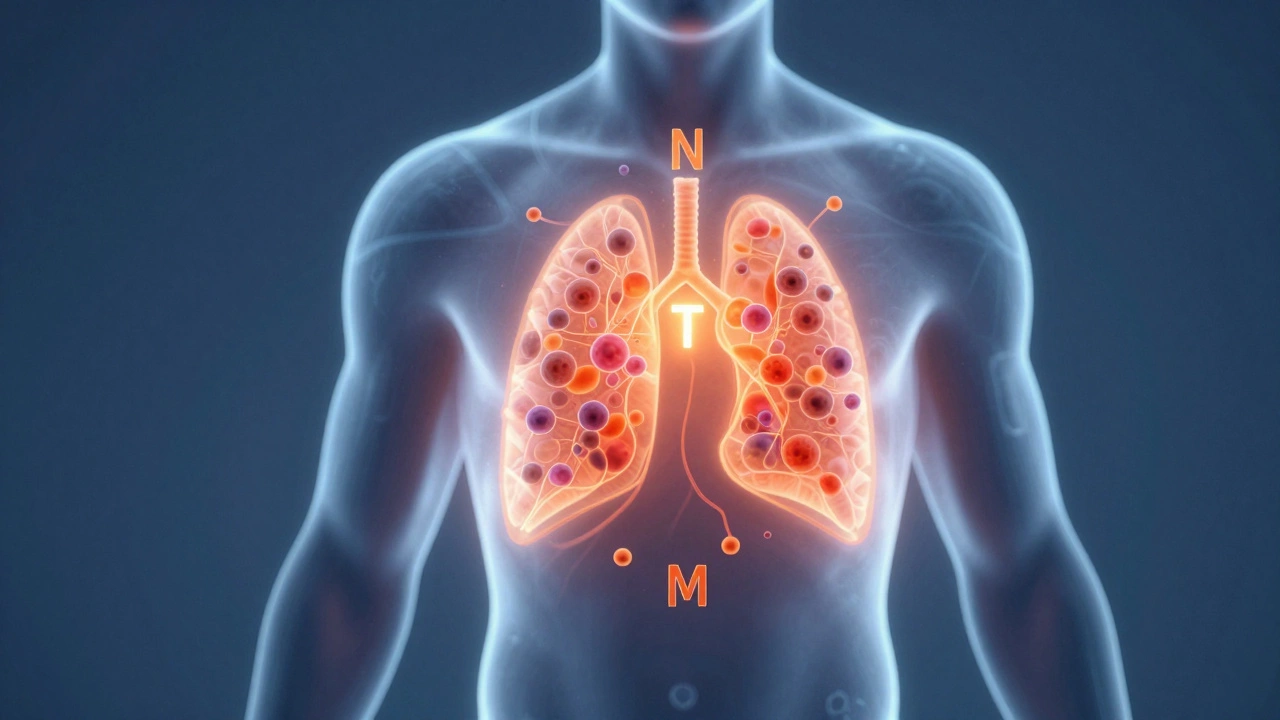
To understand why stage 5 isn't a thing, we first need to look at how doctors actually classify cancer. The most widely used system globally is the TNM system, developed by the American Joint Committee on Cancer (AJCC) and the Union for International Cancer Control (UICC). This system breaks down cancer into three main components:
- Tumor (T): Describes the size and extent of the primary tumor.
- Node (N): Indicates whether the cancer has spread to nearby lymph nodes.
- Metastasis (M): Shows if the cancer has spread to distant parts of the body.
These T, N, and M values are then combined into an overall stage number, ranging from 0 to 4. Stage 0 refers to carcinoma in situ, where abnormal cells are present but haven't invaded nearby tissue. Stage 1 means the cancer is small and contained. As the numbers go up, the cancer becomes larger, spreads to more lymph nodes, or moves to other organs. Stage 4 is the final category, indicating that the cancer has metastasized to distant organs like the lungs, liver, bones, or brain.
There is no room for a stage 5 because stage 4 already represents the most advanced classification possible under this framework. Once cancer has spread distantly, it is stage 4, regardless of how widespread or aggressive it becomes. Adding another number wouldn't change the fundamental biological reality that the disease has moved beyond its origin site.
Why Do People Say "Stage 5"?
If the medical system stops at four, why does the phrase persist? There are a few common reasons people use this term, and none of them reflect official medical diagnosis.
Emotional Hyperbole: Often, patients or families use "stage 5" to convey the severity of the situation. If a patient has stage 4 cancer that is resistant to multiple treatments, progressing rapidly, or affecting multiple organ systems simultaneously, it feels like it’s "beyond" stage 4. Saying "stage 5" is a way to communicate that desperation and gravity when words like "advanced" don't feel strong enough.
Misunderstanding of Recurrence: Some people believe that if cancer comes back after being treated and declared "in remission," it jumps to a new, higher stage. In reality, recurrent cancer is staged based on where it is found and how far it has spread at the time of recurrence. It might be restaged as stage 3 or stage 4, but it never becomes stage 5. The staging resets based on current evidence, not past history.
Confusion with Other Scales: Occasionally, patients confuse cancer staging with other medical scales. For example, the Glasgow Coma Scale goes up to 15, and renal failure stages go up to 5. Mixing these up can lead to incorrect assumptions about cancer progression. Additionally, some specific cancers have unique sub-classifications (like FIGO staging for cervical cancer), but even these rarely exceed stage IV (4).
What Actually Happens After Stage 4?
This is the question that keeps many patients awake at night. If stage 4 is the end of the line, what happens next? The answer is nuanced. Stage 4 doesn't mean immediate death; it means the cancer is systemic. Treatment goals shift from curative intent to palliative care, which focuses on extending life and maintaining quality of life.
However, "stage 4" is not a monolith. Two patients with stage 4 breast cancer, for instance, can have vastly different prognoses. One might have a single small metastasis in the liver that responds well to targeted therapy, allowing them to live for years. Another might have widespread bone and lung involvement that progresses despite treatment. Doctors use additional markers to refine this picture:
- Biomarkers: Genetic mutations (like EGFR in lung cancer or HER2 in breast cancer) can make certain stage 4 cancers highly treatable with specific drugs.
- Performance Status: How well a patient can perform daily activities (measured by ECOG scores) is often a better predictor of survival than the stage alone.
- Burden of Disease: The volume of cancer in the body matters. Oligometastatic disease (limited number of metastases) is treated more aggressively than widely disseminated disease.
In some cases, stage 4 cancer can become manageable as a chronic condition, similar to diabetes or heart disease. New immunotherapies and targeted therapies have turned what were once fatal diagnoses into long-term survival stories for certain cancer types. So, while there is no stage 5, the landscape within stage 4 is incredibly diverse.
| Common Belief | Medical Reality |
|---|---|
| Cancer gets worse than stage 4 | Stage 4 is the highest stage; progression is measured by response to treatment, not a new stage number. |
| Recurrence creates a new stage | Recurrent cancer is restaged based on current spread (usually stage 3 or 4), not added to previous stages. |
| Stage 5 means imminent death | Stage 4 varies widely; some patients live years with proper management and newer therapies. |
| All stage 4 cancers are the same | Prognosis depends on cancer type, biomarkers, location of metastasis, and patient health. |
The Role of Biomarkers and Precision Medicine
As we move further into the 2020s, the concept of "staging" is evolving. While the TNM system remains the backbone of communication, oncologists increasingly rely on molecular profiling. This is where precision medicine comes in. Instead of just asking "how big is the tumor?" doctors ask "what makes this tumor tick?"
For example, a patient with stage 4 melanoma who has a BRAF V600E mutation might respond dramatically to combination therapy with dabrafenib and trametinib. Their outlook is significantly better than a patient without this mutation, even though both are technically stage 4. Similarly, PD-L1 expression levels help determine if immunotherapy will work. These factors create a "functional" staging that is much more granular than the simple 0-4 scale.
This shift explains why some patients feel their doctor is ignoring the "stage." In many advanced cases, the stage is less important than the genetic makeup of the tumor. This doesn't mean staging is obsolete-it’s still vital for initial planning and clinical trials-but it’s no longer the sole determinant of fate.
Navigating Conversations with Your Doctor
If you hear "stage 5" used in your household, it’s important to clarify what everyone means. Here are some questions to ask your oncologist to get a clearer picture of your specific situation:
- "Can you explain my TNM staging in detail?"
- "Are there any biomarkers or genetic tests we should run to guide treatment?"
- "How does my performance status affect my treatment options?"
- "Is my cancer considered oligometastatic, or is it widely disseminated?"
- "What are the goals of treatment at this point: cure, control, or comfort?"
Don’t be afraid to write these down. Anxiety can make it hard to remember everything said during a consultation. Having a clear understanding of your actual stage and the nuances of your disease helps you participate actively in your care plan.
Support and Mental Health Resources
Dealing with advanced cancer is emotionally exhausting. The confusion around terms like "stage 5" adds unnecessary stress. It’s okay to feel overwhelmed. Many hospitals offer psychosocial oncology services, where counselors specialize in helping patients and families cope with the psychological impact of cancer.
Support groups, both online and in-person, can also provide a sense of community. Hearing from others who are navigating similar stages can reduce isolation. Remember, while the medical system may seem rigid with its stages, your experience is unique. Focus on the facts provided by your care team, and seek support for the emotional weight that comes with the diagnosis.
Does stage 5 cancer exist in any medical system?
No, stage 5 cancer does not exist in any recognized international medical staging system, including the TNM system used by the AJCC and UICC. The highest stage is stage 4, which indicates metastatic cancer. Any reference to "stage 5" is either a misconception, emotional hyperbole, or a confusion with other medical scales.
What happens if cancer spreads after stage 4?
If cancer spreads further after a stage 4 diagnosis, it remains stage 4. Doctors monitor the progression through scans and symptoms, adjusting treatment plans accordingly. The focus shifts to managing symptoms, extending life, and improving quality of life rather than assigning a new stage number.
Can stage 4 cancer be cured?
While stage 4 cancer is generally considered incurable, some types can be managed effectively for long periods. Certain cancers, like testicular cancer or some lymphomas, can sometimes be cured even at stage 4. For others, new treatments like immunotherapy have led to long-term remission, turning cancer into a chronic condition.
Why do some people say they have stage 5 cancer?
People often use "stage 5" to express the severity of their condition, especially if their cancer is resistant to treatment or spreading rapidly. It is an emotional way to convey that the disease feels "beyond" the standard definitions, but it has no basis in medical diagnostics.
How is recurrent cancer staged?
Recurrent cancer is restaged based on its current location and extent of spread. It is not added to the original stage. For example, if stage 2 breast cancer returns in the lungs, it is now classified as stage 4 breast cancer, reflecting the new metastatic status.




Write a comment