Knee Replacement Candidacy Assessment Tool
Assess Your Eligibility for Knee Replacement Surgery
This tool helps you understand potential risk factors based on medical criteria discussed in the article. It's not a medical diagnosis - always consult your doctor.
Not everyone who has knee pain is a good fit for knee replacement. It’s one of the most common joint surgeries in the world, with over 1 million performed annually in the U.S. alone. But even with its success rate, some people are at high risk of complications, poor outcomes, or even implant failure. Knowing who knee replacement isn’t right for can save you from unnecessary surgery, long recovery, and more pain down the road.
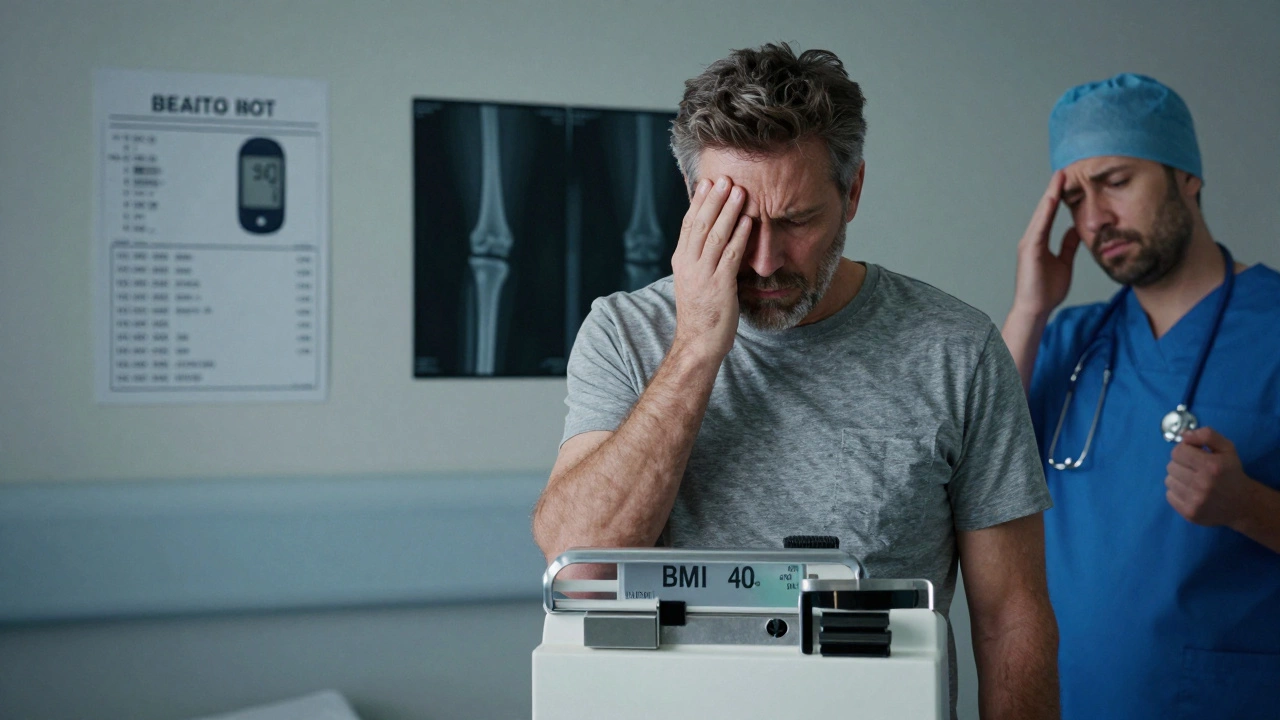
Severe Obesity (BMI Over 40)
Obesity is one of the biggest red flags. A BMI over 40 triples the risk of infection, increases wear on the implant, and makes recovery much harder. Studies show patients with BMI over 40 are 2.5 times more likely to need revision surgery within 10 years. The extra weight puts pressure on the new joint from day one. Even if the surgery goes smoothly, the implant doesn’t last as long. Losing weight before surgery isn’t just helpful-it’s often required by surgeons. Some clinics won’t even schedule the procedure until the patient drops below a BMI of 35.
Uncontrolled Diabetes
Diabetes doesn’t automatically rule out knee replacement, but uncontrolled blood sugar does. HbA1c levels above 8% mean your body struggles to heal. High glucose damages blood vessels and nerves, which slows tissue repair and increases infection risk. A 2023 study in the Journal of Bone and Joint Surgery found that diabetic patients with HbA1c above 8% had a 17% higher chance of post-op infection compared to those under 7%. If your diabetes is managed with diet and meds, and your numbers are steady, surgery can still be safe. But if you’re skipping insulin, eating sugar-heavy meals, or ignoring doctor’s advice-wait. Get your numbers under control first.
Active Infections or Recent Infections
Any active infection anywhere in your body-skin, urinary tract, lungs, or even a dental abscess-can spread to the new knee implant. Once bacteria get into the artificial joint, they form a biofilm that antibiotics can’t touch. The only fix? Remove the implant, treat the infection for months, then try again. That’s a long, painful, expensive process. Surgeons will delay knee replacement if you’ve had an infection in the last 3 months. Even a minor tooth infection can be enough to postpone surgery. Always tell your surgeon about any recent illness, no matter how small it seems.
Severe Muscle Weakness or Neurological Conditions
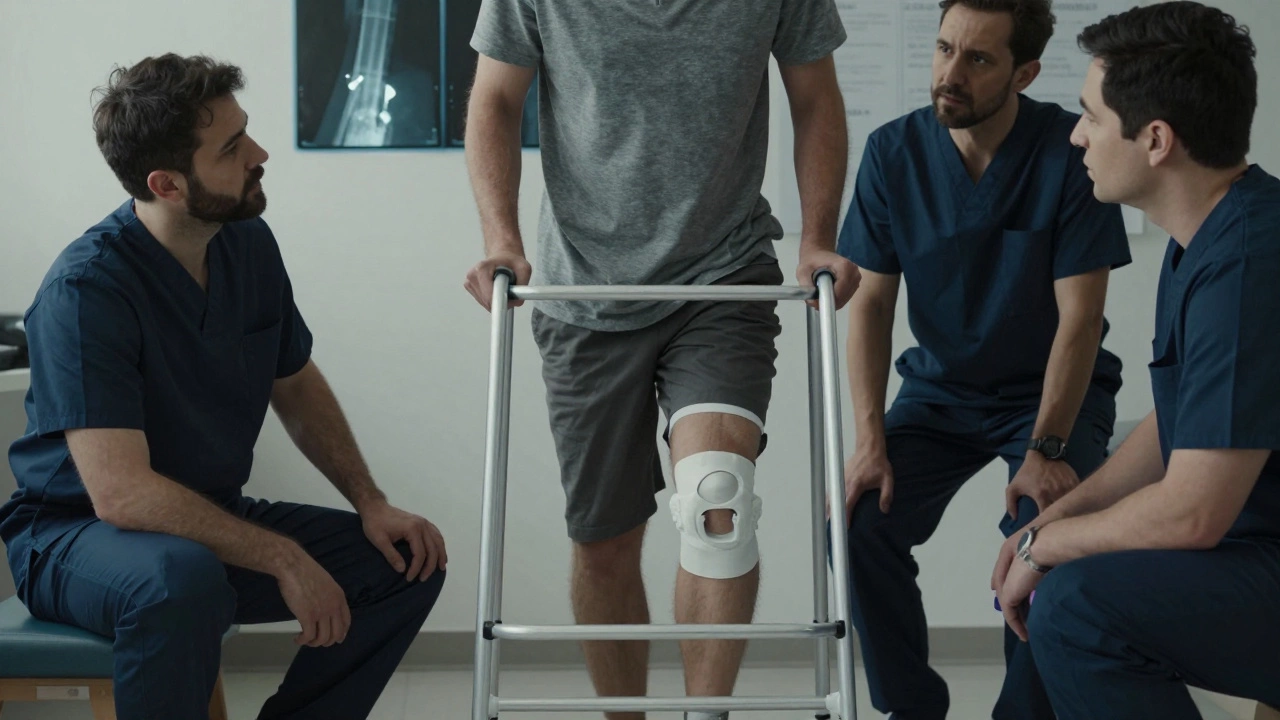
Knee replacement doesn’t fix weak muscles. If you can’t straighten your leg or lift it off the bed without help, you won’t be able to do the rehab needed after surgery. Conditions like advanced Parkinson’s, spinal cord injuries, or severe stroke damage mean you won’t be able to follow physical therapy. Without movement, the joint stiffens, and the implant doesn’t work right. In these cases, a knee replacement might leave you worse off-stuck with a painful, immobile joint that can’t be used. A physical therapist’s evaluation before surgery is critical. If they say you can’t do the rehab, surgery may not be worth it.
Young Age and High Activity Level
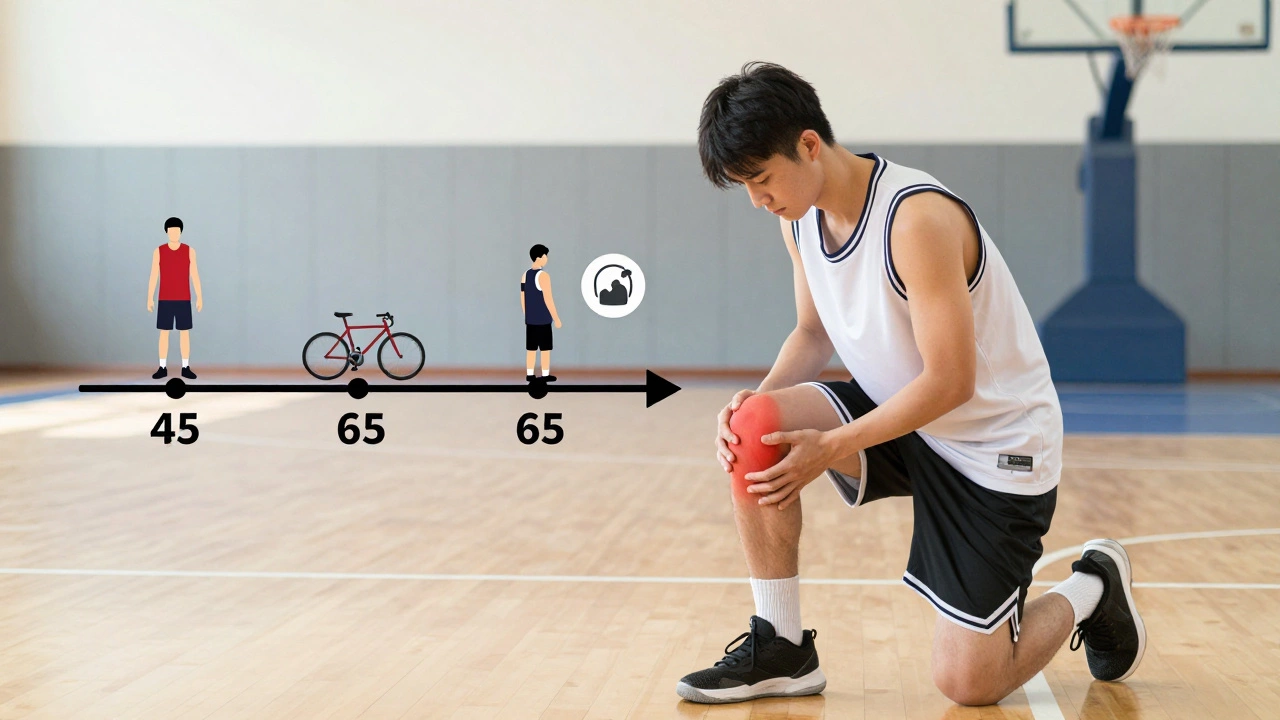
People under 50 are increasingly getting knee replacements, but that doesn’t mean they should. Implants wear out. Most last 15-20 years. If you’re 45 and play basketball, hike weekly, or lift weights regularly, your implant will wear out by your 60s. That means a second surgery, which is harder, riskier, and less successful than the first. Surgeons often recommend non-surgical options for younger, active patients-physical therapy, injections, braces, or weight loss-because they know the implant won’t last. If you’re in your 30s or early 40s and your knee pain is from sports, think twice. A replacement now might mean two replacements in your lifetime.
Psychological Factors: Depression, Anxiety, or Unrealistic Expectations
Surgery isn’t just a physical fix. Mental health matters. Patients with untreated depression or severe anxiety often report worse pain, slower recovery, and lower satisfaction-even if the surgery went perfectly. One study found that 40% of patients with moderate-to-severe depression were dissatisfied with their knee replacement results. Unrealistic expectations are just as dangerous. Some people think knee replacement will make them pain-free and able to run marathons. Reality? It reduces pain and improves mobility, but it doesn’t restore a 20-year-old knee. If you expect perfection, you’ll feel let down. Screening for mental health and setting clear expectations before surgery improves outcomes.
Smoking and Vaping
Smoking doesn’t just hurt your lungs-it kills healing. Nicotine narrows blood vessels, reduces oxygen flow to tissues, and weakens the immune system. Smokers have 3 times the risk of surgical site infections and 2 times the risk of implant loosening. Quitting smoking for at least 4-6 weeks before surgery cuts infection risk in half. Vaping isn’t safer. It still contains nicotine and other chemicals that impair healing. If you’re serious about knee replacement, stop smoking now. No exceptions. Your surgeon will likely require proof of cessation before scheduling the procedure.
Previous Knee Surgeries or Failed Implants
If you’ve had multiple knee surgeries before, your tissue is scarred and thin. The bones may be weak. The ligaments may be damaged. This makes it harder to position the new implant correctly. Revision knee replacements are more complex, take longer, and have higher complication rates. If you had a previous knee replacement that failed, you’re at higher risk for another failure. Surgeons will look closely at your X-rays, history, and bone quality. In some cases, they’ll recommend non-surgical pain management instead.
What If You’re a Bad Candidate? What Are Your Options?
Being told you’re not a good candidate doesn’t mean you’re stuck in pain. There are alternatives:
- Physical therapy: Focused on strengthening quads, hamstrings, and hips. Many patients improve significantly with 8-12 weeks of therapy.
- Weight loss programs: Even a 10% reduction in body weight cuts knee pressure by 30%. Clinics offering structured programs can help.
- Injections: Cortisone for short-term relief, hyaluronic acid for lubrication, or platelet-rich plasma (PRP) for tissue healing.
- Braces and supports: Unloader braces can shift pressure away from the damaged part of the knee.
- Activity modification: Switching from running to swimming or cycling reduces joint stress.
Some people delay surgery for years and still do well. Others use a mix of these options and avoid surgery entirely. The goal isn’t to rush into a knee replacement-it’s to find the best long-term solution for your body.
Final Thought: It’s Not About Age-It’s About Readiness
There’s no magic age for knee replacement. It’s not about being old enough. It’s about being healthy enough. If your body can handle the stress of surgery and rehab, and your lifestyle won’t destroy the implant, then it’s worth considering. If not, there are other paths. Don’t let fear or pressure push you into surgery. Talk to your doctor, get a second opinion, and make sure you’re truly ready.
Can I still get a knee replacement if I’m overweight but working on losing weight?
Yes, but only if you’re making measurable progress. Surgeons often require a documented weight loss plan and a drop of at least 5-10% of your body weight before scheduling surgery. Losing weight reduces surgical risk and improves implant longevity. Some clinics offer pre-op weight management programs specifically for this purpose.
Is knee replacement ever recommended for people under 50?
Yes, but only in specific cases-like severe arthritis from trauma, rheumatoid disease, or genetic conditions. For most younger patients, surgeons prefer conservative treatments first because implants wear out. If you’re under 50 and active, expect a detailed discussion about long-term risks and alternatives.
How long should I stop smoking before knee replacement surgery?
At least 4 to 6 weeks before surgery, but 8 weeks is better. Some hospitals require a nicotine test before surgery. Quitting earlier gives your body time to heal blood vessels and improve oxygen flow, which reduces infection and implant failure risk.
Can I have knee replacement if I’ve had a previous infection in my knee?
It’s possible, but only after the infection is completely cleared and treated with antibiotics for at least 6-12 weeks. Surgeons will check for signs of lingering bacteria using blood tests and imaging. In many cases, they’ll recommend waiting longer or avoiding surgery altogether if the risk of reinfection is too high.
What if I have arthritis in other joints-can I still get a knee replacement?
Yes. Many patients have arthritis in multiple joints. The decision depends on which joint is causing the most disability. If your knee pain is limiting your mobility more than your hip or spine, knee replacement may still be the best option. But your overall mobility and ability to rehab will be considered.



Write a comment